
Sofa Assembly Mistakes That Cause Wobbling and Early Wear
Sofa wobbling and early wear usually start with assembly problems, not just poor-quality furniture. When bolts are uneven, frame sections are out of line, or legs do not sit flat on the floor, the sofa absorbs weight the wrong way and starts loosening faster.
- Loose or uneven connections let the sofa shift every time someone sits down
- Misaligned frames can strain joints, connectors, and upholstery from day one
- Missing parts or overtightened hardware often create hidden structural stress
- Proper leveling, even tightening, and correct part placement help prevent early damage

A sofa that rocks, dips, or feels uneven is more than a small annoyance. It changes how weight moves through the frame, which can lead to loose joints, squeaks, faster cushion wear, and hardware failure over time. That problem often gets worse in apartments, after a move, or with flat-pack deliveries that come with multiple connection points.
The good news is that most of these issues are preventable when the setup is done correctly from the start. Proper assembly protects comfort, keeps the frame level, and helps the sofa hold up to everyday use in busy homes and living rooms.
What Causes a Sofa to Wobble After Assembly
A sofa usually wobbles after assembly because one or more structural points are not meeting the floor or frame correctly. Loose bolts, uneven legs, twisted connectors, and misaligned sections create movement under weight, so the sofa starts rocking, shifting, or settling unevenly almost as soon as people sit on it.
Many wobbling problems begin when parts are tightened in the wrong order. If one arm, back, or leg is locked in place before the rest of the frame is aligned, the sofa can twist slightly. That small twist is enough to keep one foot from sitting squarely on hardwood, tile, vinyl, or even carpet.
This happens often with boxed seating systems, including some models sold through IKEA sofas and sectionals and many Wayfair sofa collections, because connector styles and frame designs vary more than buyers expect.
Common wobble causes include:
- Legs installed at slightly different angles
- Bolts tightened before the frame is fully squared
- Sectional brackets that are not fully seated
- Packaging debris or rug edges under one leg
- Missing washers, pins, or support pieces
A wobble is simply unwanted movement caused by uneven support or unstable connections. Even when the sofa looks assembled, it is not truly stable unless the frame sits level and all load-bearing points are secure.
How Do Loose Connections Lead to Early Wear
Loose connections lead to early wear because movement creates friction where the sofa should stay still. Every small shift places extra stress on bolts, brackets, wood joints, metal inserts, fabric seams, and cushions, so parts start wearing down faster than they would on a properly assembled sofa.
Movement compounds over time
A single loose connection rarely stays small. Instead, daily sitting, leaning, and getting up slowly widens the gap between connected parts. That is why a sofa may seem fine the first week, then begin squeaking, leaning, or feeling soft on one side.
Stress spreads beyond the hardware
When one joint moves too much, nearby parts compensate. Arms can loosen, center supports can flex, and cushions may compress unevenly because the base under them is shifting. The same precision that matters in office furniture assembly also matters in living room seating, especially when weight needs to stay evenly distributed across the frame.
For homeowners, renters, and apartment residents, the takeaway is simple: if the sofa moves at the joints, wear starts long before visible damage appears.
Which Sofa Assembly Mistakes Affect Long Term Stability
The assembly mistakes that most affect long-term stability are uneven tightening, skipped support parts, incorrect leg placement, poor sectional locking, and forcing pieces together when the frame is not aligned. Those mistakes may not stop the sofa from being usable at first, but they gradually weaken support and shorten its service life.
For many households, the biggest long-term problem is rushing the job. A large sofa or sectional may arrive with multiple boxes, mirrored parts, and similar-looking hardware. Without careful sorting and step by step alignment, it is easy to install the wrong fastener or miss a stabilizing piece.
Mistakes that hurt stability the most include:
- Tightening one side fully before the opposite side is connected
- Mixing similar bolts with different lengths or thread types
- Installing center legs or support rails in the wrong orientation
- Leaving sectional connectors only partially engaged
- Dragging pieces into place instead of lifting and aligning them
These errors do not only affect sofas. They also show up when people need broader in-home furniture assembly help for matching pieces in the same room, from accent chairs to media furniture.
It also usually costs less to get assembly right once than to pay later for tightening, part replacement, or damage correction. If you want a sense of the difference, it helps to see current furniture assembly cost comparisons in Maryland and DC before deciding whether DIY mistakes are worth the risk.

Can Incorrect Frame Alignment Damage a Sofa Over Time
Incorrect frame alignment can damage a sofa over time because the structure is forced to carry weight unevenly. When one side sits slightly higher, lower, or twisted, pressure stops spreading evenly across the base, and that can lead to strained joints, warped supports, and faster wear in cushions and upholstery.
What frame alignment means
Frame alignment means the arms, seat base, back, legs, and connection points are sitting in the positions the manufacturer intended. If those parts are out of square, the sofa may still look assembled, but the internal load path is off.
Why sectionals are especially vulnerable
Large modular sofas and deep seating models, like many found in Crate & Barrel sofa styles, often have longer spans and multiple attachment points. That makes proper alignment even more important. If one segment sits off by a fraction, the whole layout can pull against itself.
That is why many homeowners with oversized layouts, corner units, or chaise setups prefer professional sectional sofa assembly in Maryland and DC, especially after delivery to condos, rowhomes, and apartments where space is tight and positioning matters.
Why Do Missing or Overtightened Parts Create Problems
Missing parts remove support, while overtightened parts create stress that can strip threads, crack wood, deform brackets, or crush connection points. Both problems reduce stability, and both can cause a sofa to feel solid at first but weaken much sooner under normal daily use.
Many people assume tighter is always better. In reality, furniture hardware works best within the manufacturer’s intended range. When bolts are overtightened, the hardware can bite too deeply into wood or distort metal plates, which makes future loosening more likely, not less.
Watch for these part-related problems:
- Missing washers that help distribute pressure
- Lost pins or brackets that keep sections locked together
- Cross-threaded bolts that never seat correctly
- Overdriven fasteners that crush wood fibers
- Damaged hex heads caused by poor tool fit
Using the wrong tools is a major reason this happens. If you are comparing home furniture tool kit choices, look closely at fit, torque control, and bit quality rather than speed alone.
It also helps buyers understand in advance how different designs go together. A retailer resource like the Costco sofa and sectional buying guide can give useful context on formats, dimensions, and configuration expectations before assembly day.
How Does Poor Assembly Affect Comfort and Daily Use
Poor assembly affects comfort because a sofa cannot support the body evenly when the frame, legs, or seating sections are unstable. That leads to rocking, leaning, seat sag, shifting cushions, and an overall feeling that the sofa is less supportive, less relaxing, and less dependable during everyday use.
Comfort starts underneath the cushions
People often blame the cushions first, but the issue may be below them. If the base flexes because supports are loose or one side is higher than the other, the sofa feels softer, weaker, or tilted even when the padding is still in good shape.
Daily use becomes more frustrating
A poorly assembled sofa may creak when someone sits down, separate slightly at sectional seams, or drift out of place during normal use. That is especially frustrating in family rooms, small apartments, and shared spaces where furniture gets used often.
Leveling standards matter across the whole room. The same principles outlined in this guide to living room leveling standards for TV stands and entertainment centers apply when you want seating, media furniture, and sightlines to feel balanced together. Some households also coordinate sofa placement with TV mounting and setup help so the room works as one stable, comfortable system.
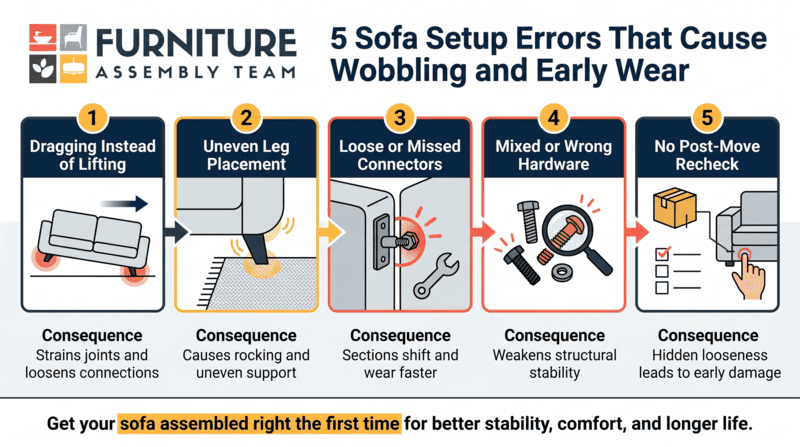
Common Setup Errors That Shorten Sofa Lifespan
Common setup errors that shorten sofa lifespan include dragging assembled sections, reusing bent hardware, forcing pieces through tight spaces, ignoring floor level issues, and failing to recheck connections after a move. These mistakes add stress to the frame and make loosening, wobbling, and wear show up much sooner.
Moves are a major risk point. Timing, narrow hallways, and rushed unpacking often lead people to disassemble and reassemble furniture without checking every fastener, bracket, and leg position.
Errors that often shorten lifespan include:
- Sliding the sofa instead of lifting it
- Reassembling with mixed or leftover hardware
- Skipping a post-move stability check
- Placing one leg partly on a rug edge
- Pushing sectional pieces together without proper connectors
If a move is coming up, planning helps. Reviewing the best time to move in 2026 can reduce last-minute pressure, while guidance on sofa and wall-unit disassembly in DC shows why take-apart jobs and tight entries create added reassembly risk.
For households setting up more than one room, it can also help to review the company’s full range of household assembly services so related furniture gets installed with the same attention to stability.
Why Proper Assembly Helps Sofas Stay Level and Durable
Proper assembly helps sofas stay level and durable because it keeps every load-bearing point working together the way the manufacturer designed. Correct alignment, even tightening, complete hardware installation, and stable leg contact reduce movement, protect the frame, and help the sofa maintain comfort and structure for years.
Professional assembly is especially useful for sectionals, sleeper sofas, chaise units, and flat-pack deliveries with many mirrored parts. Instead of guessing which small error is causing the wobble, trained assemblers can correct the root issue before damage spreads.
A properly assembled sofa should have:
- Even contact at all legs or support feet
- Tight but not overdriven hardware
- Fully engaged sectional connectors
- Squared frame sections with no twist
- Stable support under everyday sitting and movement
For homeowners and renters who want fewer callbacks, less frustration, and a cleaner result, a dedicated professional sofa and sectional assembly service is often the safest path.
Keep Your Sofa Stable From the Start
Getting a sofa level from the beginning is the easiest way to avoid wobbling, alignment problems, comfort issues, and premature wear. Professional setup gives homes, apartments, sectionals, flat-pack deliveries, and everyday living room furniture a more stable foundation, which means better support now and fewer corrections later.
Furniture Assembly Team helps homeowners, renters, movers, apartment residents, and home furniture buyers set up sofas and sectionals correctly across Maryland, Washington DC, Delaware, Pennsylvania, and Northern Virginia, including Baltimore, Rockville, Bethesda, Arlington, Alexandria, Wilmington, and Harrisburg. If your new sofa rocks, your sectional will not line up, or you want the job done right before damage starts, contact Furniture Assembly Team for professional assembly that protects comfort and long-term durability.
Many customers also appreciate having one trusted team in mind for related household needs, whether that means specialized disposal and recycling help after old furniture is removed or other property setup tasks such as finding basketball hoop installation near me for a more complete home setup.
Frequently Asked Questions
Why does my sofa rock on one side after assembly?
A sofa usually rocks on one side because one leg is not making even contact with the floor or the frame is slightly twisted. Loose hardware, a misplaced support foot, or a rug edge under one corner can all cause that imbalance.
How can I tell if sofa bolts are too loose?
Loose sofa bolts often show up as movement at the arms, back, or sectional seams when someone sits down. If you hear creaking, feel shifting, or can wiggle a connection by hand, the hardware likely needs to be checked.
Can overtightening crack a sofa frame?
Yes, overtightening can crack wood components, strip threaded inserts, or bend metal brackets. The damage may be hidden at first, but it often leads to looseness and instability later.
How do I keep sectional pieces level?
Keep sectional pieces level by assembling them on a clear surface, aligning all sections before fully tightening hardware, and checking connector engagement before final placement. After that, make sure every leg or support foot is contacting the floor evenly.
Is an uneven floor always the reason a sofa wobbles?
No, an uneven floor is only one possible cause. Many wobbling sofas are actually suffering from poor assembly, uneven leg installation, or frame alignment problems.
Does wobbling always mean parts are missing?
No, wobbling does not always mean parts are missing. It can also come from overtightened hardware, misaligned brackets, incorrect leg placement, or connectors that were never fully locked.
When is professional sofa assembly better than DIY?
Professional sofa assembly is usually better when the sofa is large, modular, heavy, delivered flat-pack, or going into a tight apartment or stair-access space. It is also the better choice when you want to avoid frame stress, uneven support, and costly corrections later.