
Patio Set Assembly Tips for Backyards, Decks, and Small Outdoor Spaces
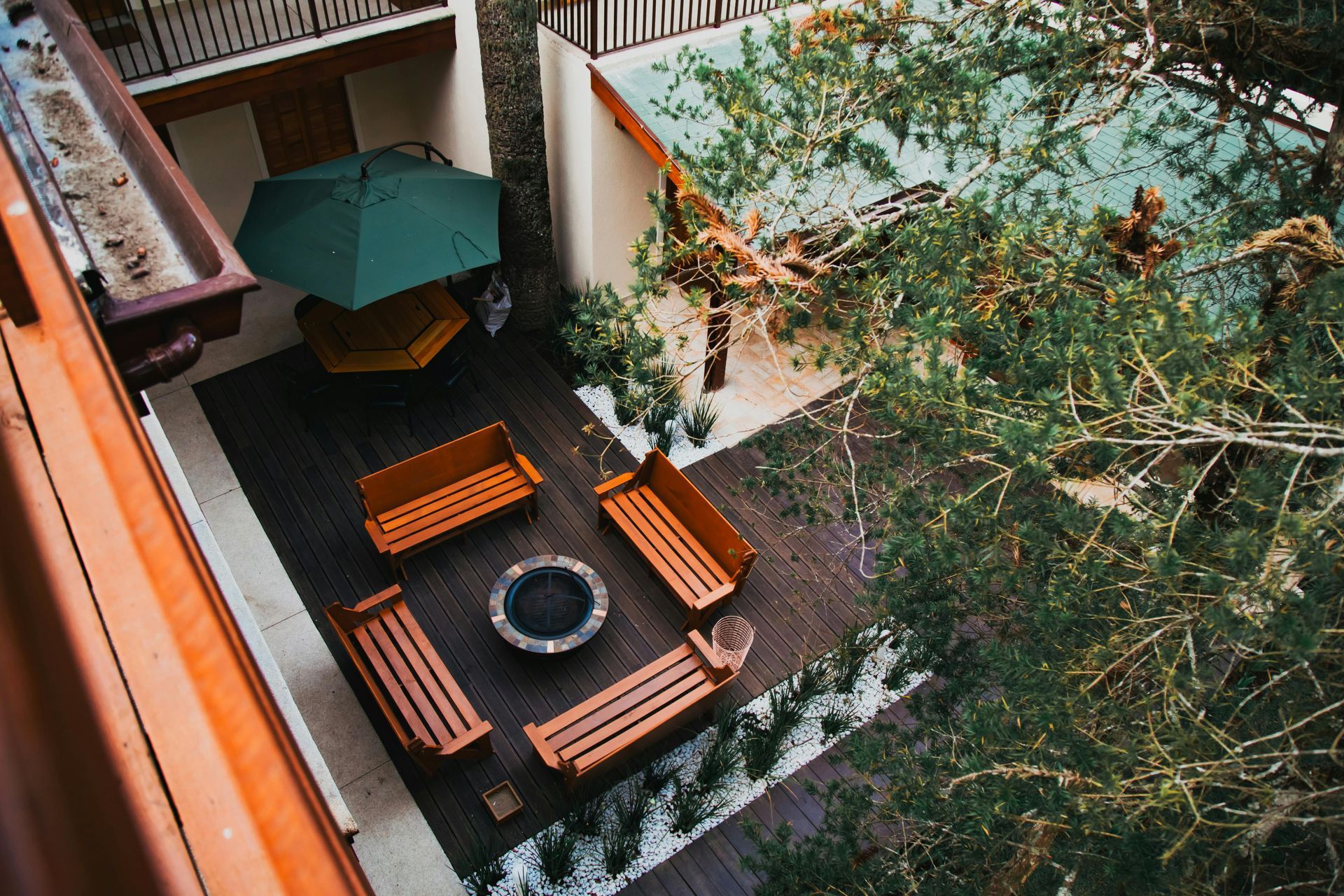
Assembling a patio set the right way starts with three things: checking the surface, organizing the hardware, and choosing the final layout before tightening a single bolt. That simple prep helps prevent wobbly chairs, scratched decking, blocked walkways, and wasted time in backyards, on decks, and in compact outdoor areas.
Problems usually start when boxes are opened in the wrong spot, parts get mixed together, or oversized furniture is forced into a space that cannot support it comfortably. For homeowners, renters, landlords, property managers, and business owners, professional setup often saves time and avoids damage. Furniture Assembly Team helps customers across Maryland, Washington DC, Delaware, Pennsylvania, and Northern Virginia assemble patio furniture safely and efficiently.
What Should You Check Before Assembling a Patio Set
Before assembling a patio set, check the furniture footprint, the condition of the surface, the full parts list, the hardware bags, and the path from delivery point to final placement. Those five checks prevent missing-part surprises, blocked walkways, unstable setup, and unnecessary lifting once assembly begins.
Start with measurements. A patio dining set that fits on paper may still crowd a deck once chair pull-back space is included. Also check gates, stairwells, elevators, and railing openings if the furniture needs to reach a rooftop, balcony, or raised deck.
Then review the instructions before opening every box. This helps you confirm whether the set should be assembled in stages or near its final position. It also reveals whether you will need two people for lifting glass tops, aligning sectionals, or stabilizing large frames.
A simple pre-assembly checklist helps:
- Measure the full furniture footprint, plus walking clearance
- Inspect the deck, patio, or backyard surface for slope or soft spots
- Confirm every carton, cushion pack, and hardware bag is present
- Plan where boxes, tools, and packing materials will sit during setup
- Check whether delivery timing, lifting, or hauling adds extra labor
If your outdoor refresh also includes pergolas, gazebos, or other major features, comparing scope with an outdoor structure installation cost guide can help you budget more realistically. Likewise, some owners weigh assembly labor against delivery and handling costs by reviewing local moving benchmarks such as movers cost in Baltimore.
How Do You Choose the Best Spot for Outdoor Furniture
The best spot for outdoor furniture is flat, stable, easy to access, and sized for both seating and movement. It should also account for sun, shade, drainage, door swing, grill clearance, and railing lines so the finished setup feels comfortable instead of cramped or unsafe.
In backyards, place the set where people naturally gather. Near the house usually works well because food, lighting, and traffic flow are easier to manage. On decks, however, the priority shifts toward weight distribution, chair movement, and protecting board surfaces during assembly.
Safe placement matters just as much as comfort. Review this outdoor furniture safety guidance if your setup includes heavy tops, unstable terrain, or pieces that could tip when leaned on or bumped.
Use this quick location test before you commit:
- Can chairs slide out without hitting walls, rails, or planters?
- Will rainwater drain away instead of pooling under the set?
- Is there enough room to carry boxes without scraping the surface?
- Will umbrellas, fire features, or side tables crowd the area?
- Does the layout still work when guests are standing and moving?
If the patio set will share space with a pergola or gazebo, coordinate the furniture footprint with any future garden structures assembly plans first. That step prevents costly rework later.
Which Patio Sets Are Harder to Assemble Than They Look
The hardest patio sets to assemble are usually modular sectionals, swivel-chair sets, large dining tables, fire pit tables, and mixed-material collections with glass, wicker, aluminum, or poly lumber components. These sets often look simple online, but they require careful alignment, level surfaces, and extra handling time.
Why complexity gets hidden
Many outdoor sets arrive in several cartons with parts spread across frames, legs, crossbars, cushions, and accessory packs. Larger styles similar to outdoor patio furniture collections from Yardistry can involve repeated frame connections, bulky panels, and tight working clearances.
Material matters too. Durable options such as weather-resistant POLYWOOD furniture hold up well outdoors, yet their solid components can be heavier and less forgiving during alignment if holes are even slightly off angle.
When professional help makes sense
A patio dining set with eight chairs, a bench, and a heavy table can easily turn into a half-day project. The same is true for deep seating with hidden brackets or reversible sectional pieces. For bigger or more time-consuming builds, many customers look at dedicated patio furniture assembly support or explore the company’s broader furniture assembly services to avoid damaged parts and repeated disassembly.
Can Small Outdoor Spaces Make Assembly More Difficult
Small outdoor spaces often make patio furniture assembly more difficult because there is less room to sort parts, rotate frames, protect surfaces, and leave proper walking clearance. Even a compact set can become frustrating when the area is narrow, elevated, or shared with planters, railings, storage boxes, or grills.
Tight spaces create more than a comfort problem. They also increase the chance of losing fasteners, scratching walls, or assembling the furniture in the wrong orientation. Apartment balconies, townhouse decks, and smaller rental patios often need a staged setup where parts are organized indoors first and carried out in sequence.
Common small-space challenges include:
- Limited room to lay out parts side by side
- No safe place for packaging and hardware during setup
- Tight turning radius for assembled chairs and loveseats
- Railings or walls that block tool access
- Fewer options for correcting placement after assembly
Many buyers start by browsing popular outdoor patio furniture categories on Amazon, but compact sets still need exact measurements and thoughtful placement. In a small patio furniture setup, inches matter.
How Do You Protect Decks and Patio Surfaces During Setup
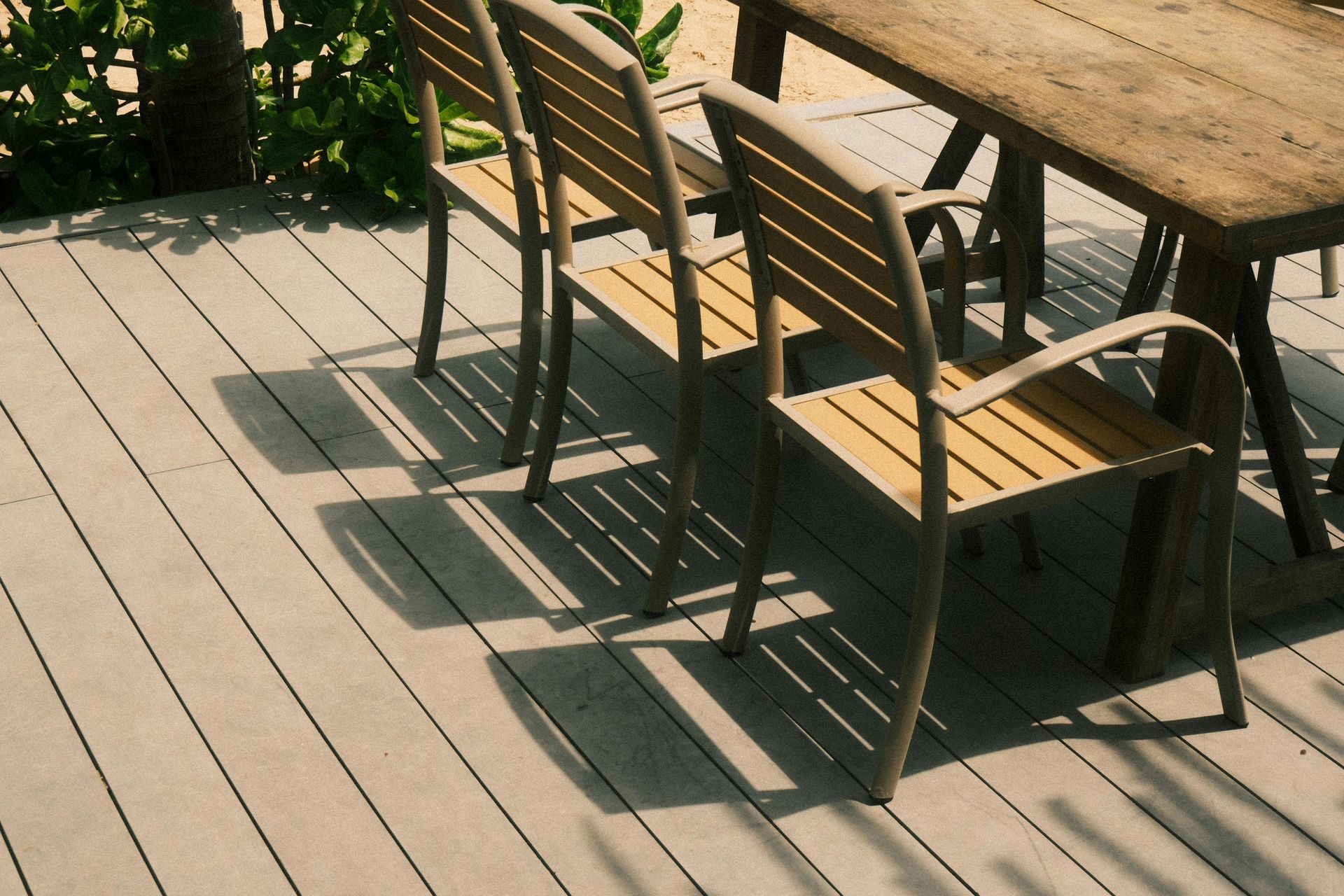
Protect decks and patio surfaces by assembling furniture on padded layers, lifting pieces instead of dragging them, and keeping hardware, tools, and cartons off finished surfaces whenever possible. Surface damage usually happens during unpacking and repositioning, not after the furniture is fully built.
Deck-safe assembly means putting furniture together in a way that prevents scratches, dents, gouges, moisture traps, and dragged hardware from damaging the surface below.
Simple ways to reduce damage
Use moving blankets, flattened cardboard, foam sheets, or clean drop cloths under the work area. On composite decking, avoid grinding metal legs across the boards while trying to align parts. On pavers or stone, keep glass tops and corner pieces cushioned until they are secured.
Place furniture close to its final location
Whenever possible, assemble the largest section near where it will stay. That reduces heavy dragging and awkward turns. It also helps on upper decks, where repeated repositioning can scuff surfaces and strain connectors.
What Tools and Hardware Should Be Organized First
Organize the instruction manual, hardware packs, Allen keys, bolts, washers, tool bits, and protective pads before you start building. A clean hardware system speeds up assembly, prevents skipped steps, and makes it much easier to catch missing or duplicate parts before the wrong fastener gets forced into place.
Treat hardware like inventory. Separate each bag into labeled cups, trays, or small containers, especially if the set includes similar-looking bolts in different lengths. Then stage the manual where it stays visible and dry.
The most helpful first-round setup usually includes:
- Manual and part diagram
- Labeled hardware containers or zip bags
- Allen keys, screwdriver, socket wrench, and rubber mallet
- Gloves, scissors, and box cutter
- Felt pads or foot caps for the finished pieces
For households and property managers who want a better way to store tools, covers, cushions, and seasonal outdoor supplies after setup, dedicated shelving installation services for stockrooms, offices, garages, and utility rooms can keep the area organized long after assembly day.
Common Patio Set Assembly Problems to Avoid
The most common patio set assembly problems are mixing hardware, tightening bolts too early, building on uneven ground, forcing parts into alignment, and underestimating how heavy or awkward outdoor furniture can be. These mistakes waste time, damage finishes, and often create a wobbly final result.
One frequent issue is premature tightening. If every bolt is locked down before the full frame is aligned, holes can shift just enough to prevent the next connection from fitting cleanly. Another problem is assembling too far from the final location, then dragging the completed set across a deck or patio.
Watch for these avoidable setbacks:
- Opening all cartons at once and mixing similar hardware
- Using power tools too aggressively on threaded connections
- Ignoring the surface slope during chair or table assembly
- Leaving packing debris in walkways during the build
- Skipping a final stability check before use
If an old set needs to be removed before the new one goes in, a professional moving and hauling service can make changeovers easier. And if furniture must be moved between homes, decks, or seasonal storage, disassembly and relocation help is often safer than forcing large assembled pieces through tight paths.
How to Create a Functional Layout in a Tight Outdoor Space
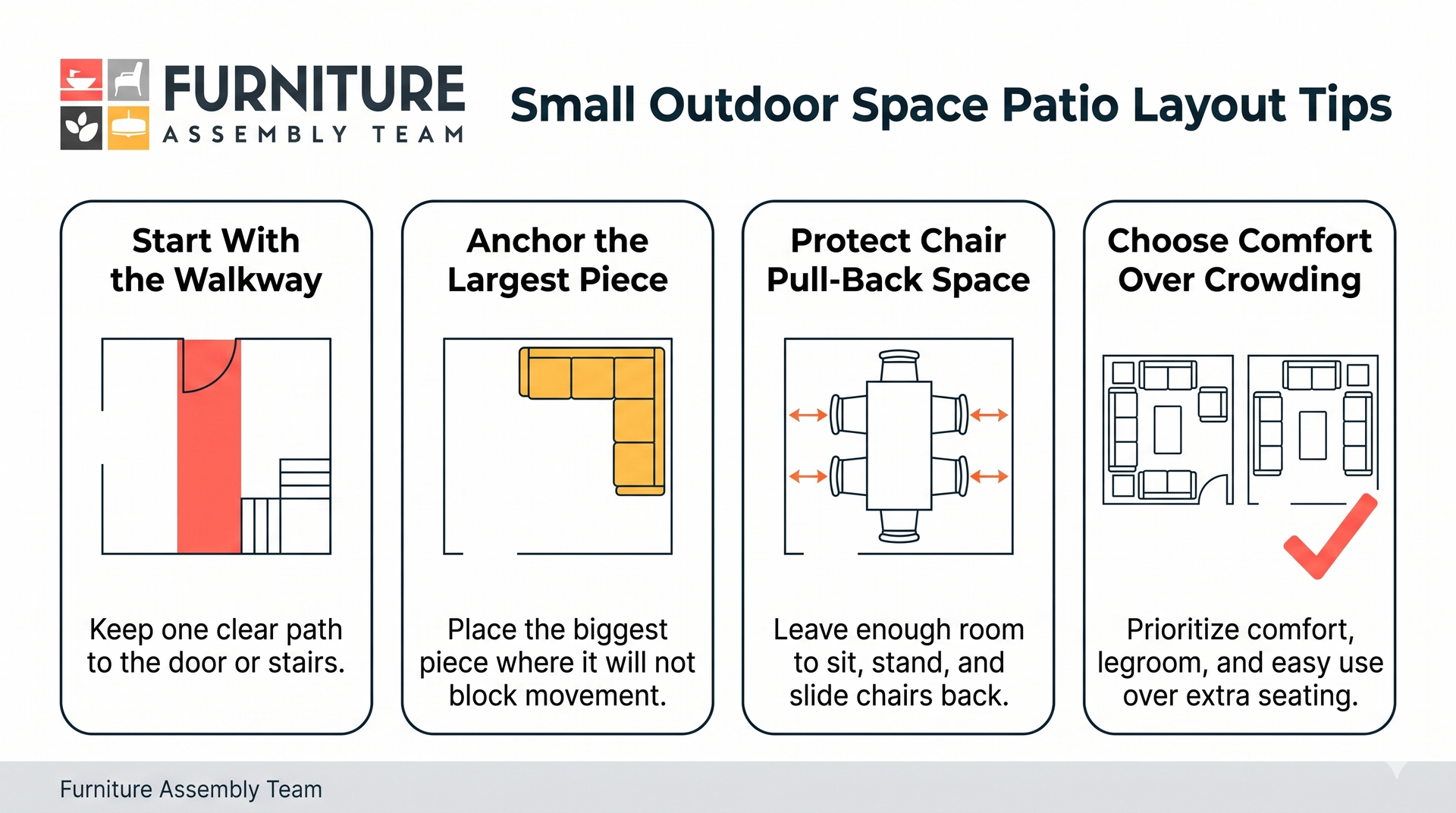
Create a functional layout in a tight outdoor space by choosing one clear focal point, preserving walking paths, and scaling the furniture to how the area is actually used. Good layouts feel open, easy to move through, and comfortable for daily routines, not just attractive in listing photos.
For a narrow deck, place the largest piece against the least active edge. On a compact patio, center the table only if chairs can still slide back without blocking the exit. In shared spaces, clear access should always matter more than squeezing in one extra seat.
A smart layout usually follows these rules:
- Keep at least one direct path to the door or stairs
- Use nesting or lightweight side tables where possible
- Angle chairs only if the footprint still stays efficient
- Leave room for cushions, covers, and planters to coexist
- Prioritize legroom and reach over maximum seating count
Comfort-first spacing is especially important for multigenerational homes, rental properties, and shared community areas. The same user-friendly thinking behind senior living furniture setup services for bedrooms, common areas, and care spaces also applies outdoors, where easy movement and safe spacing make furniture more usable every day.
Set Up Your Patio Furniture for Comfort and Easy Use
The best patio setup feels comfortable, leaves enough room to move, and protects the surface under the furniture from day one. When the furniture is heavy, awkward, or headed to a backyard, deck, patio, balcony, common area, or apartment outdoor space, professional assembly is often the smartest path to a cleaner result.
Professional setup saves time and protects the space
Furniture Assembly Team helps homeowners, renters, landlords, property managers, and business owners get outdoor furniture set up correctly without the usual hassle of confusing instructions, misplaced hardware, scratched surfaces, or awkward repositioning. That matters whether you are refreshing a townhouse deck in Bethesda, staging a rental in Baltimore, updating a shared courtyard in Wilmington, or improving a patio in Rockville, Arlington, Alexandria, or Harrisburg.
A better outdoor flow starts with the right team
If you want a finished layout that supports comfort, safe spacing, and smooth traffic flow, it makes sense to contact Furniture Assembly Team for professional patio furniture assembly and outdoor setup. Many customers also coordinate other projects at the same time, from comparing backyard sports upgrades like how long it takes to install a basketball hoop to planning indoor commercial changes with office furniture installation strategies for flexible workspaces. Across Maryland, Washington DC, Delaware, Pennsylvania, and Northern Virginia, professional help can turn an outdoor refresh into a faster, safer, better-organized project.
Key Takeaways
- Pre-assembly planning matters because surface conditions, measurements, box counts, and access paths all affect whether a patio set goes together smoothly.
- Sectionals, large dining sets, swivel seating, and mixed-material collections often create more setup challenges than they appear to online.
- Small patios, balconies, and decks make assembly harder because they limit hardware staging, tool access, turning space, and layout flexibility.
- Organized hardware, labeled parts, and padded work areas help prevent delays, lost fasteners, scratches, and stability issues.
- Deck-safe assembly is not just about placement. It also means lifting instead of dragging, protecting finishes, and building near the final location when possible.
- For complex, heavy, or awkward outdoor furniture setups, Furniture Assembly Team is often the smarter choice for safe assembly, better spacing, and a more polished outdoor result.
Frequently Asked Questions
Should patio furniture be assembled on grass or on a hard surface?
A hard, stable surface is usually better because parts stay cleaner, tools stay level, and hardware is less likely to disappear. Grass can work for light staging, but it often makes alignment harder and increases the risk of losing small pieces.
How long does patio set assembly usually take?
Most standard patio sets take one to three hours, depending on size, hardware count, and how many boxes are involved. Large dining sets, sectionals, and fire pit tables can take longer, especially if the area is tight or the surface is uneven.
Which patio sets usually come with the most hardware?
Modular sectionals, swivel-chair sets, and large dining collections usually have the most hardware because they include multiple repeated connections. Sets with hidden brackets, glass tops, or mixed materials also tend to take more sorting and alignment time.
Can patio furniture be assembled in a small balcony or compact deck area?
Yes, but it often requires careful staging and exact measurements before the first box is opened. In compact spaces, it helps to organize hardware indoors and assemble larger pieces as close to their final position as possible.
How do you keep parts from getting lost during setup?
Use labeled containers, keep each hardware bag separated, and open boxes one at a time instead of all at once. It also helps to place the manual in a visible spot and group parts by furniture piece before assembly starts.
Do deck surfaces need protection during assembly?
Yes, deck surfaces should be protected with moving blankets, cardboard, or another clean barrier before assembly begins. Most scratches happen while boxes are opened, frames are rotated, or finished pieces are dragged into position.
When is professional patio set assembly better than DIY?
Professional assembly is the better option when the set is heavy, oversized, complex, or headed to a deck, rooftop, or small outdoor area. It also makes sense when you want the layout planned correctly the first time and do not want to risk damage to the furniture or surface.
How should a patio set be arranged in a narrow outdoor space?
Arrange the largest piece against the least active side and keep one clear path to the entrance or stairs. Prioritize movement, chair pull-back space, and everyday comfort instead of trying to maximize the seat count.