
How to Safely Anchor Tall Bookcases and Heavy Office Storage Cabinets to Your Walls
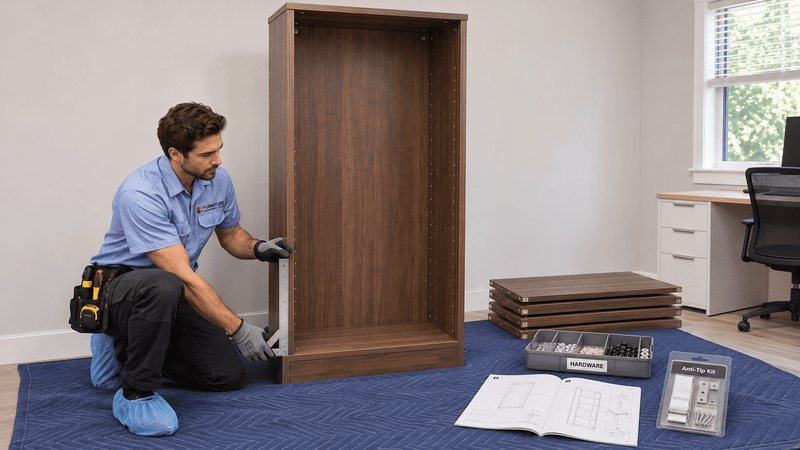
Assemble, level, and position tall furniture, then check manufacturer-specified wall attachment requirements before regular use. Anchoring decisions depend on furniture design, wall material, available attachment points, manufacturer hardware, floor conditions, and placement. Complete required attachments before loading or using the furniture.
- Level furniture before anchoring.
- Check the manufacturer’s anti-tip instructions.
- Identify suitable wall attachment points.
- Keep heavier contents lower when practical.
- Use hardware suited to the wall and furniture.
Assembly Comes Before Anchoring
Correct assembly creates the frame that wall attachment depends on; anchoring cannot repair a poorly built cabinet. Tall bookcases and heavy office storage cabinets may appear stable until drawers open, shelves fill, or floors slope. Weight shifting forward can expose problems that an empty unit hides.
Poor leveling, unsuitable wall hardware, and overloaded upper shelves can add avoidable risk. Skipping anti-tip instructions leaves another important part unfinished. A cabinet that looks straight may still have loose joints or uneven support.
Professional furniture assembly and anchoring bring these details into one organized process. Furniture Assembly Team helps customers across Washington, DC, Maryland, and Northern Virginia coordinate assembly, placement, leveling, and appropriate attachment. Services also extend across Delaware and Pennsylvania.
Square the Frame Before Attaching Hardware
Furniture squaring means aligning the frame so its corners and panels match the manufacturer’s intended shape. A twisted frame can affect shelf support, door alignment, and drawer travel.
Follow the assembly sequence rather than tightening every fastener immediately. Some designs require alignment before final tightening.
Check these components before wall attachment:
- Frame and back panels: Align panels and install specified back-panel fasteners.
- Shelves: Seat shelf supports fully and install fixed shelves as directed.
- Doors and drawers: Fit hinges, runners, stops, and any supplied drawer interlocks correctly.
- Fasteners and brackets: Check locations, orientation, and tightness without stripping the material.
- Base components: Install feet, plinths, supports, and leveling feet according to instructions.
Do not pull a crooked cabinet straight using its wall strap. Correct the assembly problem first.
Why Choose Our Team for Tall Furniture Assembly
Furniture Assembly Team provides bookshelf and storage unit assembly services, filing-cabinet assembly, and related home-office furniture setup. The team helps reduce furniture assembly guesswork through manufacturer-guided assembly, furniture leveling, drawer adjustment, and door alignment. It can also coordinate anti-tip hardware and wall attachment with final placement.
Professional project coordination helps customers approach tall furniture setup through an organized process. That matters when several storage pieces must fit beside desks or entertainment centers.
The Wall and Floor Both Matter
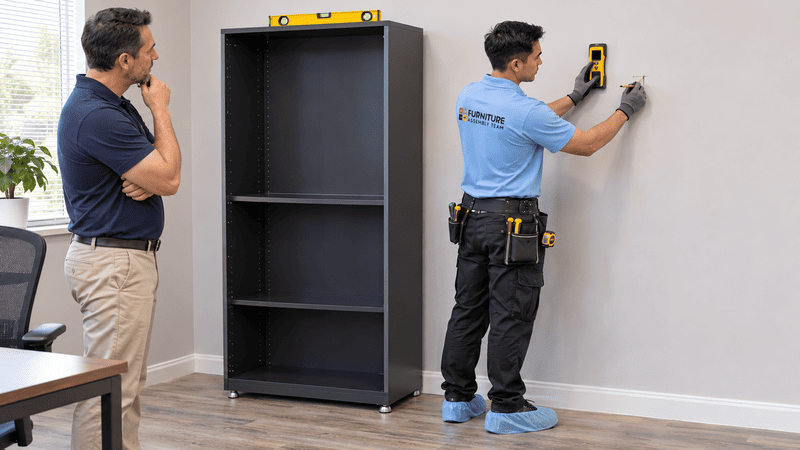
Wall material determines the attachment method, while floor conditions affect how the furniture sits before anchoring. Drywall, plaster, masonry, and wood framing need different consideration. Evaluate both surfaces, confirm suitable attachment locations, and resolve rocking before fastening furniture to the wall.
A painted wall does not reveal everything behind its surface. Drywall may cover wood framing, metal framing, or masonry. Plaster may conceal lath and studs.
Wall thickness also affects fastener selection and engagement. Never assume that a fastener supplied with furniture suits every wall.
| Condition | What to check | Why it matters |
|---|---|---|
| Drywall | Thickness, condition, framing, and approved attachment method | Wallboard alone may not support the specified connection |
| Plaster | Cracks, loose areas, lath, and framing locations | Brittle or damaged finishes complicate attachment |
| Masonry | Material type, surface condition, and specified fasteners | Brick, block, and concrete require suitable methods |
| Carpet | Compression beneath the base and leveling feet | Soft flooring can change how the unit sits |
| Hard flooring | Slopes, uneven joints, and base contact | Small differences can cause rocking |
| Baseboards | Furniture clearance and attachment geometry | A wall gap can change bracket or strap alignment |
Confirm Wall Clearance Before Drilling
Baseboards often prevent a cabinet from sitting directly against the wall. Do not overtighten straps to force the furniture across that gap. Use only manufacturer-compatible spacing or attachment methods. Never improvise extensions or alter brackets without suitable guidance.
Confirm stud locations where the attachment method requires framing. Also check the proposed drilling area for concealed wiring or plumbing concerns. Damaged drywall, crumbling plaster, or loose masonry needs further assessment before installation. Stop if you cannot establish a suitable connection.
For rental properties in Maryland or Delaware, obtain any required landlord approval before drilling. Agree on placement and wall repair responsibilities beforehand. Planning professional shelving installation and wall protection starts with suitable placement and attachment decisions, not promises of untouched walls.

Weight Distribution Changes Stability
Stored contents change how freestanding furniture behaves, especially when weight sits high or moves forward. Keep heavier items lower when furniture design and manufacturer instructions allow. Balanced loading helps, but it does not replace required anti-tip attachment or permit exceeding stated shelf and drawer limits.
Heavy books, files, and office supplies can turn an empty cabinet into a very different unit. Electronics can also concentrate weight in one area. Upper shelves increase the height of stored weight. Meanwhile, loaded drawers carry their contents forward when opened.
Use storage habits that suit the furniture:
- Place dense books and paper supplies on lower shelves where permitted.
- Follow each shelf’s and drawer’s stated load limit.
- Spread contents rather than concentrating everything on one side.
- Keep frequently used items within comfortable reach.
- Close one filing drawer before opening another.
- Keep children from climbing shelves, doors, or drawers.
Plan Storage Around Everyday Use
A Pennsylvania home office might combine reference books, printer paper, and small electronics. Put heavier supplies lower instead of filling the highest shelf first. Leave required ventilation space around electronics. Do not change shelf positions in ways that conflict with the assembly instructions.
Opening several loaded drawers can shift substantial weight forward. A drawer interlock, where supplied, supports intended use but does not replace required anchoring. Cabinet doors and pull-out components also change how forces act on the unit. Do not lean on open doors or use drawers as steps.
Furniture Assembly Team’s filing cabinet assembly services address drawer installation, alignment, leveling, and placement before daily filing begins.
Anti-Tip Hardware Needs the Right Attachment Point
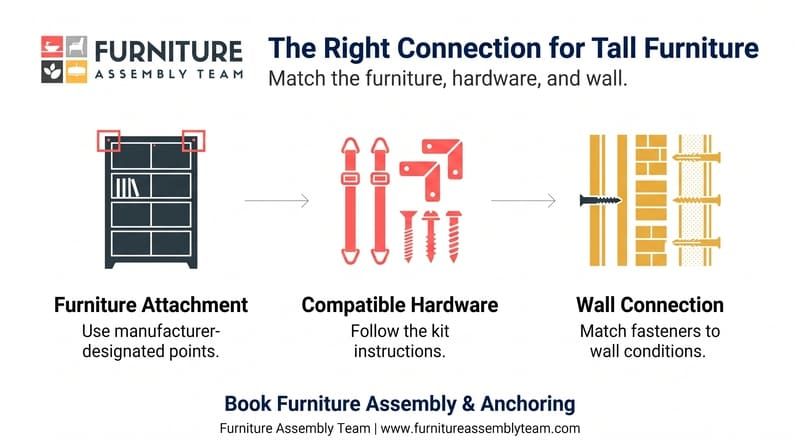
Anti-tip hardware connects designated furniture attachment points to a suitable wall location using the specified installation method. Straps, brackets, cables, and fasteners serve different systems. Follow the furniture and hardware instructions because neither appearance nor screw size establishes compatibility with a particular wall.
Anti-tip furniture anchoring connects suitable furniture attachment points to an appropriate wall location. Furniture design, wall type, hardware, and manufacturer instructions guide that connection.
The purpose is to help reduce tip-over risk. It does not eliminate every risk or excuse incorrect assembly and storage use.
Before installation, confirm:
- Furniture attachment points: Use designated locations, not arbitrary holes in thin back panels.
- Manufacturer-provided kits: Check that all required parts and instructions are present.
- Wall fasteners: Match them to the actual wall construction and specified connection.
- Stud attachment: Use suitable framing connections where the system calls for them.
- Masonry attachment: Select compatible fasteners and methods for the specific masonry material.
- Replacement hardware: Obtain manufacturer guidance or a documented compatible replacement.
Check Existing Anchors Before Reuse
An old wall anchor may have an unknown installation history. Its position may also miss the new furniture’s attachment points. Do not reuse existing anchors simply because they feel tight. Confirm their suitability, condition, and compatibility first.
Likewise, avoid swapping a supplied strap for an unrelated bracket without checking compatibility. Different systems have different attachment geometry and installation requirements.
Follow the stated strap tension or bracket alignment instructions. Do not use the connection to lift, straighten, or suspend freestanding furniture. Recheck connections according to manufacturer guidance and after any disturbance. Stop using a unit with loose hardware or visible attachment damage until someone addresses it.
Tall Furniture Behaves Differently by Design
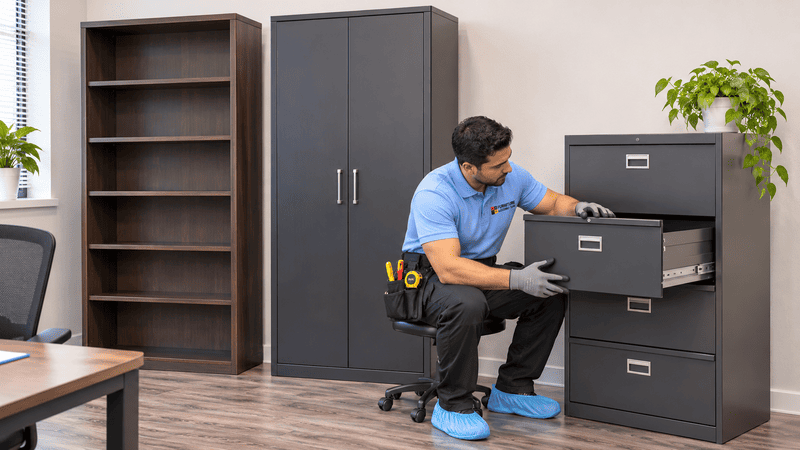
Open shelving, drawer cabinets, and entertainment centers create different placement and anchoring needs. Height matters, but width, base depth, moving components, and stored contents also affect behavior. Assess each piece individually rather than treating every tall or heavy unit as the same installation.
A wide shelving unit may still need anti-tip attachment. Extra width does not cancel the effects of climbing, uneven floors, or forward force.
Different furniture designs deserve different checks:
- Tall bookcases: Confirm frame squareness, shelf supports, base contact, and specified anchoring.
- Wide shelving units: Check support across the entire base and manufacturer-approved connections between units.
- Filing cabinets: Verify runners, drawer stops, interlocks, leveling, and required attachment.
- Freestanding cabinets: Check hinge adjustment, door clearance, and base support.
- Storage towers: Review narrow footprints, upper loading, and attachment access.
- Entertainment centers: Coordinate cabinet connections, equipment placement, ventilation, and anti-tip instructions.
Coordinate Storage With Desks and Screens
A Northern Virginia home office may place a storage tower beside a desk. Allow space for cabinet doors, chair movement, and access to attachment hardware. Coordinating storage with professional home office desk assembly helps establish the room layout before wall attachment.
For media furniture, distinguish between securing the stand and securing the television. Anchoring a TV stand does not automatically secure the screen. TV stand and entertainment center assembly should follow the furniture instructions alongside the television manufacturer’s separate requirements.
When Tall Furniture Setup Needs Professional Help
Professional help can reduce assembly and anchoring guesswork for heavy cabinets, tall bookcases, and large entertainment centers. It also supports accurate furniture leveling when floors slope or several units need alignment. Plaster, masonry, and complex manufacturer hardware add further planning needs.
A Washington, DC rental may require wall approval before work starts. A Delaware workplace may need several filing cabinets assembled without blocking everyday access.
Furniture Assembly Team can make multi-piece furniture projects easier to coordinate. Discuss unfamiliar wall conditions before work begins.
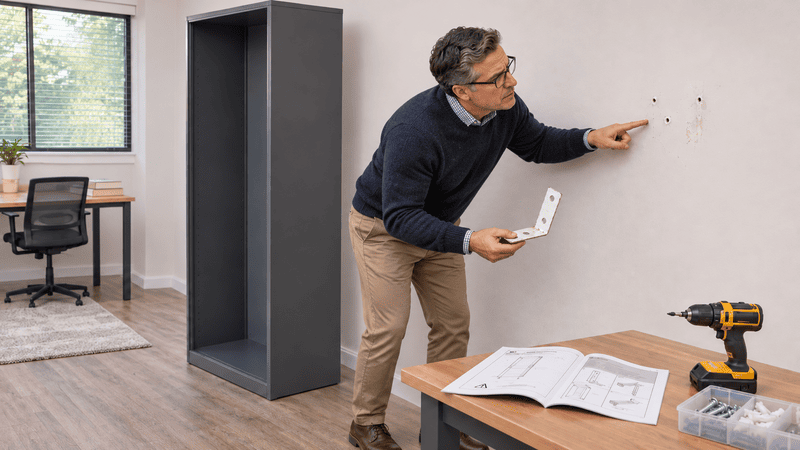
Anchoring Mistakes Create More Problems
Most anchoring problems begin before the first wall hole: incorrect assembly, poor placement, unsuitable hardware, or skipped leveling. Confirm the final position and attachment method first. Otherwise, correcting the setup later can require extra holes, replacement hardware, and repeated drawer or door adjustments.
Avoid these common mistakes:
- Skipping leveling: Correct rocking and uneven support before installing anti-tip hardware.
- Using unsuitable fasteners: Match wall hardware to both the wall and attachment system.
- Missing designated attachment points: Do not fasten into convenient but unsuitable furniture panels.
- Ignoring wall damage: Loose or crumbling material needs attention before attachment.
- Forgetting baseboards: Account for gaps without forcing the cabinet backward.
- Overloading upper shelves: Follow load limits and keep heavier contents lower where permitted.
- Opening multiple drawers: Close one drawer before opening another.
- Leaving loose brackets: Check fasteners and connections as instructed.
- Skipping later checks: Inspect disturbed or loosened hardware before continued use.
- Anchoring before final placement: Confirm clearance, alignment, and access before drilling.
Confirm Placement Without Stressing the Furniture
Check door swing, drawer clearance, outlets, and nearby desks before fastening the unit. Maintain any manufacturer-specified wall clearance. Do not drag anchored furniture to improve its position. Disconnect and reinstall the system according to its instructions.
If furniture rocks after loading, stop and investigate. Do not assume that tightening the wall strap will solve the underlying problem.
What Affects Assembly and Anchoring Costs
Costs depend on project scope, not simply whether a cabinet needs two wall connections.
Furniture type, height, size, and part count affect assembly work. Shelf quantities, drawers, doors, and complex fittings also influence the task.
Wall material, anchor requirements, existing damage, and floor conditions affect installation planning. Supplied manufacturer hardware may need checking for completeness and compatibility. Room access and the number of units matter too. Several filing cabinets require different coordination than one small bookcase.
Share product details, instructions, furniture quantities, and room photographs when requesting pricing. Include wall information and any rental restrictions. For Pennsylvania property managers, documenting each room’s furniture helps define the requested work. Clear project details support a more relevant quote.
Book Heavy Office Storage Cabinets Assembly
Coordinate assembly, leveling, furniture placement, wall assessment, manufacturer hardware, and anti-tip anchoring before regular use. Furniture Assembly Team helps organize these connected tasks for heavy office storage cabinets and other freestanding furniture.
Our professional furniture assembly services cover bookcases, storage units, filing cabinets, home-office furniture, and entertainment centers. Discuss the furniture model, wall conditions, and requested anchoring work when planning your project.
Plan Tall Bookcase and Freestanding Storage Assembly
Homeowners, renters, home-office users, landlords, property managers, and businesses can request assembly and anchoring assistance with Furniture Assembly Team. Services are available across Washington, DC, Maryland, and Northern Virginia, with service also available across Delaware and Pennsylvania.
Bring your product instructions, preferred placement, and wall details together. Then request a furniture assembly and anchoring quote based on your furniture and installation conditions.
Frequently Asked Questions
Should tall bookcases be anchored to the wall?
Follow manufacturer instructions and use suitable anti-tip attachment to help reduce tip-over risk.
How do you anchor furniture to drywall?
Identify the wall construction, then follow the furniture and hardware instructions for suitable framing attachment or approved wall fasteners.
Can filing cabinets tip when multiple drawers are open?
Yes, multiple open drawers can shift weight forward and increase tip-over risk.
Do heavy office storage cabinets need anti-tip hardware?
Check manufacturer instructions for heavy office storage cabinets and complete required anti-tip attachment before regular use.
When should I hire a professional furniture assembler?
Professional help is useful for heavy units, complex hardware, uneven floors, uncertain wall conditions, or coordinated multi-piece installations.