
Coffee Table and Side Table Assembly Services
Coffee table and side table assembly services ensure your living room furniture stands level, stable, and ready for daily use. Trained technicians handle hardware tightening, leg alignment, and surface protection so every piece feels secure underfoot and looks polished in the space. The result is safer placement, smoother function, and furniture that holds up far longer than rushed DIY setups.
- Improved table stability across uneven floors
- Safer furniture placement near seating and walkways
- Better room organization and traffic flow
- Reduced wobbling, squeaking, and early wear
- Faster furniture setup without trial-and-error mistakes
Unstable tables, stripped screws, and mismatched legs are some of the most common frustrations homeowners face after unboxing flat-pack furniture. A small misalignment quickly escalates into wobbling surfaces, scratched flooring, and drinks tipping over during everyday use. Over time, loose hardware loosens further, joints weaken, and the table becomes a hazard rather than a centerpiece.
Professional coffee table assembly services and side table setup services solve these issues from the start. Technicians bring the right tools, precise leveling techniques, and structural know-how to deliver a living room furniture installation that feels solid, aligned, and built to last.
Why Professional Coffee Table and Side Table Assembly Matters
Professional assembly matters because a coffee table or side table is used dozens of times a day, often supporting drinks, electronics, and decor. Proper setup prevents wobbling, protects joinery, and keeps hardware tight, giving you a stable surface that holds up under real living room conditions.
Precision Where It Counts Most
Even a two-millimeter misalignment on a tabletop can cause noticeable wobble. Trained assemblers torque bolts to manufacturer specifications, square frames before final tightening, and confirm that every leg shares the load equally.
Long-Term Value Over Short-Term Convenience
DIY assembly often skips small steps that matter most, such as washer placement, dowel seating, and cam-lock orientation. For a deeper breakdown of best practices, see this guide on stable living room setup techniques used by experienced technicians.
What Types of Coffee Tables and Side Tables Can Be Assembled
Almost every modern table style can be professionally assembled, from flat-pack particleboard pieces to solid hardwood designs with intricate joinery. Technicians handle lift-top, nesting, drum, drawer-based, and storage integrated tables, adapting tools and techniques to each construction type.
Popular Styles Handled Daily
- Lift-top and storage coffee tables
- Nesting and stackable side tables
- Drum, barrel, and pedestal designs
- C-shaped sofa-side accent tables
- Glass-top and marble-top tables
- Industrial metal-and-wood combinations
Browse retailer collections such as the IKEA coffee table range or the Ashley Furniture living room coffee tables to see the variety of constructions professionals routinely assemble.
Material-Specific Handling
Glass tops require suction lifters and edge protection. Solid wood needs careful pre-drilling to avoid splits. Particleboard demands precise cam-lock alignment to prevent stripping. Each material gets a tailored approach.
Who Benefits Most From Professional Living Room Furniture Setup
Anyone who values time, safety, and furniture longevity benefits from professional living room furniture assembly. It is especially valuable for households juggling busy schedules, property managers handling multiple units, and designers staging spaces on tight deadlines.
| Customer Type | Primary Benefit | Common Setting |
|---|---|---|
| Busy families | Time savings and safety | Family homes |
| Renters and students | Quick, damage-free setu | Apartments and condominiums |
| Property managers | Consistent quality at scale | Rental units and turnovers |
| Interior designers | Showroom-quality finish | Model homes |
| Office facilities teams | Polished common areas | Office lounges and waiting areas |
For multi-unit property managers, coordinated assembly support like the kind offered through property management furniture assembly programs keeps turnover timelines tight and predictable.
How Proper Assembly Improves Stability and Everyday Use
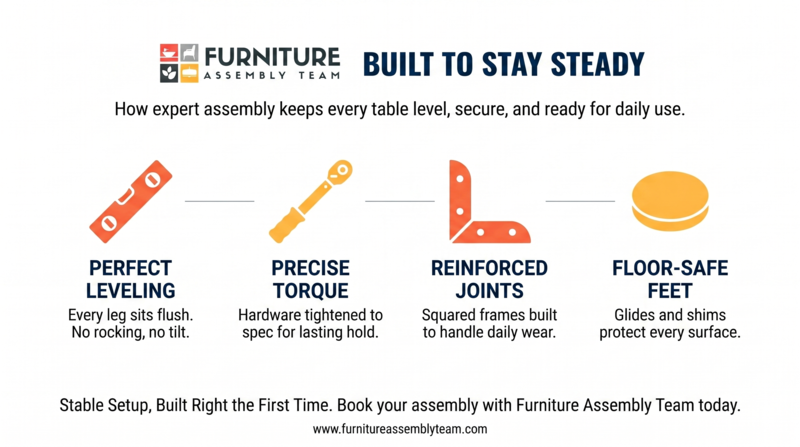
Proper assembly improves stability by ensuring every joint is square, every bolt is torqued evenly, and every leg sits flush with the floor. This balance prevents rocking, distributes weight correctly, and keeps the tabletop level even under heavy daily use.
Preventing Wobbling on Uneven Flooring
Older homes and rental units often have slightly uneven floors. Technicians use adjustable glides, shims, and leveling feet to compensate, eliminating the rocking motion that loosens hardware over time.
Reinforcing Joints for Daily Wear
Coffee tables endure constant contact, from feet propped up after work to children climbing during play. Reinforced corner brackets, properly seated dowels, and correctly oriented cam locks all contribute to a table that stays tight for years.
Common Problems Caused by Incorrect Table Assembly
Incorrect table assembly leads to wobbling legs, stripped hardware, cracked panels, and scratched flooring. These problems usually appear within weeks and worsen quickly, shortening the furniture's lifespan and creating safety risks in high-traffic living areas.
Frequent issues include:
- Loose or cross-threaded screws
- Misaligned legs causing diagonal wobble
- Damaged cam locks from over-tightening
- Cracked tabletops from uneven pressure
- Scratched floors from unprotected leg bases
Many of these mirror the structural shortcuts that cause
sofa assembly mistakes and early wobbling, where a single rushed step compromises the entire piece.
How Coffee Table Placement Affects Living Room Functionality
Coffee table placement directly affects how a living room flows, looks, and feels. Proper spacing improves walking paths, conversation comfort, and access to seating, while poor placement creates obstacles and visual clutter that disrupt the entire room.
Choosing the Right Table Size for Small Spaces
In apartments and condominiums, a nesting set or slim rectangular design often works better than a bulky square. Reference resources like standard coffee table dimensions help homeowners pick the right footprint before assembly day.
Balancing Decorative and Functional Placement
Leave roughly 14 to 18 inches between the sofa and the coffee table for legroom. Side tables should sit level with the sofa armrest for comfortable reach. These small details transform daily usability.
Why Proper Hardware Installation Prevents Early Furniture Damage
Proper hardware installation prevents early damage by distributing stress evenly across joints, panels, and fasteners. When screws are torqued correctly and washers are placed in the right sequence, the table resists daily forces without loosening or cracking.
Protecting Hardwood and Tile Flooring
Felt pads, rubber feet, and proper leveling protect both the floor and the table base. Skipping this step often leads to gouges on hardwood and chipped tiles, especially when tables are dragged rather than lifted.
Preventing Stripped Threads and Wood Splits
Pre-drilling pilot holes in solid wood and using a hand finish on cam locks avoids two of the most common failures. For broader living room projects, pairing table assembly with TV stand and entertainment center installation ensures the entire seating zone is built to the same standard. Industry safety overviews such as these essential furniture safety requirements reinforce why hardware integrity matters.
Mistakes to Avoid During Coffee Table and Side Table Assembly
The biggest mistakes during table assembly include skipping the instructions, over-tightening hardware too early, ignoring leveling, and assembling on hard floors without protection. Each shortcut creates structural weaknesses that surface during everyday use.
Avoid these common errors:
- Tightening all screws before the frame is squared
- Forcing dowels into misaligned holes
- Reusing stripped or damaged hardware
- Assembling on carpet, which hides uneven legs
- Skipping the manufacturer's torque guidelines
Resources from specialized providers like
coffee table assembly specialists often highlight these same pitfalls as the leading causes of warranty claims.
How to Prepare Your Living Room Before Furniture Installation
Preparing your living room beforehand speeds up installation, protects your floors, and prevents last-minute surprises. A clear, clean, and measured space lets technicians focus on precision rather than logistics.
Clearing and Measuring the Space
Move existing furniture, vacuum the area, and confirm the new table fits the planned spot. If you are relocating, planning resources such as realistic moving timelines by home size help coordinate assembly around delivery windows. For larger sectional moves, services like sectional sofa disassembly for apartment moves pair well with new table installation on the same day.
Protecting Floors and Walls
Lay down a clean blanket or assembly mat, keep pets and children out of the workspace, and have an outlet accessible for power tools. These small steps prevent scratches and speed the process. Whole-home projects often benefit from coordinated home furniture assembly services that handle multiple rooms in a single visit. Office environments can apply similar prep strategies, like those outlined in this guide to storage cabinet placement for organized offices.
Get Professional Coffee Table and Side Table Assembly Support
Ready for a stable, perfectly aligned living room setup?
Furniture Assembly Team delivers safer installation, precise leveling, and improved room functionality so every table feels solid from day one. Whether you are furnishing a new apartment, refreshing a family home, or staging a model unit, our technicians bring the tools and experience to get it right the first time. We also coordinate larger projects involving home office furniture setup, commercial recreational installations, and wall-mounted hoop installation. Reach out to our assembly team to schedule your service.
Frequently Asked Questions
How long does coffee table assembly usually take?
Most coffee tables take 30 to 60 minutes for a trained technician, depending on the design and hardware count. Larger lift-top or storage models with drawers may take up to 90 minutes. Side tables generally finish in 20 to 40 minutes.
Why does my side table wobble even after assembly?
Wobbling usually points to uneven legs, loose hardware, or an unlevel floor. A quick adjustment with leveling feet or shims often solves it, but persistent wobble may signal a structural alignment issue that needs professional correction.
Does professional assembly really improve furniture durability?
Yes, professional assembly significantly extends furniture lifespan. Correct torque, squared frames, and properly seated joinery reduce stress on every component, which prevents the gradual loosening that leads to cracks and breakage.
How can I protect my flooring during table installation?
Lay down a soft blanket or assembly mat before unboxing, and never drag a finished table across the floor. Felt pads or rubber glides on each leg add long-term protection against scratches and dents.
What tools are typically needed for coffee table assembly?
A standard kit includes Phillips and flat screwdrivers, an Allen wrench set, a rubber mallet, a level, and a cordless drill with adjustable torque. Professionals also bring suction lifters for glass tops and pre-drilled bits for hardwood.
Does table placement affect long-term stability?
Yes, placement matters more than most people realize. Tables on uneven floors, near heating vents, or in high-traffic walkways experience more stress, which loosens hardware faster and shortens overall lifespan.
How often should table hardware be checked and tightened?
Inspect hardware every six to twelve months, especially on tables used daily. A quick tightening pass keeps joints firm, prevents wobble from developing, and helps catch small issues before they damage the structure.