
Dining Table and Chair Assembly Services
Dining table and chair assembly services include building, aligning, leveling, tightening, and positioning your dining furniture so it feels secure and works properly every day. Professional setup helps prevent wobbling, unsafe seating, surface damage, and premature wear while improving stability, safety, and long-term usability.
- Better table stability for daily meals and gatherings
- Safer seating setup with properly tightened chair frames
- Correct alignment and leveling on uneven floors
- Reduced risk of scratches, stripped hardware, and assembly damage
- Longer-lasting performance through accurate installation
A
dining set can look perfect in the box and still turn into a daily frustration after assembly. A loose frame, uneven table legs, or badly aligned chair hardware can lead to wobbling, discomfort, scratched floors, and safety concerns that get worse over time.
Furniture Assembly Team solves those problems with professional dining room furniture setup that focuses on stability, correct fittings, surface protection, and practical placement, so your furniture feels solid from the first meal to years of regular use.
Why Professional Dining Table and Chair Assembly Matters
Professional dining table and chair assembly matters because the quality of setup directly affects safety, comfort, and furniture lifespan. A table that looks finished can still be out of level, and a chair that feels stable at first can loosen quickly if hardware is unevenly tightened or the frame is slightly twisted.
Stability starts at the frame
Dining furniture handles repeated movement, shifting weight, and constant use. In apartments, small floor variations can make a table rock immediately. In family homes, daily use by kids and adults adds more stress to joints and fasteners. Professional furniture assembly helps square the frame, distribute weight correctly, and reduce the kind of movement that leads to wobble.
Correct setup protects your investment
Many modern sets arrive with multiple hardware types, thin veneers, or heavy tops that need careful handling. That is why broader home furniture assembly support is often the smarter choice when you want a reliable result without trial and error in the middle of your kitchen or dining room.
What Is Included in Dining Furniture Assembly Services
Dining furniture assembly services typically include unpacking, part checks, table and chair assembly, frame alignment, hardware tightening, leveling, placement, and a final stability review. The goal is not just to put pieces together, but to make sure the finished set is safe, balanced, and ready for daily use.
A professional dining table assembly service usually covers both structure and usability. That means the installer looks beyond whether the parts fit and focuses on whether the furniture performs well once it is in place.
- Unboxing and confirming parts, fasteners, and instructions
- Protecting floors and furniture surfaces during assembly
- Building table bases, tops, leaves, and support components
- Completing dining chair assembly with even leg alignment
- Tightening screws and bolts for structural integrity
- Checking table leveling and stability on the actual floor
- Positioning the set for clearance, traffic flow, and comfort
- Final inspection for wobble, rocking, and loose fittings
For clients who want a deeper look at seating performance, this guide on dining chair assembly tips for stable seating and long-term use explains why small alignment details make a big difference in everyday comfort.
Who Benefits Most From Professional Dining Furniture Setup
Professional dining furniture setup benefits anyone who wants a stable, safe, and polished result, especially when the furniture is heavy, the room is tight, or the set will get frequent use. The value becomes even clearer in busy homes and commercial spaces where wobble and wear show up fast.
Typical spaces where professional setup helps most
| Space | Why professional setup helps |
|---|---|
| Apartments | Tight layouts make maneuvering and leveling harder, especially with pedestal or extension tables. |
| Family homes | Daily meals, homework, and gatherings put constant strain on joints, screws, and chair frames. |
| Restaurants | High traffic means every chair must feel secure and every table must sit flat for service. |
| Cafes | Compact table spacing requires precise placement and balance to avoid crowding and instability. |
| Office dining spaces | Break rooms need clean layout planning, safe seating, and dependable hardware under repeated use. |
| Rental properties | Fast turnover makes durable setup important because poorly assembled furniture fails sooner. |
Shoppers often choose from broad catalogs such as IKEA dining chairs or large kitchen and dining tables collections, but choosing the right product is only half the equation. Proper installation is what turns those parts into furniture that actually feels dependable.
How Proper Assembly Improves Dining Furniture Stability
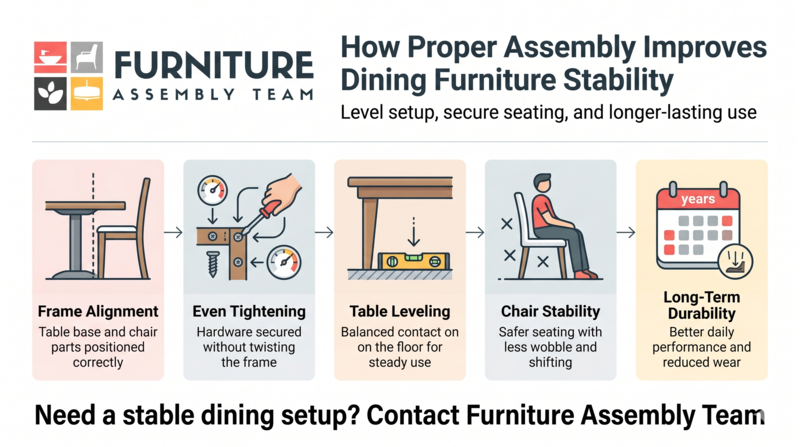
Proper assembly improves dining furniture stability by creating even contact points, balanced weight distribution, and consistent tension across the frame. When the table base is squared correctly and chair hardware is tightened in the right sequence, the whole set handles daily use with less movement and less long-term stress.
Balanced hardware prevents movement
A common DIY mistake is tightening one side fully before the rest of the frame is aligned. That can twist the structure and leave one leg slightly off, even if the furniture looks fine from a distance. Professional assemblers tighten in stages, recheck alignment, and correct small shifts before the final torque is applied.
Leveling affects safety
Table leveling and stability matter for more than appearance. An uneven dining table can cause drink spills, plate movement, and extra stress on joints. In commercial environments, stability is part of a broader safety mindset that aligns with standards shaped by the
Consumer Product Safety Improvement Act, especially when furniture is used repeatedly by different people throughout the day.
Common Problems With Poorly Assembled Dining Furniture
Poorly assembled dining furniture often develops wobble, loosening hardware, uneven seating, scratched flooring, and premature wear. These problems may seem minor during setup, but they usually get worse with repeated use, especially in busy dining rooms, rental properties, restaurants, and office dining spaces.
The most common issues usually come from rushed installation or skipped checks.
- Chair legs that do not sit evenly on the floor
- Table bases assembled slightly off center
- Screws overtightened into soft materials or left too loose
- Leaves or extension mechanisms that do not align properly
- Missing pads or protection that lead to floor scratches
- Weight concentrated unevenly across the tabletop
- Frames that creak because joints were not squared before tightening
The same pattern shows up in other room installations too. Problems like inaccurate leveling and silent structural strain are similar to those described in
kitchen cabinet installation mistakes that silently damage your home and budget, which is why professionals focus on precision instead of just speed. Even other providers of
dining tables and chairs assembly highlight leveling, floor protection, and frame squaring because those details are what keep furniture usable over time.
How Dining Chair Assembly Affects Safety and Comfort
Dining chair assembly affects safety and comfort because even slight errors in frame alignment can change how a chair bears weight. When legs are uneven or bolts are tightened out of sequence, the chair may creak, flex, or rock under pressure, making everyday seating less secure and less comfortable.
Why comfort depends on alignment
A chair can have a cushioned seat and still feel wrong if the frame is under stress. In family homes, that often shows up as a subtle side to side sway. In cafes and restaurants, customers notice it immediately because the chair shifts when they lean back or turn.
Why safety depends on consistent tightening
Dining chair assembly is not just about attaching the seat to the legs. It involves checking rail alignment, back support position, and even pressure across all contact points. The same care used in TV stand and entertainment center assembly services applies here too, because both jobs depend on stable load support and correct positioning rather than guesswork.
How Table Leveling Impacts Everyday Dining Experience
Table leveling impacts everyday dining experience by making meals, work, and conversation feel more comfortable and predictable. A level table supports dishes evenly, keeps chairs from being awkwardly positioned around one weak corner, and reduces the constant micro-movements that make a dining area feel cheaply assembled.
Better function in real life
In apartments, leveling matters because floors often slope more than expected. In family homes, a slightly uneven table becomes obvious during homework, board games, and shared meals. In office dining spaces, it affects laptops, coffee cups, and quick meetings just as much as lunch service.
Less strain over time
When a table sits evenly, the base carries weight more naturally. That reduces stress on connection points and helps extend the usable life of the furniture. For customers comparing room by room solutions, the full range of furniture installation services makes it easier to coordinate stable setup across the home or workplace.
Mistakes to Avoid When Assembling Dining Furniture
The biggest mistakes to avoid when assembling dining furniture are rushing the process, tightening hardware too early, ignoring floor conditions, and skipping final stability checks. These errors can turn a brand new set into an everyday annoyance, even when the furniture itself is well made.
A careful setup avoids the problems below.
- Building directly on hard floors without surface protection
- Mixing similar screws or washers during unpacking
- Tightening one leg or rail completely before frame alignment
- Assuming factory-drilled holes guarantee perfect leveling
- Forgetting to recheck chair stability after the first sit test
- Placing heavy tabletops without enough support or handling help
- Leaving packaging and room clutter in the work area
Brand-specific hardware can be especially confusing, which is one reason many people seek specialized help for flat-pack products like
IKEA furniture assembly instead of forcing pieces together and hoping for the best. If the dining area is part of a move, clearing dishes, glassware, and pantry overflow first with a simple
kitchen packing guide can also prevent avoidable damage during installation.
How to Prepare Your Dining Area Before Installation
Preparing your dining area before installation makes the assembly faster, safer, and cleaner. The best approach is to clear enough floor space, protect nearby surfaces, confirm delivery contents, and think through final furniture placement before the first bolt is tightened.
A little preparation helps the installer focus on precision instead of working around obstacles.
- Remove rugs, fragile décor, and breakables from the immediate area
- Measure doorways, table clearance, and chair pull-back space
- Set aside the boxes so parts stay organized and visible
- Keep children and pets away from the work zone during setup
- Identify uneven flooring or walls that may affect placement
- Plan disposal or removal for older pieces before the new set arrives
When kitchen and dining furniture installation overlaps with larger room changes, sequencing matters. Work such as kitchen cabinets installation should usually happen before final table placement, while old built-ins or bulky units may need kitchen cabinets disassembly first so the area is truly ready. If packaging or unwanted furniture is piling up, organized disposal and recycling planning keeps the room usable instead of turning it into a storage zone.
Get Professional Dining Table and Chair Assembly Support
Professional help gives you a dining set that feels stable, safe, and ready for daily use instead of almost finished. Furniture Assembly Team focuses on correct installation, clean positioning, and long-term usability, which matters just as much in a breakfast nook as it does in a restaurant or office break room.
Book a setup that lasts
If you appreciate thoughtful placement like these
storage cabinet placement tips for cleaner and more organized offices and value long-term care the way people do when
weatherproofing a basketball hoop for year-round use, it makes sense to bring that same mindset to your dining furniture. When you are ready,
contact Furniture Assembly Team to schedule a professional setup that supports daily comfort and durability.
Frequently Asked Questions
How long does dining furniture assembly usually take?
Most standard dining sets take one to three hours, depending on table size, chair count, hardware complexity, and room access. Extension tables, heavy tops, and commercial setups often take longer because alignment and leveling require more care.
Do dining chairs really need professional assembly?
They often do, especially when several chairs need to feel equally stable. Small differences in leg alignment or bolt tension can make one chair feel solid and another feel loose, even from the same set.
Why does a dining table wobble after setup?
A wobble usually comes from uneven floor contact, misaligned legs, or hardware tightened in the wrong sequence. Sometimes the problem is not the floor alone, but a frame that was slightly twisted during assembly.
What tools are needed for proper dining furniture installation?
Proper installation usually requires the correct hex keys, screwdrivers, socket tools, soft surface protection, and sometimes leveling aids. Just as important as the tools is knowing when to partially tighten, adjust, and then fully secure the frame.
Is table leveling really that important?
Yes, because leveling affects comfort, balance, spill prevention, and long-term structural stress. A table that sits unevenly often puts extra pressure on joints and makes everyday dining less pleasant.
How can I maintain dining furniture stability after assembly?
Check hardware periodically, avoid dragging the furniture across the floor, and address small movement early before it becomes a larger issue. Keeping the set on an appropriate surface and using it within its intended limits also helps.
Can professional assembly improve furniture lifespan?
Yes, because correctly aligned frames and properly tightened hardware usually wear more evenly over time. Professional setup reduces the chance of stripped fasteners, uneven load pressure, and damage caused by avoidable DIY mistakes.