
How a Professional Furniture Set Up Service Transforms Your Empty House into a Ready to Live Home
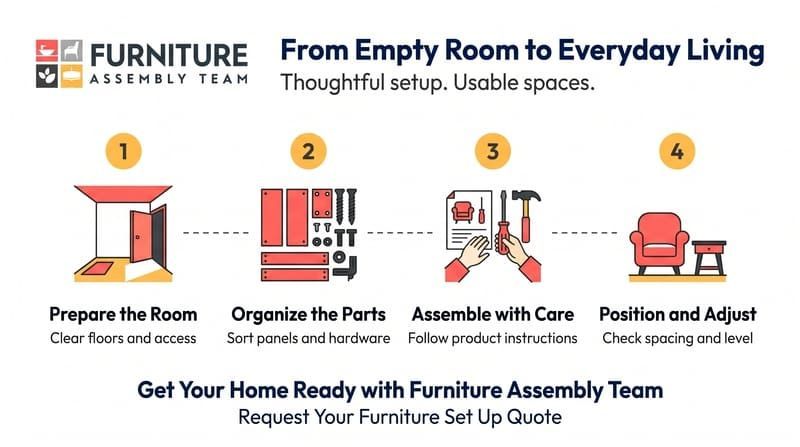
Professional home furniture setup can include preparing rooms, organizing components, assembling pieces, positioning furniture, leveling items, adjusting hardware, and final checks. Scope depends on furniture quantity, room size, access, part count, and product complexity. Floor conditions, wall clearance, and household priorities also shape the work.
- Prepare rooms before furniture arrives.
- Assemble large pieces near their intended locations.
- Organize flat-pack hardware before starting.
- Position furniture around doorways and daily walking routes.
- Complete leveling, hardware adjustment, and final checks.
An Empty Room Needs a Setup Plan
An empty home needs a furniture plan before assembly starts, not just space for delivery boxes. A furniture set up service helps coordinate that plan. Otherwise, cartons, hardware bags, panels, mattresses, furniture frames, and partially assembled pieces can quickly take over rooms.
Poor preparation makes the problem worse. A wardrobe built downstairs may not fit through an upstairs doorway. Meanwhile, missing hardware, reversed panels, and rushed placement can leave several rooms unfinished. Professional help brings assembly, placement, adjustments, and room-by-room completion into one coordinated project.
For a Washington, DC apartment, that might mean completing the bedroom before opening every living room carton. In a Maryland house, it could mean keeping delivery paths clear while organizing furniture by room.
Prepare the Room Before Opening Boxes
Measure both the furniture footprint and the space needed to build it. Also, check how parts will travel through doorways, stairs, and narrow landings.
- Clear floor space: Remove loose belongings and create enough working room around the planned furniture location.
- Check delivery paths: Measure doorways and stairs, including turns and overhead clearance.
- Confirm room measurements: Allow space for drawers, doors, chairs, and storage compartments to open.
- Plan furniture locations: Keep electrical outlets, windows, and everyday walking routes accessible.
- Prepare packaging areas: Keep cartons together without blocking exits or neighboring rooms.
- Protect floors: Use suitable protective material beneath components and follow product handling instructions.
- Organize hardware: Keep each item's instructions, labeled parts, and fastener bags together.
Large furniture often needs assembly near its intended location when practical. Completed wardrobes and storage beds may be too bulky for later movement. However, some wardrobes require extra clearance for upright positioning. Check the instructions before choosing the assembly spot.
A furniture set up service helps assemble, position, level, adjust, and prepare household furniture for use. The work follows product instructions, room layout, and property conditions.
For coordinated projects, residential furniture setup services can bring these preparation and assembly tasks into one scope.

Bedrooms Usually Take the Most Assembly
Bedroom setup often involves several connected tasks because beds, storage furniture, and walking space must work together. Bed frames need their specified supports, while dressers depend on aligned drawers. Wardrobes add doors, hinges, shelves, and clearance requirements that call for a different assembly sequence.
Start with the largest pieces and plan their relationship before building. For example, a storage bed needs room for its drawers or lifting mechanism.
Likewise, placing a dresser opposite the bed requires more than checking whether both pieces fit. Someone must still open drawers and walk through the room.
Match the Assembly Method to Each Piece
- Bed frames and headboards: Follow the specified order for rails, center supports, legs, slats, and headboard connections.
- Storage beds: Check drawer tracks or lifting hardware before adding the mattress, as the instructions direct.
- Dressers and drawer units: Align the frame and drawer slides before fitting every drawer.
- Nightstands: Coordinate height, placement, and access to nearby outlets.
- Wardrobes and closet systems: Plan hanging space, shelves, hinges, door travel, and any specified wall attachment.
- Shelving and mirrors: Confirm placement and use the product's specified brackets or attachment method where applicable.
Bed frame assembly and wardrobe assembly use different connectors and support systems. Therefore, the same build order rarely suits both. Dresser assembly also requires attention to drawer fronts and slide positions. A frame that sits unevenly can complicate adjustments.
For a Northern Virginia move-in, bedroom priorities might include a usable bed and accessible clothing storage first. Decorative placement can follow once those essentials work.
Dedicated wardrobe and closet assembly services help coordinate these storage components within the available space.
Flat Pack Boxes Hide the Real Work
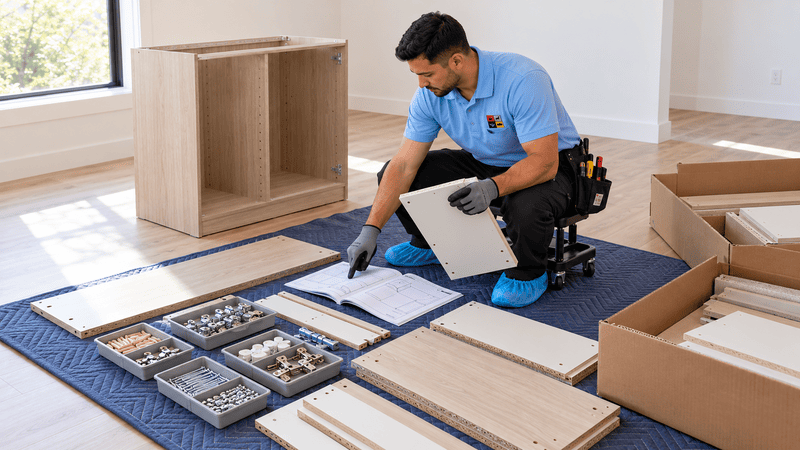
Flat-pack furniture needs careful sorting because similar panels and fasteners can serve different purposes. Clear organization helps preserve the intended assembly order and supports accurate component alignment. Although many items are straightforward, larger builds can involve several hardware types and repeated adjustment steps.
Flat pack furniture assembly starts with identifying parts, not tightening the first screw. Compare labels against the instructions before spreading components across the floor.
Next, separate hardware by item and step. This matters especially when several furniture boxes contain nearly identical screws.
Give Every Component a Clear Place
- Panels and part labels: Check finished edges, predrilled holes, and front-to-back orientation.
- Cam locks, dowels, and connector bolts: Sort by type and confirm their positions before joining panels.
- Drawer slides and hinges: Identify matching sides and specified mounting holes.
- Back panels and shelves: Follow their installation order rather than treating them as finishing details.
- Fastener bags and instructions: Keep each set beside its matching furniture components.
- Leveling feet: Identify adjustment points before the furniture reaches its final position.
One reversed panel can hide a needed hole or put a finished edge inside the unit. Consequently, later steps may no longer fit. Similarly, an incorrect fastener can interfere with a connector or damage a panel. Stop when parts resist unexpectedly instead of forcing them together.
Keep packaging until you have checked the parts and completed the agreed setup. Small brackets can remain tucked inside cardboard folds. A landlord furnishing a Delaware rental may have several matching cabinets and dressers. Keeping each build separate helps prevent hardware mix-ups.
Living Spaces Need More Than Furniture Placement
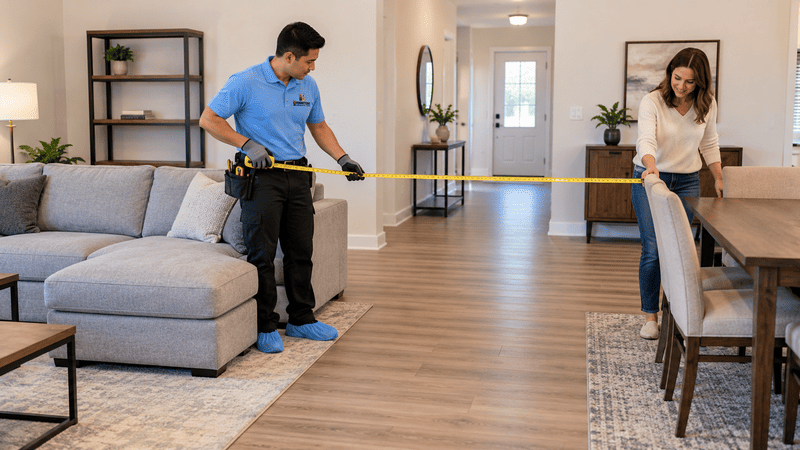
Living and dining furniture needs assembly and placement that support daily movement, seating, storage, and access. Sofas may need legs or frame connections, while sectionals need the correct arrangement. Tables, chairs, and cabinets also require enough surrounding space for normal household use.
A room can look finished while still feeling awkward. A sectional might interrupt the route to a doorway, for instance. Meanwhile, dining chairs need room to pull back. A sideboard should open without forcing people to move the table.
Arrange Seating and Dining Pieces Around Daily Use
- Sofas and sectionals: Confirm the layout, attach specified components, and check connectors before final positioning.
- Dining tables and chairs: Follow joint assembly instructions, then check placement with chairs pulled out.
- Sideboards and cabinets: Allow doors and drawers to open fully.
- Console tables: Keep entry routes usable rather than filling every available wall space.
- Bookcases, shelving, and storage units: Plan access, floor contact, and wall clearance before loading them.
For connected seating, professional sofa and sectional assembly addresses component connections alongside the planned room configuration. Likewise, dining table and chair assembly helps coordinate the furniture with its intended eating space. Placement should also consider window access and nearby outlets. Avoid trapping cords beneath legs or blocking controls behind large storage units.
A Pennsylvania family furnishing an open living area may need separate paths for dining, seating, and storage. Planning those routes prevents unnecessary repositioning.
Broader residential furniture installation services can also be relevant when a furnishing project includes several household furniture types.
Small Assembly Errors Slow the Whole House Down
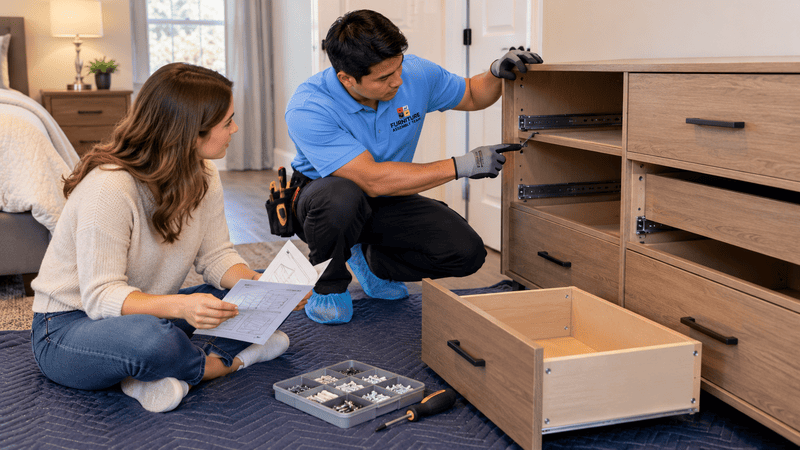
Small assembly mistakes create rework when they affect parts that later steps depend on. A reversed panel can prevent drawer installation, for example. Incorrect hardware or skipped supports may require partial disassembly before the project can continue according to the product instructions.
Rushing usually becomes less productive when several pieces remain unfinished. Instead, complete each build stage and check it before moving forward. Some errors stay hidden until the final steps. A misplaced drawer slide might only become obvious when the drawer will not close.
Check These Details Before Moving Forward
- Wrong assembly room: Confirm that completed furniture can reach its intended location before building elsewhere.
- Reversed panels: Match labels, holes, and finished edges to the diagrams.
- Incorrect screws: Compare length and type rather than assuming similar fasteners are interchangeable.
- Overtightened fasteners: Follow instructions and avoid forcing connectors beyond their intended fit.
- Skipped supports: Install specified center legs, braces, back panels, and other support pieces.
- Misaligned drawer slides: Check orientation and mounting positions before fitting drawers.
- Poor hinge adjustment: Check door gaps and movement using the specified adjustment points.
- Ignored leveling feet: Adjust them where provided and check how the furniture contacts the floor.
- Premature movement: Avoid moving incomplete furniture unless the instructions require repositioning.
- Early packaging disposal: Check for remaining hardware and small components first.
- Blocked pathways: Keep room circulation in mind throughout the build.
- Unplanned final placement: Confirm the footprint before committing to a large assembly location.
Leveling and hardware adjustment are finishing tasks, not substitutes for correct assembly. First, check the build against its instructions. Then, assess drawer movement, door operation, and furniture placement. Wall attachment should follow manufacturer guidance where specified.
If a part appears damaged or hardware is missing, pause the affected step. Improvised substitutes can create further problems.

Professional Help Makes Sense on Bigger Setups
Professional furniture assembly can reduce assembly workload when several rooms, large pieces, or complex hardware compete for attention. It helps keep furniture projects organized and supports accurate component alignment. Assistance can also help households coordinate limited assembly space, stair access, and move-in priorities.
Consider help for heavy wardrobes, storage beds, multi-drawer dressers, sectionals, or several flat-pack items. Limited time can make even straightforward builds difficult to coordinate. New home move-ins often combine furniture deliveries with unpacking and household routines. Similarly, rental property furnishing may involve repeated pieces across several rooms.
For these projects, professional assistance may reduce avoidable assembly errors. It can help make several rooms ready for use more efficiently.
What Affects Home Furniture Setup Costs
Assembly costs depend on project scope, the actual furniture, property conditions, and requested services. A piece count alone cannot describe every project.
| Cost factor | Why it affects the work |
|---|---|
| Number of pieces and rooms | More items require additional sorting, assembly, and coordination. |
| Furniture type and size | Large wardrobes and storage beds involve different handling and assembly steps. |
| Part count and hardware complexity | More panels and connectors increase the number of assembly stages. |
| Drawer systems, doors, and hinges | These components need installation, alignment, and adjustment. |
| Stairs and room access | Narrow routes can affect component handling and the assembly location. |
| Available assembly space | Tight rooms can limit how parts are organized and positioned. |
| Existing assembly errors | Corrections may require inspection and partial disassembly. |
| Furniture placement | Final positioning requirements affect the agreed scope. |
| Specified wall attachment | Product guidance and wall conditions affect attachment requirements. |
Share product links, quantities, room locations, and access details when requesting a quote. Also, identify anything already assembled incorrectly.
For furnished rentals in Maryland or Delaware, list each room's furniture separately. This gives the provider a clearer picture of the requested work.
Why Choose Our Team for Home Furniture Setup
Furniture Assembly Team provides residential furniture assembly and room setup support for homeowners, renters, landlords, and property managers. Its professional home furniture assembly services cover beds, dresser setup, wardrobe assembly, shelving, sofas, sectionals, dining furniture, and flat-pack pieces.
Room by room coordination helps reduce furniture setup guesswork. It also makes multi-piece projects easier to organize. Discuss furniture leveling, hardware adjustment, and final positioning when defining the work. Include clean work practices, packaging organization, and project coordination in that conversation.
The aim is practical: help homeowners move from delivered boxes to usable furniture without managing every assembly step themselves.
Book a Furniture Set Up Service
A furniture set up service can coordinate room preparation, component organization, assembly, placement, leveling, hardware adjustment, and final setup. Start with a clear furniture list and your household's priorities.
Furniture Assembly Team's professional furniture assembly services support single-room projects and larger residential setups.
Get Your Newly Furnished Home Ready for Everyday Use
Homeowners, renters, landlords, and property managers across Washington, DC, Maryland, and Northern Virginia can request help with residential furniture setup. Service is also available across Delaware and Pennsylvania.
Share your furniture details, property access, and preferred room layout with Furniture Assembly Team. Then, request a home furniture setup quote for the work your home needs.
Frequently Asked Questions
What does a furniture set up service include?
A furniture set up service can include assembly, placement, leveling, hardware adjustment, and final checks.
Should rooms be cleared before furniture assembly?
Yes, clear working space and access routes, while keeping boxed furniture near its intended room.
Can professionals assemble beds and dressers?
Yes, professional assemblers can build bed frames, storage beds, dressers, and nightstands according to product instructions.
Can assemblers set up wardrobes and shelving?
Yes, setup can include wardrobes, closet systems, bookcases, and shelving, with attachment following product guidance where specified.
Do professionals assemble flat-pack furniture?
Yes, flat-pack assembly involves organizing panels and hardware, following instructions, and checking component alignment.
Can furniture be positioned after assembly?
Final positioning depends on furniture size, construction, access, floor conditions, and manufacturer handling instructions.
What affects home furniture setup costs?
Costs depend on furniture quantity, complexity, room access, assembly space, corrections, placement, and requested installation tasks.
When should I hire professional furniture assemblers?
Consider professional help for multiple rooms, heavy furniture, complex hardware, limited space, or demanding move-in priorities.