
Bunk Bed Assembly Guide for Safer Kids’ Rooms and Shared Bedrooms

Safer bunk bed assembly depends on a stable frame, secure guardrails, correct ladder placement, the right mattress fit, and enough clearance for daily climbing and movement. The best setup will vary based on your child's age, room size, ceiling height, bed style, hardware quality, mattress thickness, and whether the bunk is going into a home, apartment, shared bedroom, rental property, or family guest room.
- Check every bolt, bracket, and connector for a tight, stable frame before kids climb in.
- Confirm guardrail height, ladder grip, and mattress fit match the manufacturer's specifications.
- Plan furniture layout carefully in small kids' rooms and shared bedrooms.
- Place bunk beds away from windows, ceiling fans, light fixtures, and heating vents.
- Hire professional bunk bed assembly when frames are tall, complex, or hardware-heavy.
Safer Bunk Bed Setup for Kids' Rooms and Shared Spaces
Bunk beds are a smart way to save floor space, but assembly can quickly turn stressful. Parents often find themselves managing tall frames, ladder positioning, guardrail requirements, mattress thickness, ceiling clearance, and wall spacing all at once. A poorly built bunk can wobble, hide loose hardware, sit too close to a fan, or leave the room feeling cramped and unsafe.
Professional bunk bed assembly services solve these problems by delivering a stable, child-safe setup in homes, apartments, shared bedrooms, guest rooms, and growing family spaces.
Room Planning Comes Before the First Bolt Goes In
Before opening the box, measure the room and map out where the bunk bed will sit. Bunk bed assembly planning means checking room size, ceiling height, mattress fit, ladder access, guardrail position, wall clearance, hardware condition, and safe movement space before installation begins. Skipping this step leads to last-minute frustration.
Smart room planning includes:
- Measuring ceiling height and leaving at least 24 inches above the top mattress.
- Reviewing doorways and hallways to confirm the frame can be carried in.
- Marking ladder placement so kids have safe entry and exit space.
- Comparing different bunk bed styles before choosing one that fits the room.
- Reserving open floor space for storage, play, and shared sibling routines.
This is especially important in townhomes, condos, and small apartment bedrooms where every inch matters.
Bunk Bed Frame Stability Starts With Correct Assembly
Frame stability is the backbone of bunk bed safety. A bunk should never sway, creak, or shift when a child climbs up or rolls over. Stability depends on tightened bolts, aligned posts, matched joints, and using only the hardware included in the original kit.
Hardware and Joint Checks
Every bolt, screw, cam lock, and bracket must be installed in the correct order. Skipping a single fastener can leave the frame off-balance. Always tighten hardware in stages, then go back and re-tighten once the full structure is assembled.
Floor Leveling and Wall Anchoring
Uneven flooring can throw off the entire frame. Use shims under the legs if needed, and anchor tall bunks or loft beds to the wall when the manufacturer recommends it. This is especially important in older homes and rental properties with sloped floors.
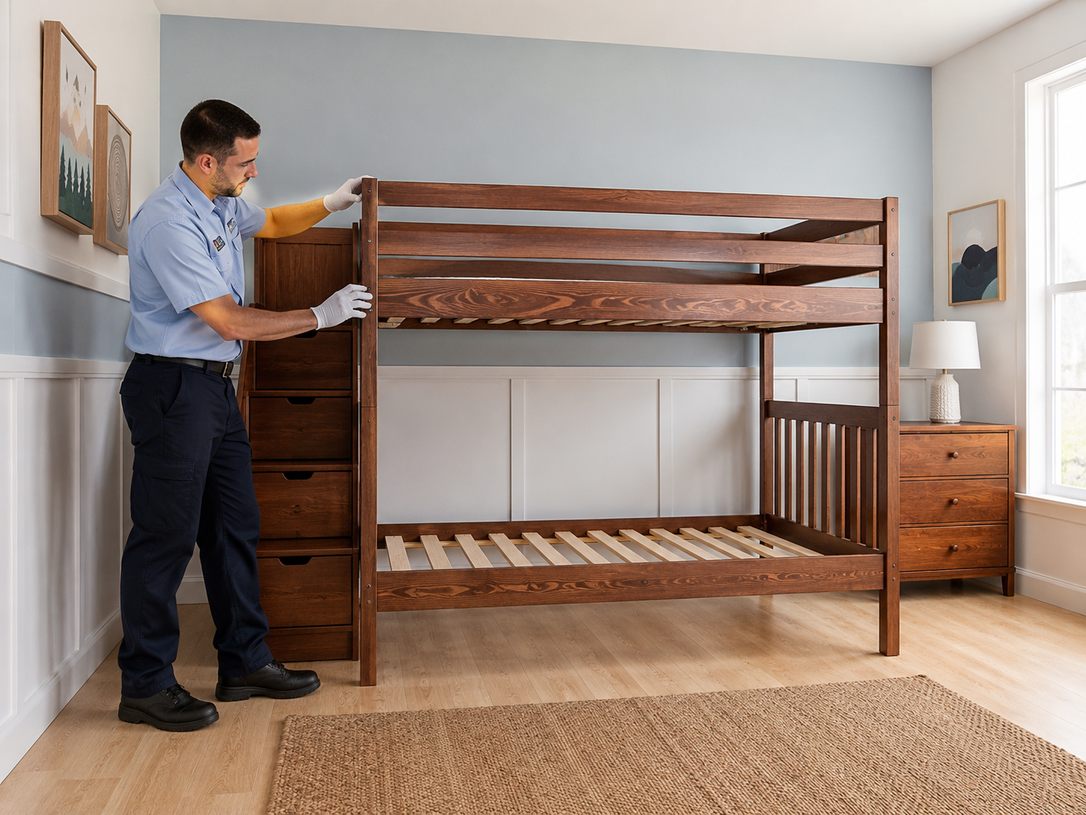
Guardrails, Ladders, and Mattress Fit Need Extra Attention
Guardrails, ladders, and mattress fit are the three details that protect kids every single night. Guardrails should sit at least 5 inches above the mattress top, ladders must lock securely into place, and the mattress must match the frame's recommended thickness. Reviewing standard bunk bed dimensions helps confirm these measurements before buying.
| Safety Feature | Recommended Standard | Common Mistake |
|---|---|---|
| Guardrail height | 5+ inches above mattress | Mattress sits too high, rail too low |
| Ladder angle | Securely locked, non-slip steps | Loose hooks, missing grip pads |
| Mattress thickness | Follows frame guidelines | Oversized mattress blocks rail |
| Top bunk weight limit | Matches manufacturer specs | Adult sleeps on a kids' bunk |
Doing a quick kids bed setup check after assembly catches these issues before kids climb up.
Shared Bedrooms Work Better With Smart Furniture Placement
Shared bedrooms benefit when the bunk bed becomes the anchor and other furniture flows around it. Smart placement keeps walkways clear, gives each sibling a defined zone, and reduces nighttime collisions. Browsing different kids bunk options helps families pick a frame that fits the layout.
Helpful placement tips:
- Position the ladder toward an open walkway, not a dresser or wall corner.
- Place nightstands or storage cubes on opposite sides for personal space.
- Keep desks or play tables away from the ladder zone.
- Use under-bunk storage to clear floor clutter in sibling bedrooms.
These adjustments work well in family homes, vacation rentals, and children's sleepover spaces.
Small Rooms Need Careful Clearance Around Bunk Beds
Small kids' rooms need extra clearance so the bunk doesn't crowd the rest of the layout. Keep at least 30 inches of walking space around the ladder, leave the top bunk well clear of ceiling fans, and avoid pushing the frame against windows or radiators. In compact condos and studio guest rooms, a loft bed assembly may free up more floor space than a traditional bunk.
For tight bedrooms, consider scheduling IKEA furniture setup help so the bunk and surrounding pieces fit together without rework.

Professional Assembly Helps Reduce Safety and Stability Issues
Professional assembly reduces wobble, missed hardware, and unsafe shortcuts. Trained installers know how each brand's joints lock together, how to balance tall frames, and how to confirm guardrails and ladders meet safety expectations. For busy parents, that peace of mind is worth more than a Saturday spent reading instructions.
Professional help is especially useful for:
- Tall loft beds in apartments with limited ceiling clearance.
- Twin-over-full bunks with heavier framing.
- Rental property turnovers where time is tight.
- Families that also need mattress moving support on the same day.
Home Furniture Setup Support for Growing Family Spaces
Growing families rarely stop at a bunk bed. Dressers, desks, bookcases, and toy storage usually arrive in the same season. Coordinated home furniture assembly keeps every piece aligned, safe, and ready for daily use. A complete setup also gives parents a chance to confirm anchor straps, drawer stops, and sturdy frames across the room.
When choosing a provider, take time making the right furniture assembly choice so installers match your family's needs, schedule, and bedroom layout.
Schedule Bunk Bed Assembly With Furniture Assembly Team
When child safety is the priority, trust an experienced team to deliver a stable frame, secure guardrails, correct ladder placement, proper mattress fit, and a smart room layout built for years of daily use. Furniture Assembly Team handles bunk beds, shared bedrooms, kids' rooms, and full residential setups with care. Families who also need office furniture moving, home gym planning, or trampoline repair support can bundle services for one easy visit.
Explore our full assembly services or schedule assembly help today.
Frequently Asked Questions
Is professional bunk bed assembly worth it?
Yes, especially for tall frames, loft beds, or families with multiple kids. Professionals confirm stability, hardware tightness, and safety details that are easy to miss during a DIY weekend project.
What makes a bunk bed safer for kids?
A safer bunk bed has tight hardware, guardrails on the top bunk, a securely locked ladder, the correct mattress thickness, and safe clearance from fans, windows, and lights. Routine checks keep it stable over time.
How much ceiling clearance does a bunk bed need?
Most bunk beds need at least 24 inches between the top mattress and the ceiling. This gives kids enough space to sit up safely and helps avoid ceiling fans or hanging fixtures.
Can bunk beds work in small shared bedrooms?
Yes, bunk beds are ideal for small shared rooms because they free up floor space. The key is planning ladder placement, walking paths, and storage so siblings each have a comfortable zone.
Why does mattress thickness matter for bunk beds?
A mattress that is too thick lowers the guardrail's protective height and increases fall risk. Always match the mattress size and thickness to the frame's manufacturer guidelines.
What are common bunk bed assembly mistakes?
Common mistakes include skipping steps in the manual, leaving bolts loose, mixing hardware from other kits, and placing the bunk too close to ceiling fans or windows. Re-tightening after a week of use also gets overlooked.
Should bunk beds be placed near windows or ceiling fans?
No, bunk beds should be kept clear of windows, ceiling fans, light fixtures, and heating vents. This prevents fall hazards, blind cord risks, and accidental contact with moving blades.
When should parents schedule bunk bed assembly help?
Parents should schedule help when the frame is tall, the hardware is complex, or time is short before move-in day. Professional setup is also smart for rental turnovers, new sibling bedrooms, and growing family homes.