
Bookshelf Assembly Safety Tips for Homes, Offices, and Kids’ Rooms
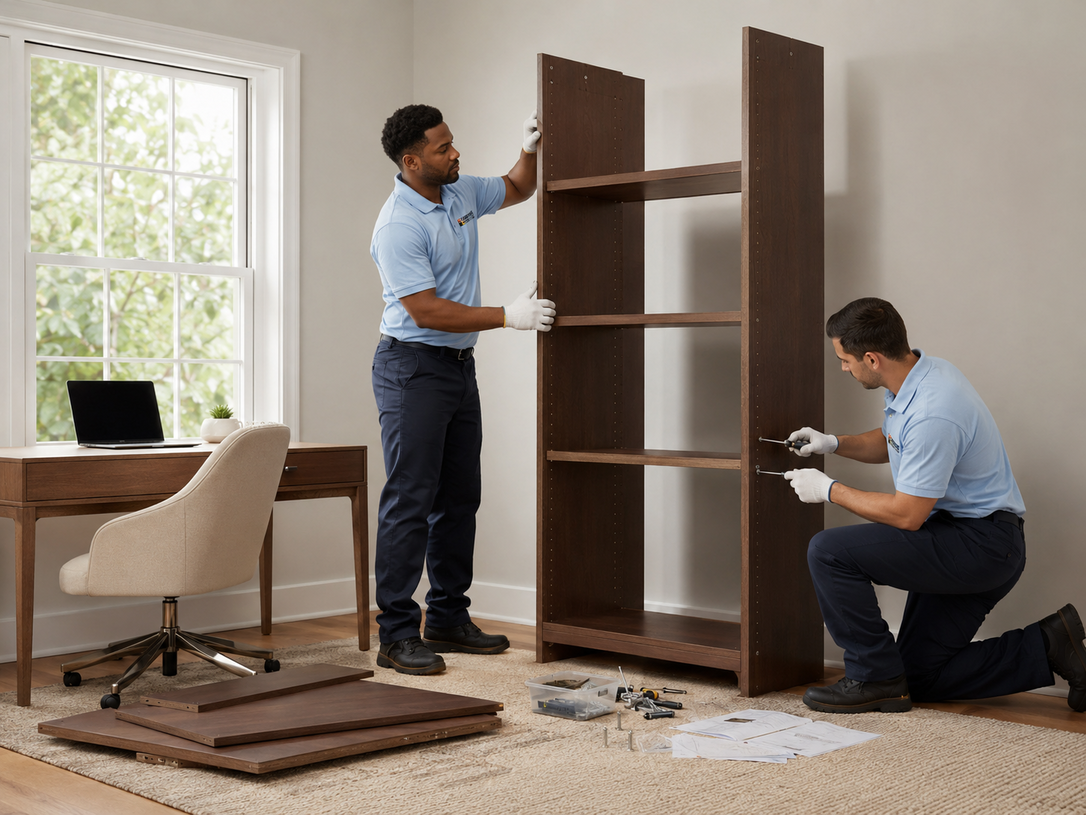
Safer bookshelf assembly depends on a stable frame, correct shelf placement, balanced weight distribution, secure wall anchoring, level flooring, and smart placement away from climbing risks or busy walkways. The right setup changes based on room type, wall material, bookshelf height, shelf load, flooring, the presence of kids or pets, and whether the unit lives in a home, office, classroom, kids' room, or shared storage area.
- Check every fastener, dowel, and backing panel before loading shelves with books.
- Anchor tall bookcases to wall studs to prevent tip-over accidents.
- Keep bookshelves in kids' rooms low, lightweight on top, and climb-resistant.
- Distribute heavy items on lower shelves and respect the unit's weight limit.
- Hire trained assemblers when tall, heavy, or built-in units are involved.
Safer Bookshelf Setup Starts With Proper Assembly
Bookshelves look simple until you face tall frames, uneven floors, missing fasteners, weak backing panels, overloaded shelves, heavy hardcovers, curious toddlers, pets that climb, and tight room layouts. A rushed build often leads to wobbling, leaning, loose shelf pins, scratched walls, falling books, and serious tip-over risks. That is where trained help matters.
Professional bookshelf assembly brings the right tools, hardware checks, and anchoring skills to homes, apartments, condos, kids' rooms, classrooms, home libraries, garages, stockrooms, and shared storage spaces, so every shelf stays level, solid, and safe for daily use.
Tall Bookcases Need More Than a Few Screws
Tall bookcases require a square frame, tight cam locks, a fully seated backing panel, and level feet before any books go on the shelves. Without these basics, the unit rocks, leans forward under load, and pulls away from the wall over time.
A six-foot bookcase in a living room or home library carries real weight. Hardcovers, decor pieces, and storage bins quickly add up. If the back panel is stapled crookedly or the side panels are not flush, the entire frame twists. You can browse popular bookcase styles for different rooms to see how different heights and materials affect stability.
Frame stability checklist:
- Confirm the frame sits square on all four corners.
- Tighten every cam lock, dowel, and screw after final placement.
- Press the backing panel flat and secure it on all edges.
- Adjust leveling feet on uneven hardwood, tile, or carpet.
For Kallax-style cube units that double as room dividers, getting the geometry right matters even more. Many families request Kallax shelf assembly service help when these units arrive flat-packed with dozens of small parts.
Wall Anchoring Makes Bookshelves Safer in Busy Rooms
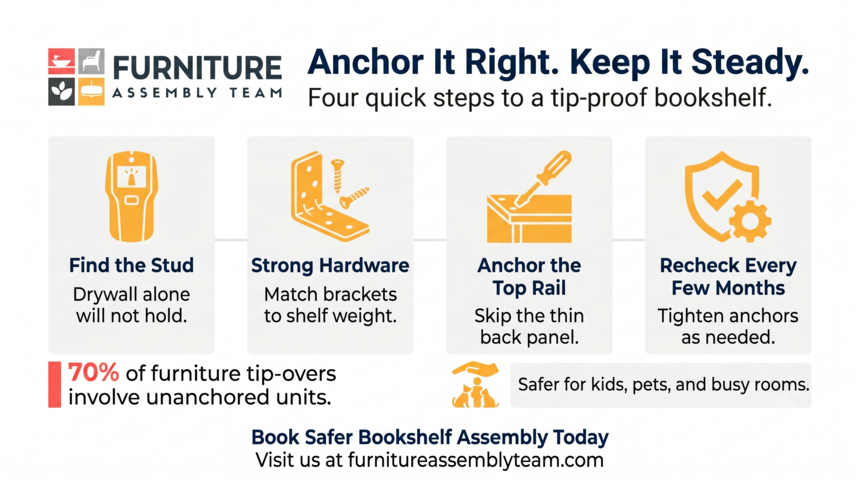
Wall anchoring is the single best defense against tip-overs. Most bookcases ship with a small anti-tip strap or bracket, and that hardware should always go into a wall stud, not just drywall. Studs hold weight. Drywall alone does not.
In busy rooms like family living areas, condo entryways, or rental apartments with frequent foot traffic, anchoring keeps the bookshelf from rocking when someone bumps into it. Renters can still anchor safely using small, patch-friendly screws.
Tip-over prevention essentials:
- Locate wall studs with a magnetic or electronic stud finder.
- Use brackets rated for the bookcase weight and height.
- Anchor through the top rail, not the thin back panel.
- Re-check anchor tightness every few months.
Our team handles bookshelf storage unit assembly services for clients who want secure anchoring done right the first time.
Kids' Rooms Need Extra Care With Storage Furniture
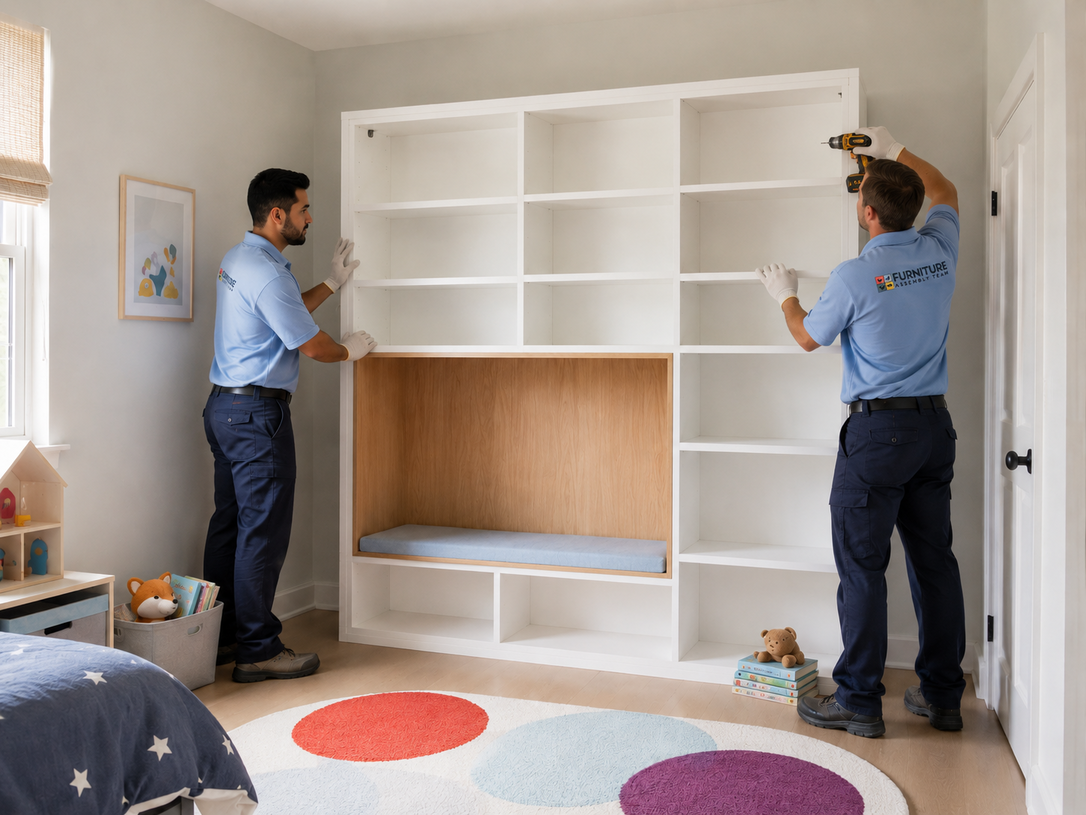
Kids' rooms, nurseries, and playrooms call for short, sturdy bookshelves placed against anchored walls, with the heaviest bins on the bottom and no climbable footholds. Children naturally pull, grab, and climb, so every shelf in their space should resist that pressure.
A toddler reaching for a stuffed animal on the top shelf can pull a five-foot bookcase forward in seconds. That is why low-profile units, soft-close drawers, and rounded corners work best in these rooms. Daycare rooms and classrooms follow similar rules, often with extra anchoring on every storage piece.
Kids' room bookshelf safety tips:
- Choose units under 48 inches tall when possible.
- Anchor every bookshelf, even short ones, to a stud.
- Store heavy bins, books, and toys on the lowest shelf.
- Avoid placing bookcases under windows or near cribs.
Parents looking for home furniture assembly for families often add anchoring to dressers and nightstands during the same visit for full-room safety.
Office Bookshelves Should Support Workflows Without Creating Hazards
Office bookshelves should sit flat against a wall, stay clear of doorways and walkways, and hold binders, files, and supplies without blocking light, vents, or fire exits. A well-placed unit improves daily workflow. A poorly placed one becomes a daily hazard.
In corporate offices, home offices, and shared coworking rooms, tall storage units near desks need anchoring just like residential units. Heavy binders on top shelves multiply the tip-over risk during a bump or earthquake. Office managers often pair shelving with storage cabinet placement for offices to keep walking paths open.
For larger facilities with bulk inventory, commercial storage cabinet installation services are often the safer route since these units carry heavier loads.
Shelf Weight, Flooring, and Placement All Matter
Every shelf has a weight limit, and ignoring it causes sagging, bowing, and shelf-pin failure. Flooring matters too. Soft carpet shifts under load, hardwood telegraphs every uneven leg, and tile amplifies small wobbles.
Bookshelf assembly safety planning means checking the bookcase height, wall material, shelf load, hardware, floor level, room layout, anchoring needs, and daily use before installation begins. That short planning step prevents most long-term problems.
| Room Type | Recommended Height | Best Shelf Load | Anchoring Priority |
|---|---|---|---|
| Kids' Room | Under 48 inches | Light to medium | Required |
| Living Room | Up to 72 inches | Medium to heavy | Strongly advised |
| Home Office | Up to 84 inches | Medium, balanced | Required |
| Garage or Stockroom | 72 to 96 inches | Heavy, evenly spread | Required |
| Classroom | Under 60 inches | Light to medium | Required |
Pairing bookshelves with matching storage pieces is easier when you compare storage furniture options for homes before assembly day.
Common Bookshelf Assembly Mistakes That Cause Wobbling
Most wobbling traces back to a handful of avoidable mistakes. Skipping the backing panel, mixing up similar-looking screws, forcing cam locks, or loading shelves before the frame is fully tightened all create instability that gets worse over time.
Frequent assembly errors:
- Leaving cam locks half-turned or finger-tight.
- Installing the back panel inside out or upside down.
- Skipping leveling feet adjustments on uneven floors.
- Overloading one side with heavy reference books.
- Placing the unit on thick rugs without a flat base.
Renters and movers planning a transition often request storage space setup for moves so units arrive ready to use, not in pieces. When relocating built-in wall units, professional wall unit dismantling before moving prevents damage to both furniture and walls.
Shelving and Storage Units Need the Right Installation Approach
Shelving systems for garages, stockrooms, utility rooms, and shared storage areas use different hardware than residential bookcases. Wall-mounted rails, heavy-duty brackets, and adjustable uprights all need stud-level anchoring to handle real weight.
In utility spaces, items like power tools, paint cans, and bulk supplies push shelves hard. A standard particleboard bookcase will not hold up there. Steel or solid-wood shelving with proper shelving installation for storage spaces is the right call.
Kitchens and pantries often benefit from coordinated kitchen cabinet installation for storage alongside open shelving for a unified, safe layout.
Professional Assembly Helps Prevent Tip-Overs and Damage
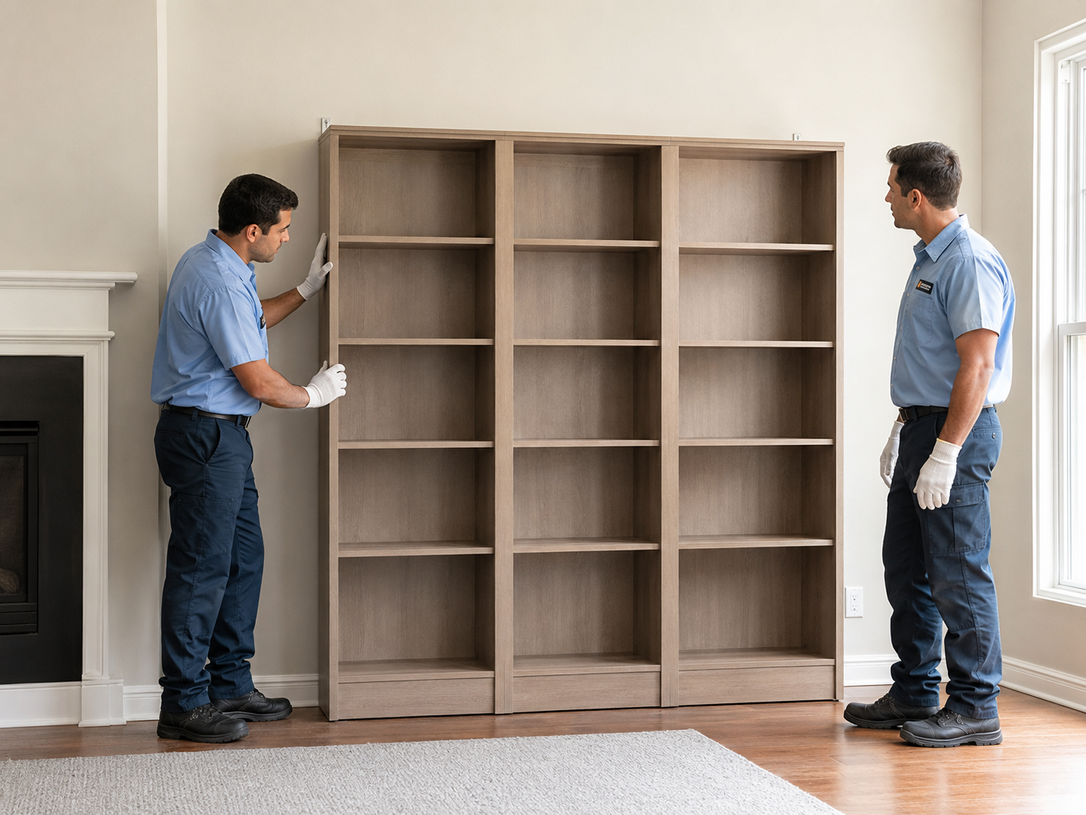
Professional assembly brings calibrated tools, stud-finding accuracy, hardware know-how, and the patience to read every instruction line. That combination prevents tip-overs, wall damage, and the slow wobble that develops months after a rushed build.
Benefits of hiring trained assemblers:
- Correct torque on every cam lock and screw.
- Accurate stud location for safe anchoring.
- Proper leveling on tile, hardwood, or carpet.
- Disposal of packaging and protective film.
- Honest advice on weight limits and placement.
Explore our full professional furniture assembly service options to see how each project type is handled from start to finish.
Book Safer Bookshelf Assembly With Furniture Assembly Team
Safer bookshelf assembly comes down to solid framing, smart placement, careful anchoring, and a setup plan that fits the room. Our team handles every step so your shelves stay level, secure, and ready for daily life.
Many clients also ask about related installation projects, including commercial trampoline installation service support for fitness facilities and business basketball hoop installation ideas for community spaces, which we are happy to coordinate alongside furniture work.
Ready to lock in a safer setup? Reach out to schedule bookshelf assembly service today for bookshelves, storage units, shelving systems, kids' room furniture, office storage, and full home assembly.
Frequently Asked Questions
Should bookshelves be anchored to the wall?
Yes, especially any bookcase taller than 30 inches or placed in rooms with children, pets, or heavy foot traffic. Anchoring into a wall stud is the most reliable way to prevent tip-overs and shifting.
What makes a bookshelf unsafe for kids' rooms?
Tall frames, climbable shelves, heavy items stored up high, and missing wall anchors are the biggest risks. Sharp corners, exposed hardware, and unstable backing panels also turn a normal bookshelf into a hazard for young children.
How do you stop a bookshelf from wobbling?
Start by tightening every cam lock and screw, then check that the backing panel is fully seated. Adjust the leveling feet, redistribute heavy books to lower shelves, and anchor the top of the unit to the wall for full stability.
Can tall bookcases be used safely in offices?
Yes, when they sit against an anchored wall, stay clear of walking paths, and hold balanced loads. Office managers should keep binders and heavy supplies on lower shelves and reserve upper shelves for lighter materials.
What should go on the bottom shelves?
Heavy books, storage bins, and dense decorative items belong on the bottom shelves. Keeping the weight low lowers the center of gravity and makes the entire bookcase far more stable during daily use.
Is professional bookshelf assembly worth it?
For tall units, heavy bookcases, built-ins, and any setup in kids' rooms or offices, yes. Trained assemblers catch hardware issues early, anchor correctly, and finish the job in a fraction of the time.
Can storage units be installed in garages or stockrooms?
Absolutely, as long as the shelving is rated for the load and anchored into studs or masonry. Heavy-duty steel or solid-wood units work best in these spaces and should be paired with proper bracket hardware.
When should I schedule bookshelf assembly help?
Book service as soon as the furniture is delivered or before a move-in day, so shelves are ready when you need them. Scheduling early also helps secure a preferred time slot during busy seasons.