
Why Professional Furniture Assembly is Essential for Heavy Flat Pack Wardrobes and Dressers
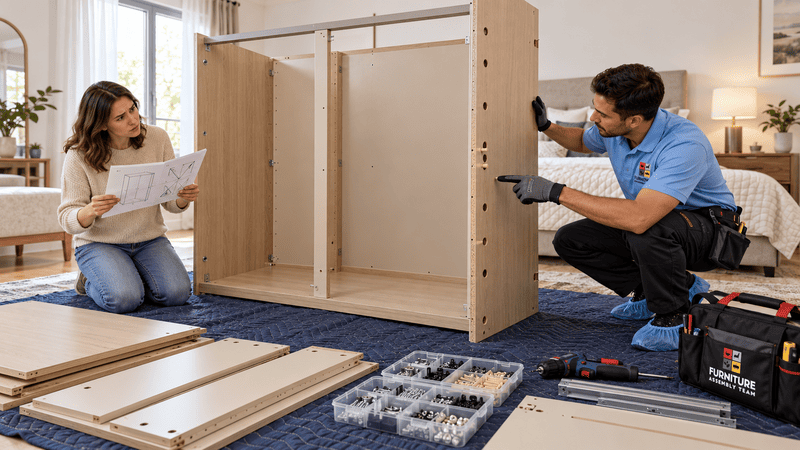
Professional furniture assembly typically includes organizing components, identifying hardware, following the build sequence, aligning panels, installing drawers or doors, and leveling. Assemblers then complete final hardware checks. Difficulty depends on furniture size, part count, hardware systems, room access, floor conditions, wall attachment requirements, and product design.
- Heavy panels need controlled handling.
- Drawer slides require accurate placement.
- Wardrobe frames must stay square.
- Fasteners need appropriate tightening.
- Final leveling affects fit and function.
Heavy Flat Pack Furniture Magnifies Small Errors
Heavy flat-pack furniture makes small errors harder to correct because each step affects the next connection. Professional furniture assembly helps organize components, establish panel orientation, and follow the required sequence. This approach matters when large frames, drawers, and doors must fit together within limited room space.
Wardrobes and dressers arrive in compact boxes, yet contain large panels, drawers, rails, hinges, backing boards, and hardware bags. Their instructions may stretch across dozens of steps. One reversed panel can hide the holes needed for a later connection. Meanwhile, a misplaced slide or overtightened cam lock can disrupt the finished fit. An organized build addresses these details before regular use.
Professional furniture assembly means organizing, building, aligning, adjusting, leveling, and checking household furniture. The process follows product instructions while accounting for components, room conditions, and intended use.
Assembly Errors That Force Rework
Small shortcuts can create larger problems as the build progresses:
- Reversed panels: Finished edges or connector holes face the wrong direction.
- Wrong screws: Similar fasteners may have different lengths, threads, or intended locations.
- Skipped hardware: Missing connectors leave joints incomplete.
- Loose cam locks: Panels may retain movement after assembly.
- Missing back panels: The frame may lack the support specified by its design.
Correcting these mistakes may require removing shelves, doors, or completed drawer sections. Therefore, checking each stage can reduce avoidable rework.
For a Washington, DC apartment, this also means planning enough space to lay out components without blocking access.
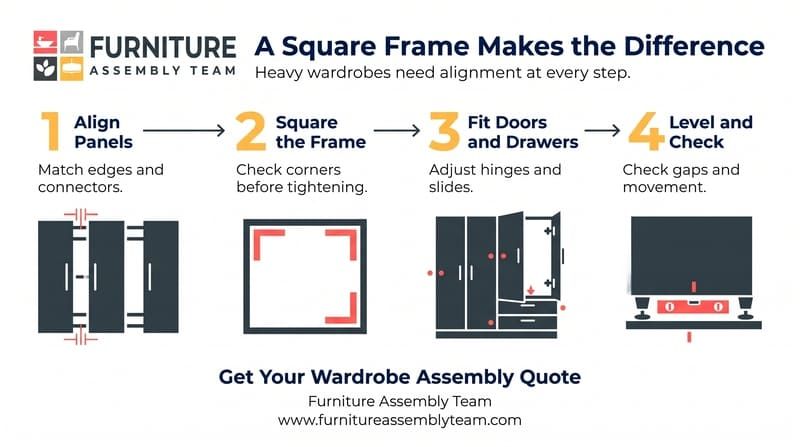
Wardrobes Depend on a Square Frame
Large wardrobes need square frames because doors, drawers, and shelves share the same structure. A small frame distortion can change several gaps at once. Correct sequencing supports panel alignment before hinges and drawer modules receive their final adjustments, while leveling addresses the furniture’s contact with the floor.
“Square” means the frame’s corners form right angles rather than leaning into a diamond shape. Installers may compare diagonal measurements where the design allows.
Tall side panels can flex during handling. Consequently, top and base panels need support while connectors engage.
Wardrobe Components Need a Planned Sequence
Flat pack wardrobe assembly often involves several connected tasks:
- Tall sides, top, and base: Confirm orientation before joining the main frame.
- Back panels and cross-bracing: Fit these components in the manufacturer’s specified sequence.
- Cam locks and connectors: Engage them correctly without forcing damaged or mismatched hardware.
- Shelves and clothing rails: Install supports at the correct matching positions.
- Doors and hinges: Adjust height, depth, and side clearance as the hardware allows.
- Drawer modules: Check their placement against the completed frame.
- Leveling feet: Adjust supported contact points before final door checks.
For a Maryland bedroom project, ceiling clearance may determine whether the wardrobe can rise from a horizontal build. However, the manufacturer’s instructions determine the permitted assembly method.
Furniture Assembly Team’s wardrobe and closet assembly services cover frame building, shelves, drawers, doors, and related adjustments.
Wall Attachment and Final Wardrobe Placement
Wall attachment should follow manufacturer guidance where specified. Wall materials and attachment requirements affect the hardware and installation method.
Leveling does not replace required wall attachment. Likewise, anchoring cannot correct a poorly assembled frame or guarantee stability under every floor condition.
Closet system assembly also requires clear access to drawers, hanging rails, and adjacent doors.
Drawer Systems Demand Precise Alignment
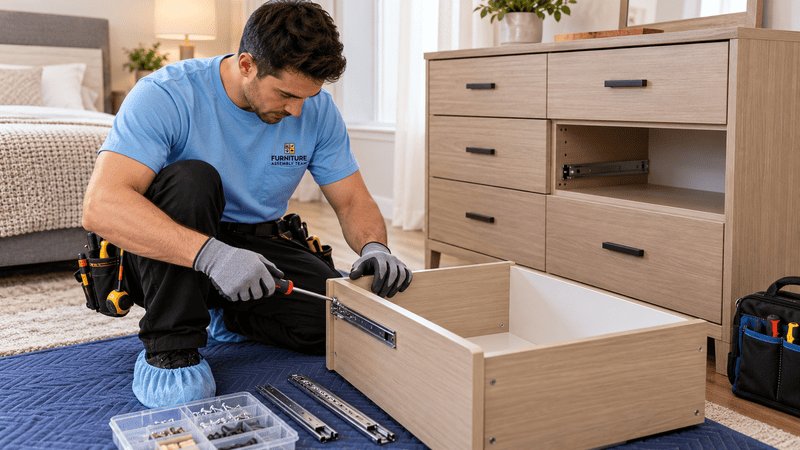
Dresser drawers depend on matching rail positions, square drawer boxes, and an aligned outer frame. Small differences between left and right slides can affect travel and drawer-front gaps. However, damaged parts, manufacturing variation, floor conditions, and wear can also contribute to drawer problems.
A chest of drawers repeats the same assembly task several times. Therefore, one mistaken rail position can affect an entire drawer bank.
Drawer Fit Starts Before the Fronts Go On
Accurate dresser assembly includes several checks:
- Match left and right drawer slides to their intended sides.
- Use the specified holes to maintain consistent rail spacing.
- Keep drawer boxes square before securing their backs.
- Confirm side panels and back panels face the correct direction.
- Align front panels and handles without forcing the fittings.
- Check drawer gaps and movement before final adjustment.
Some slides include separate cabinet and drawer sections. Others require release tabs or a particular insertion angle. Forcing a drawer can bend hardware or damage mounting points. Instead, stop and check rail engagement.
A Pennsylvania furnished rental may include matching dressers, nightstands, and storage cabinets. Checking every drawer helps identify inconsistent gaps before tenants begin using the furniture.
Furniture leveling also matters. If the outer frame twists on an uneven floor, previously adjusted drawers may rub. However, leveling cannot fix bent slides or damaged drawer boxes. Those problems may require replacement components rather than further adjustment.
Beds and Sofas Bring Different Assembly Challenges
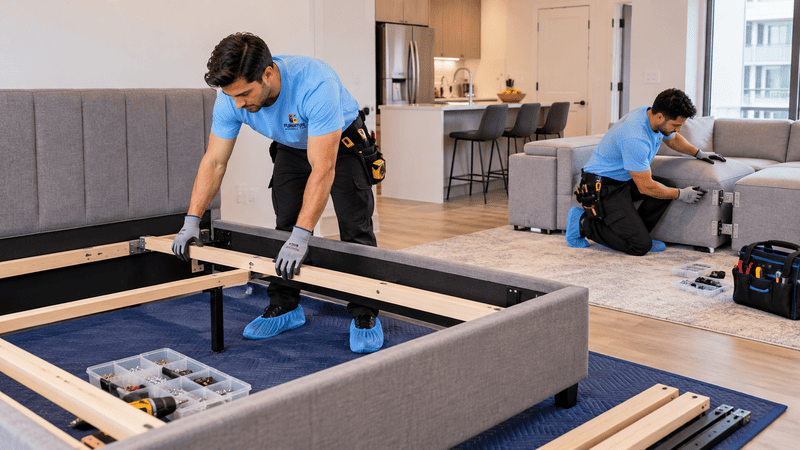
Beds, sofas, and other household furniture use different connectors, supports, and assembly sequences. Bed frames distribute weight through rails, slats, and center supports. Sofas and sectionals rely on their specific frame connections, legs, and joining brackets, so one assembly method cannot suit every product.
For Northern Virginia households, a bedroom refresh may combine a storage bed, headboard, dresser, and two nightstands. Coordinating those builds helps preserve access around the room.
Match the Assembly Method to the Furniture
Different household pieces need different checks:
- Platform beds: Fit slats, platform panels, rails, and center supports according to instructions.
- Storage beds: Align drawers or lifting mechanisms before checking their movement.
- Headboards: Match brackets, bolts, and mounting positions to the intended frame.
- Sofas and sectionals: Connect modules and fit legs before checking the seating layout.
- Bookcases and shelving: Align shelves, backs, and any required wall attachments.
- Sideboards and cabinets: Check door clearance, drawer travel, and supported floor contact.
- Dining furniture: Follow the specified sequence for legs, braces, and extension mechanisms.
Customers arranging professional bed frame assembly services should identify storage drawers, lifting bases, and separate headboards beforehand. These details affect both the assembly sequence and the working space required.
Similarly, a Delaware living room may need sectional connectors positioned before the final seating arrangement. Building against the wall too early can block access to those fittings.
Coordinated professional home furniture assembly can cover several residential pieces within one planned project. Fixed kitchen cabinetry involves additional wall, layout, and mounting considerations. For that separate household project, professional kitchen cabinet installation services address installation beyond freestanding furniture setup.
Hardware Choices Affect the Final Build
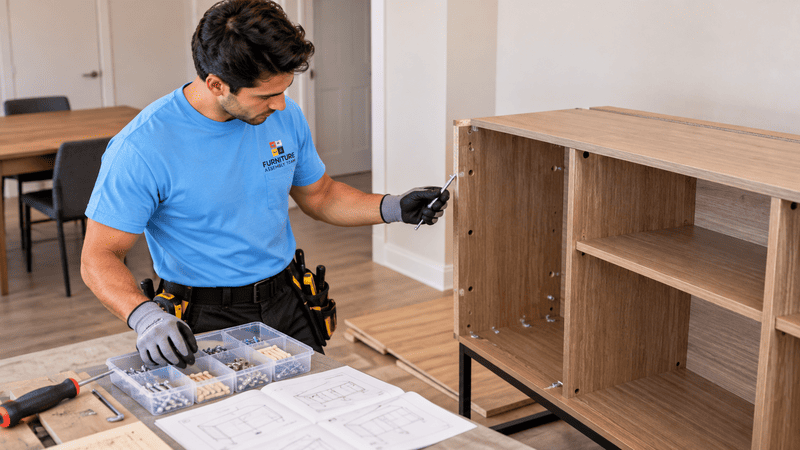
Correct tools help installers engage furniture hardware without applying unnecessary force. Manual screwdrivers, hex keys, and suitable bits support controlled tightening. Meanwhile, levels and measuring tools help check placement, although each furniture design requires its own tool selection and fastening sequence.
Cam locks are rotating fittings that grip matching connector bolts. Dowels are short pegs that help locate adjoining panels.
Neither fitting should compensate for the wrong panel position. If a connection resists, check its orientation before adding force.
Tools Should Match the Furniture Hardware
Furniture hardware installation may call for:
- Manual screwdrivers and hex keys: Control tightening near delicate panels and fittings.
- Bit sets: Match screw heads to reduce slipping.
- Drills or drivers: Use carefully where instructions permit powered fastening.
- Levels and measuring tools: Check floor contact, spacing, and alignment.
- Rubber mallets: Seat suitable components only when the instructions allow.
- Brackets and wall-attachment hardware: Match the product requirements and applicable wall construction.
Excessive tool torque can strip fasteners, damage threaded inserts, or crush particleboard and MDF around a joint. Therefore, faster tightening does not necessarily produce a better connection. Some builds require loosely fitted joints before alignment and final tightening.
Panel Orientation and Tightening Order
Hinge plates, connector bolts, and drawer rails may look interchangeable while serving different positions. Keep hardware groups separate until their assembly steps. Similarly, check finished edges and predrilled holes before fastening panels. A reversed panel may fit initially but block a later bracket.
Furniture Assembly Team’s residential furniture assembly specialists approach household setup through organized component handling and product-specific instructions. Clean work practices also matter. Clear hardware bags and loose packaging from the working area as the build progresses.
Complex Furniture Can Outgrow a DIY Setup
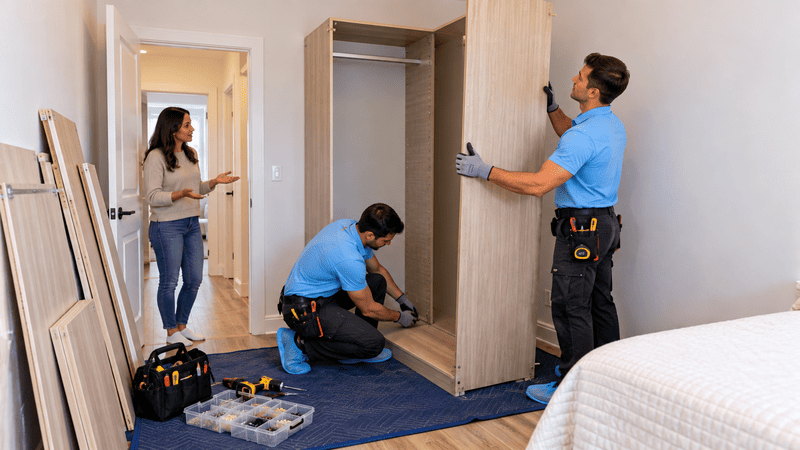
Professional help makes sense when furniture weight, complexity, or room conditions exceed a manageable DIY setup. Tall wardrobes, multiple drawers, large beds, stairs, and tight spaces add coordination demands. Assembly support can reduce guesswork and help keep components organized throughout a larger household project.
Some products specify two-person handling. Others require support while someone positions a panel or secures a connection. Check those requirements before starting. Also, measure access routes and allow room for tools, opened boxes, and door movement. Moving furniture before assembly is complete can strain unfinished joints. Plan wall placement before building, then follow the approved positioning sequence.
Furniture Assembly Team’s Residential Approach
Furniture Assembly Team provides residential furniture assembly support for homeowners, renters, landlords, and property managers. Projects can include wardrobe assembly, closet-system installation, dresser assembly, bed-frame setup, and sofa assembly. Related tasks include drawer installation, door adjustment, furniture leveling, and hardware organization.
The team follows manufacturer instructions and coordinates household furniture setup through an organized process. This supports accurate component alignment and can make complex furniture projects easier to manage. For Maryland families or Pennsylvania landlords furnishing several rooms, professional project coordination helps organize the requested work. Share every furniture item rather than listing only the largest piece.
What Changes Furniture Assembly Costs
Assembly costs depend on the actual furniture, site conditions, and services requested. Product names alone rarely describe the full scope.
| Cost factor | Why it affects the project |
|---|---|
| Furniture type and size | Different designs require different build methods and working space. |
| Part count and hardware complexity | More components create additional sorting and fastening steps. |
| Drawers, doors, and hinges | Each moving section needs fitting and adjustment. |
| Furniture weight and piece count | Handling needs and total workload vary. |
| Room access and stairs | Access routes affect how components reach the assembly room. |
| Available assembly space | Restricted space can complicate panel handling and sequencing. |
| Wall attachment | Wall conditions and product requirements affect installation work. |
| Existing assembly errors | Inspection and partial disassembly may expand the scope. |
| Packaging condition | Mixed, damaged, or missing parts can complicate preparation. |
Provide product links, model numbers, quantities, and room details when requesting an estimate. Include photos if assembly has already started. Existing errors may require dismantling completed sections before the intended build can continue. Missing or damaged components may also need replacement.
Book Professional Furniture Assembly
Component organization, hardware installation, frame alignment, drawer setup, door adjustment, leveling, and final checks all connect. Professional furniture assembly coordinates these tasks around your furniture and room conditions.
Furniture Assembly Team offers residential furniture assembly services for wardrobes, closet systems, dressers, beds, sofas, cabinets, shelving, and other household pieces.
Plan Assembly for Your Heavy Household Furniture
Homeowners, renters, landlords, and property managers across Washington, DC, Maryland, and Northern Virginia can request residential setup support. Service is also available across Delaware and Pennsylvania.
Send furniture details, quantities, access information, and any existing assembly concerns. Then request a furniture assembly quote from Furniture Assembly Team and discuss scheduling for your household project.
Frequently Asked Questions
Why is professional furniture assembly useful for heavy wardrobes?
Professional furniture assembly helps organize large panels, follow the build sequence, and coordinate frame, door, and drawer adjustments. It can reduce assembly guesswork when the design requires complex hardware or two-person handling.
Why do dresser drawers become misaligned?
Uneven rail positions, an unsquared frame, or incorrect drawer-box assembly can affect alignment. However, damaged slides, component defects, and uneven floors may also contribute.
Can professionals assemble partially built furniture?
They can assess partially built furniture and identify the work needed. Incorrect connections, missing hardware, or damaged panels may require partial disassembly or replacement parts.
Should wardrobes be attached to the wall?
Follow the manufacturer’s wall-attachment instructions where specified. The attachment method must suit the furniture requirements and wall construction.
Do furniture assemblers bring their own tools?
Professional assemblers typically bring tools for the agreed project. Confirm any special requirements and retain all supplied hardware and instructions.
Can heavy bed frames require two people to assemble?
Yes, some designs specify two-person assembly or involve components that need coordinated support. Check the product instructions before lifting or positioning large sections.
What affects home furniture assembly costs?
Furniture size, part count, drawers, doors, weight, access, stairs, and wall attachment all affect project scope. Existing assembly errors and packaging condition can also change the work required.
When should I hire professional furniture assemblers?
Consider help with tall wardrobes, complex drawer systems, heavy beds, multiple pieces, or limited working space. Time constraints and unclear assembly steps can also make professional support useful.