
How to Fix a Squeaky Bed Frame: When to Call the Furniture Assembly Team for a Permanent Fix
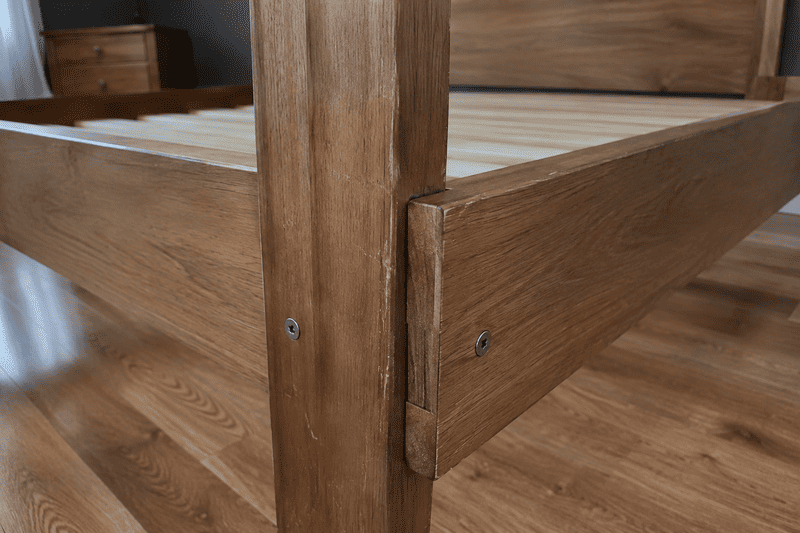
The best way to fix a squeaky bed frame is to find the exact movement or friction point, check loose hardware, inspect slats and brackets, replace worn parts when possible, and reassemble the frame tightly. The right repair depends on frame material, bed size, mattress weight, slat spacing, center support, hardware condition, headboard movement, floor level, and whether the frame is metal, wood, upholstered, storage-style, or bunk-style.
- Squeaks often come from loose joints or rubbing hardware
- Quick DIY fixes may only work for a short time
- Stripped bolts can make the problem worse fast
- Slats and center supports need careful checking
- Professional reassembly can reduce repeat noise issues
A Squeaky Bed Usually Means the Frame Is Moving
A squeaky bed frame usually means one or more parts are shifting under weight, pressure, or motion. That movement often starts at bolts, rails, slats, brackets, or support legs, then gets louder as the frame loosens over time and quick fixes wear off.
In a primary bedroom, guest room, or apartment setup, even a small squeak can turn into a nightly problem. Homeowners and renters often assume the mattress is the issue, but the sound usually keeps coming back because the frame underneath is still moving. That is why professional inspection matters. Furniture Assembly Team handles bed frame assembly services for repairs so the frame can be tightened, stabilized, and rebuilt with the right sequence instead of guesswork.
The Noise Often Starts Where Hardware Rubs Together
Most bed frame squeaks start where two frame parts meet and rub under pressure. Metal-on-metal friction, wood joints shifting, loose washers, slats tapping rails, and brackets flexing can all create noise that repeats every time someone rolls over or sits on the edge.
Common squeak sources include:
- Loose side rail bolts on metal bed frames
- Dowels shifting inside wooden rails or footboards
- Slats rubbing against support ledges
- Center beams moving on uneven floors
- Upholstered headboard mounts flexing at the connection point
- Bunk bed ladder or guardrail hardware loosening over time
That is true for platform beds, storage beds, IKEA-style frames, and standard bedroom sets alike. If you are comparing bed styles for bedroom planning or newer bed frame designs for home upgrades, it helps to remember that more connection points usually mean more places where small movement can start.
Quick DIY Fixes Can Hide the Real Frame Problem
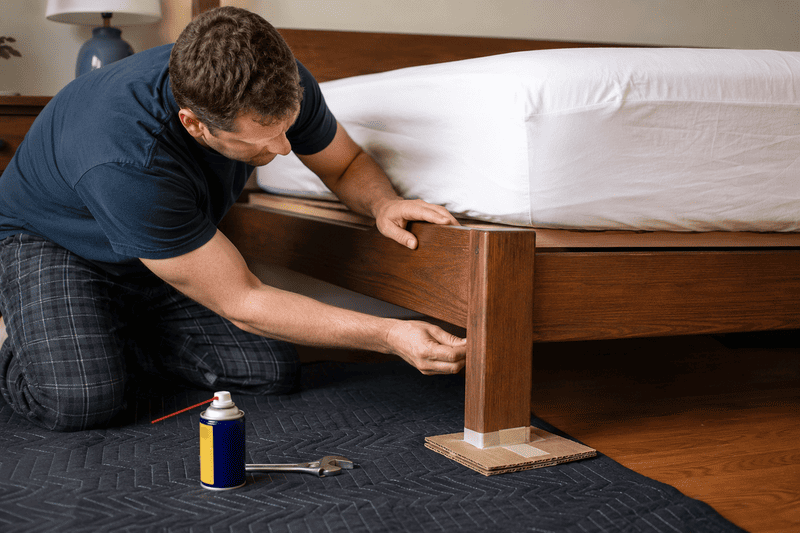
Quick DIY fixes can quiet a squeak for a few nights, but they often miss the real problem. Lubricant, fabric stuffing, or tightening one visible screw may reduce surface noise while deeper movement continues inside the joint, bracket, or support system.
Common short-term fixes that often fail include:
- Spraying lubricant without checking where the movement starts
- Stuffing felt, cardboard, or fabric between parts
- Tightening only the easiest bolt to reach
- Using a cheap Allen wrench that slips under pressure
- Ignoring rail alignment and floor level
- Leaving slats and center legs unchecked
That is why recurring frame noise belongs on the list of household repairs homeowners should not ignore, especially when the bed is used every night and the same squeak keeps returning after each attempt.
Stripped Bolts and Loose Dowels Need More Than Tightening
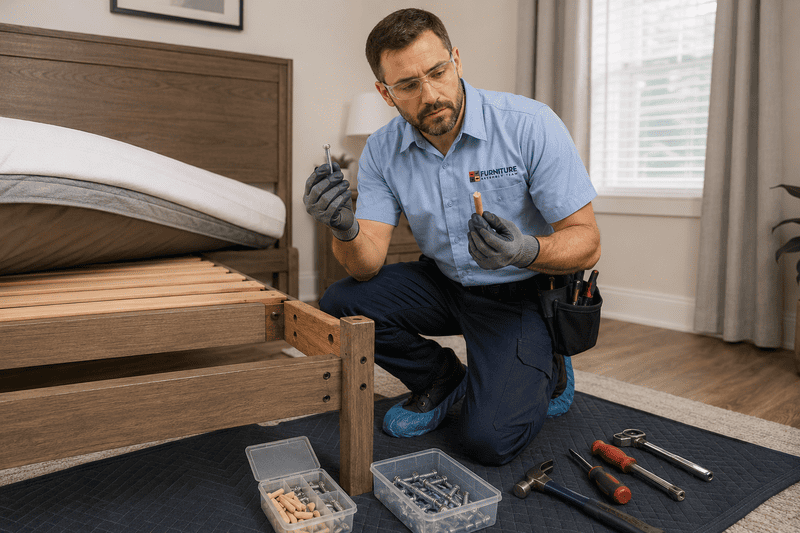
Stripped bolts and loose dowels usually need more than another turn with a tool. Once threads wear down or the joint wallows out, the hardware may feel tight at first but still shift under load, which keeps the squeak and frame movement active.
Watch for signs like these:
- Allen screws that spin without catching
- Bolts that back out again after a few days
- Washers missing from rail connections
- Wood dowels that no longer seat firmly
- Brackets bent from repeated stress
- Side rails separating slightly from the headboard
A technician can determine whether the hardware can be reset, replaced, reinforced, or reassembled differently. In many cases, that is more effective than repeating a professional bed assembly for stable frames approach on already-damaged joints without inspecting the full connection.
Slats Rails and Center Supports Should Be Checked Together
Slats, rails, and center supports work as one system, not as separate parts. If one piece is loose, bowed, missing, uneven, or misaligned, the frame can shift under the mattress and create squeaks that seem to come from everywhere at once.
A proper check should include:
- Slat spacing and fit across the frame
- Rail straightness and bracket tightness
- Center beam alignment from head to foot
- Support leg contact with the floor
- Cracks around screw holes or ledges
- Mattress weight compared with the support layout
This matters even more with flat-pack setups and IKEA furniture assembly for home projects, where one missed step during setup can show up later as bed frame squeaking instead of an obvious assembly error.
Headboards Can Add Noise When Mounts Shift
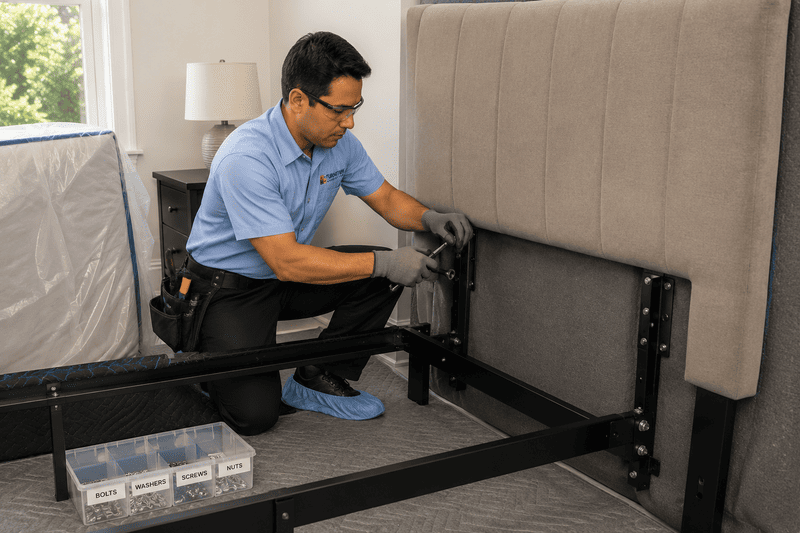
A loose headboard or footboard can amplify small frame movement and make the whole bed sound worse. The noise may seem to come from the mattress area, but the actual problem can be at the mounting plates, bolts, or side rail connections.
Check for these headboard-related issues:
- Wall contact that transfers vibration
- Upholstered panels flexing at mount points
- Bolts loosening where rails meet the headboard
- Decorative posts wobbling during movement
- Footboards pulling against uneven rails
This is common in kids' rooms, guest rooms, and moved furniture. If the bed is being relocated, tufted headboard disassembly before moving can help prevent damage, but reassembly still needs careful alignment afterward.
Heavy Mattresses Need Better Frame Support Below
Heavy memory foam and hybrid mattresses put more pressure on slats, rails, center beams, and connection points. When support below is uneven, the frame may flex, squeak, or feel loose even if the top of the bed still looks straight.
Why mattress weight changes the repair
Wooden bed frames, metal frames, upholstered platforms, storage beds, and even IKEA bed frame bedroom set assembly setups can react differently under a heavier mattress. In bunk rooms, bunk bed assembly for safer rooms also needs extra attention because repeated climbing and motion can loosen key joints faster.
Why support layout matters
If the center leg is floating, the slats are undersized, or the floor is uneven, the mattress can exaggerate every weak point. That can also raise mattress sagging concerns, even when the real issue is the frame underneath.
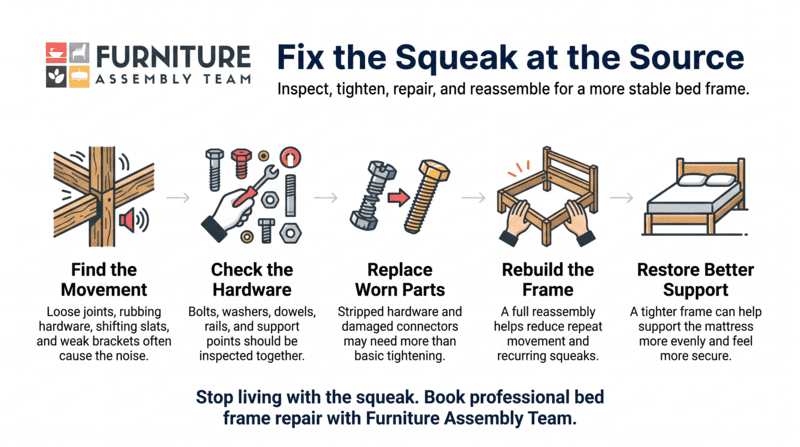
Professional Reassembly Helps Stop the Squeak at the Source
Professional reassembly helps stop the squeak at the source by taking the frame apart in the right order, checking every connection, correcting hidden movement points, and rebuilding the bed more securely. That approach is often more effective than chasing the noise one bolt at a time.
Squeaky bed frame repair means finding the friction or movement point, inspecting the hardware, checking slats and supports, replacing worn parts when possible, adding suitable dampening materials, and reassembling the frame so it sits more securely.
A trained technician may:
- Break the frame down section by section
- Inspect brackets, bolts, dowels, and washers
- Re-seat slats and center supports
- Replace worn or stripped hardware when possible
- Add suitable dampening materials at contact points
- Rebuild the frame to reduce repeat movement
That same room visit can also help when the bed issue is part of larger home furniture assembly for bedrooms or related handyman services for household repairs, especially after a move or new furniture delivery.
A Quieter Frame Starts With the Right Repair Plan
A quieter frame starts with a repair plan that matches the bed style, hardware condition, support layout, and room setup. Instead of guessing, the goal is to inspect the whole structure, prioritize the weak points, and rebuild only after the real cause is clear.
What a technician usually checks first
| Symptom | Likely cause | What should be checked |
|---|---|---|
| Squeak when turning | Rail or bracket friction | Bolts, washers, bracket fit |
| Noise at bed edge | Loose side rail joint | Rail alignment, dowels, fasteners |
| Creak near center | Weak support below | Center beam, support legs, slat span |
| Bounce with heavy mattress | Uneven support system | Slats, beam contact, floor level |
For homeowners planning a fuller bedroom update, wardrobe closet system assembly support often pairs well with bed repairs because the room can be stabilized and organized in one visit. Thoughtful bedroom layouts for furniture placement and furniture compliance guidance for households also matter when support legs, clearances, and manufacturer instructions need to line up with daily use.
If the bed is new or recently delivered, furniture pickup assembly and placement can solve setup logistics, but a squeaky frame still needs a proper inspection before it settles into regular use.

Book Squeaky Bed Frame Repair Help Today
Stop repeating the same temporary fix and start addressing the loose joints, stripped hardware, shifting slats, and unstable support underneath the bed. A careful inspection and reassembly can help reduce recurring squeaks and restore more reliable frame support.
If your room update also includes office furniture setup, trampoline park setup, or basketball hoop installation help, those projects can be planned separately while the bedroom repair is handled correctly.
Stop the Squeak Before It Gets Worse
Stop losing sleep over an annoying squeak and book a local technician or request a quick frame repair quote from Furniture Assembly Team for bed frame repair, bunk bed assembly, bedroom setup, and complete furniture assembly service help.
Frequently Asked Questions
Why does my bed frame squeak when I move?
Usually because a joint, bracket, rail, slat, or support leg is shifting under pressure and creating friction.
Can a mattress cause a bed frame to squeak?
A mattress can add weight and stress, but the squeak usually comes from movement in the frame or support system below it.
Why do DIY squeak fixes stop working?
They often treat the sound instead of the loose or worn connection that is causing the movement.
Can stripped bolts make a bed frame unstable?
Yes. Stripped hardware can keep a joint from tightening correctly, which may allow the frame to keep shifting.
Should bed slats be checked during repair?
Yes. Slats, rails, and center supports should be checked together because one weak section can affect the whole bed.
Can a loose headboard cause squeaking?
Yes. A shifting headboard or footboard can transfer noise through the rails and make the squeak seem worse.
When should I call for bed frame repair?
Call when the squeak keeps returning, the frame feels loose, hardware will not hold, or the mattress support seems uneven.
Can a professional repair an IKEA-style bed frame?
Yes. Many IKEA-style frames can be inspected, tightened, stabilized, and reassembled with the correct hardware checks and support review.