
How to Avoid Unstable Workplace Seating with Professional Chair Assembly
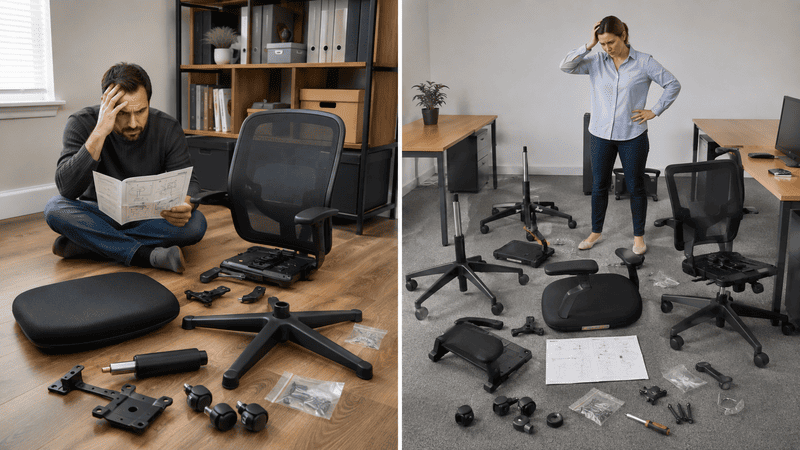
Professional chair assembly helps prevent unstable workplace seating by making sure bases, casters, gas cylinders, seat plates, arms, backrests, tilt controls, and fasteners are installed and tested correctly. The right setup depends on chair type, hardware condition, user needs, desk height, office layout, ergonomic features, employee count, bulk rollout demands, and whether the chairs are for a corporate office, small business, coworking space, or home office.
- Poor chair assembly can cause wobbling and daily instability
- Ergonomic features only work well when setup is correct
- Loose hardware often turns into repeat maintenance
- Bulk chair assembly keeps employees focused on work
- Professional setup helps offices feel ready faster
Unstable Chairs Can Make a Workplace Feel Unfinished
Unstable chairs usually start with rushed assembly, not bad intentions. Once dozens of boxes, similar bolts, caster bases, gas cylinders, and arm sets hit the floor, even organized teams can end up with wobbling seats, uneven armrests, squeaks, and chairs that never feel fully work-ready.
That problem grows fast in active offices. Employees start swapping seats, managers chase missing hardware, and setup drifts into the workday. Instead of leaving seating quality to chance, many teams book office chair assembly services for workplaces so chairs are built correctly, adjusted consistently, and ready for daily use without repeated interruptions.
Chair Bases Need More Attention Than Most People Expect
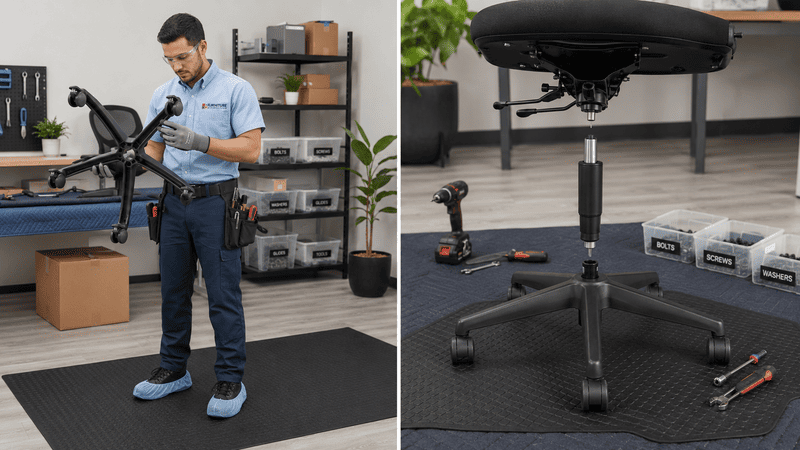
A stable chair starts at the floor. If the base, casters, and connection points are not seated correctly, the chair may rock, roll unevenly, or feel off balance even when every visible part looks assembled.
Common base problems usually show up in a few ways:
- Casters not fully pressed into the base
- Uneven pressure across a five-point base
- Incorrect hardware placed at the base connection
- Misaligned arms that make the whole chair feel crooked
- Task chairs assembled on uneven surfaces during setup
This matters in coworking spaces, startup offices, and fast expansions where several chair models may arrive at once. Before placing staff in premium office seating for workplaces or professional task chairs for daily work, the base should be checked carefully so the chair supports more stable daily use. That same attention also improves office chair assembly for daily comfort in busy work areas.
Gas Cylinders and Seat Plates Must Fit Correctly
Gas cylinders and seat plates do more than hold a seat together. When they are installed backward, seated unevenly, or paired with misaligned hardware, a chair can wobble, tilt strangely, or lose smooth height and recline function during normal work.
Watch for these setup issues:
- Gas lift cylinder not seated squarely in the base
- Seat plate mounted in the wrong direction
- Tension plate bolts tightened unevenly
- Backrest and seat pan connections pulling out of alignment
- Recline controls blocked by incorrect plate placement
In practical terms, that means a mesh chair may lean oddly, an executive chair may squeak under load, and a desk chair may never feel centered. Those risks show up in corporate offices and home workstations alike, especially when teams assemble mixed orders of desk chairs for home offices beside standard office seating.
Ergonomic Features Lose Value When Assembly Is Rushed
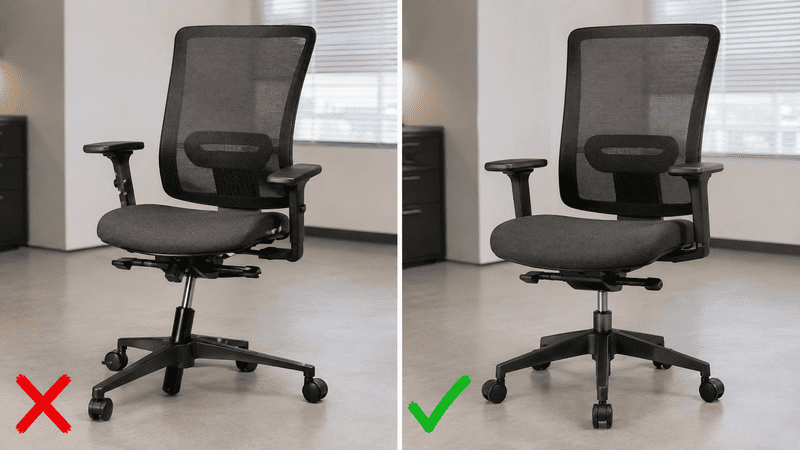
Ergonomic chairs can only do their job when the moving parts are assembled correctly. If the seat pan, lumbar system, armrests, tilt mechanism, or backrest hardware is off by even a small amount, the chair may still function, but not as intended.
Small mistakes affect expensive features
Premium ergonomic features are part of the investment. Lumbar supports should move cleanly. Seat pan glides should track smoothly. Synchronized tilt systems should respond evenly. Tension controls should feel consistent from chair to chair.
Correct setup helps protect adjustability
Professional chair assembly planning means checking the chair base, casters, gas cylinder, seat plate, backrest, arms, tilt controls, hardware, desk fit, employee count, and testing steps before workplace seating is placed into daily use.
That process helps protect ergonomic features, supports more consistent workstation setup, and pairs well with modular office furniture installation for teams when a full office layout is changing.
Loose Hardware Creates Repeat Maintenance Problems
Loose hardware rarely stays minor. A chair that starts with one slightly under-tightened bolt can turn into a squeak, a shifting armrest, uneven caster rolling, or a seat that never feels secure after a few weeks of use.
Maintenance issues often include:
- Bolts backing out after daily movement
- Stripped threads from overtightening
- Seat plates loosening under repeated recline use
- Armrests shifting out of level
- Casters wearing unevenly because the chair never sat square
Why repeat fixes cost more than setup
For facilities teams and small business owners, these callbacks take real time. One unstable office chair becomes ten small complaints across the floor. A better approach is preventing those issues at setup, not chasing them later. Teams that have seen office chair setup mistakes to avoid usually understand why trained assembly matters.
Bulk Chair Assembly Keeps Office Projects Moving
Bulk office chair assembly keeps projects moving because employees stay focused while an assembly crew handles sorting, building, alignment, and testing at scale. That matters during relocations, expansions, onboarding waves, and phased seating rollouts where consistency is just as important as speed.
| Office situation | DIY setup risk | Professional benefit |
|---|---|---|
| Relocation | Mixed hardware and lost time | Faster, organized installation |
| Expansion | Inconsistent chair adjustment | Uniform workstation readiness |
| Startup rollout | Employees pulled off core work | Better use of staff time |
| Hybrid refresh | Partial setup across teams | Consistent seating across spaces |
In larger projects, chair work often overlaps with office furniture installation for business spaces, office furniture disassembly before changes, and safe planning to move electronics near office furniture without crowding employee workstations or computer equipment.
Remote Workers Need Stable Seating Too
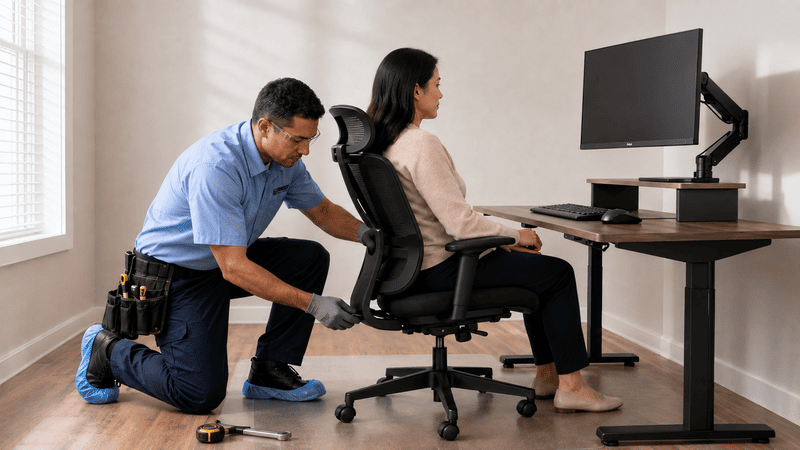
Remote workers need stable seating for the same reason office teams do. An unstable chair in a home office can waste time, create daily frustration, and leave a workstation feeling unfinished, especially when the chair height, desk height, and floor surface are already harder to balance.
Helpful setup steps for home offices include:
- Matching chair height to desk and monitor position
- Checking caster performance on the actual floor surface
- Confirming arm clearance under the desk
- Tightening hardware after full adjustment
- Testing recline and lumbar settings before daily use
That is why many professionals combine home office desk assembly support with a practical home office desk setup guide. It also complements broader home office furniture setup support and productive home office furniture assembly when hybrid employees are building out a full workspace.
Every Chair Should Be Tested Before Daily Use
Every chair should be tested before daily use because assembly is not finished when the last bolt goes in. Stability, rolling, recline, height range, arm alignment, and hardware tightness should all be checked under real use conditions.
A final test should include:
- Sit test for wobble or shifting
- Height adjustment check
- Recline and tension check
- Armrest alignment check
- Caster roll test on the actual floor
- Quick recheck of visible fasteners
Testing catches problems before employees do
This step is especially useful during bulk chair rollouts, coworking refreshes, and remote setups where a small assembly error may not show up until the chair is already in use.
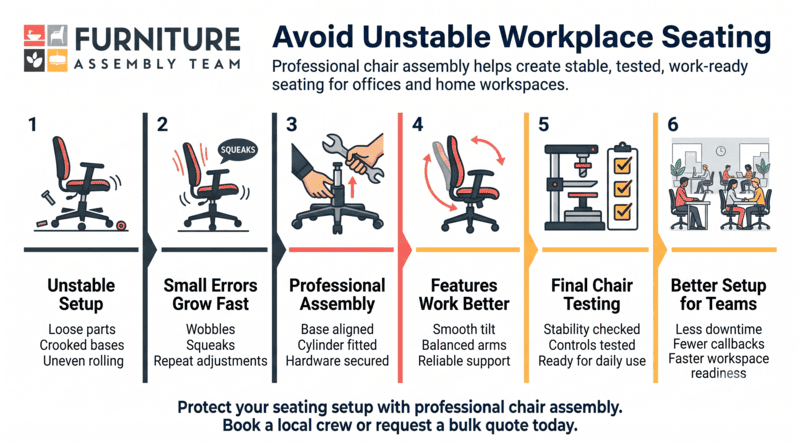
Professional Chair Assembly Helps Reduce Setup Risk
Professional chair assembly is recommended when seating needs to be stable, consistent, and ready for daily work without avoidable setup delays. It can help reduce common installation risks, support better feature performance, and keep office projects from turning into a patchwork of chair adjustments and maintenance calls.
Why businesses choose a trained crew
Corporate offices, small businesses, hybrid teams, and growing workspaces often need more than chair assembly alone. They need coordinated scheduling, efficient room by room setup, and dependable follow-through. Furniture Assembly Team provides complete furniture assembly service help for chairs, desks, and modular office layouts with a practical approach that fits active business environments.
Request Workplace Chair Assembly and Bulk Setup Help
Professional chair assembly helps office managers and remote professionals avoid unstable seating, loose hardware, wasted setup time, and repeat maintenance issues before they spread across a workspace. It is a practical way to support stable workplace seating during everyday operations and major transitions.
If your project also involves cleanup or adjacent room changes, planning may include equipment disposal help or even nearby home recreation setup in mixed-use properties.
Book stable seating setup now
Contact Furniture Assembly Team to request chair assembly help today and get a fast bulk setup quote or book a local crew online for office chair assembly, office furniture installation, home office desk assembly, modular workspace builds, and workplace seating setup.
Frequently Asked Questions
Why does an office chair wobble after assembly?
A wobble often starts with an uneven base connection, a poorly seated gas cylinder, or a misaligned seat plate.
Can loose chair hardware become a workplace problem?
Yes. Loose bolts and shifting parts can create repeat maintenance issues and make daily seating feel unreliable.
Do ergonomic chairs need professional assembly?
They often benefit from it because tilt systems, lumbar supports, arms, and seat pan controls work best when installed correctly.
What happens if a gas cylinder is installed incorrectly?
The chair may feel unstable, adjust poorly, or sit unevenly under normal use.
Can office chairs be assembled in bulk?
Yes. Bulk chair assembly is common during office moves, expansions, and new workspace rollouts.
Should remote workers hire help for chair setup?
It can be a smart choice when a home office chair, desk, and floor surface need to work together reliably.
How should office chairs be tested after assembly?
Each chair should be checked for wobble, rolling, height adjustment, recline response, arm alignment, and visible hardware tightness.
When should businesses request chair assembly help?
It is usually a good time when setting up multiple chairs, relocating offices, expanding teams, or dealing with repeated seating issues.