
Kitchen Cabinet Assembly and Installation Mistakes That Cost Homeowners Thousands

Kitchen Cabinet Installation Mistakes That Silently Damage Your Home and Budget
Many homeowners underestimate how much precision kitchen cabinet installation demands. Small errors in leveling, wall anchoring, and spacing create a chain reaction of problems including crooked cabinets, doors that will not close properly, and support structures that cannot hold real weight. These are not minor cosmetic concerns. They escalate into structural damage, safety hazards, and expensive repairs that far exceed what professional installation would have cost in the first place.
Working with walls, studs, load distribution, and manufacturer-specific sequencing requires training and experience that most DIY guides never fully address. Furniture Assembly Team provides accurate, long-lasting cabinet installation across Maryland, Washington DC, Delaware, Pennsylvania, and Northern Virginia. Before errors become costly to correct, explore professional furniture assembly services and request expert help today.
Why Kitchen Cabinet Installation Errors Can Lead to Costly Structural and Alignment Issues
Kitchen cabinet installation errors cause long-term structural and alignment damage because cabinets bear significant weight and must connect securely to structural wall framing. Even minor misalignments at the start of an installation multiply across every adjacent cabinet in the run, making correction increasingly expensive the longer the issue goes unaddressed.
When Small Errors Become Major Problems
When cabinets are not installed precisely, consequences reach well beyond appearance. An unleveled base cabinet causes countertops to crack at seams, drawers to jam repeatedly, and appliances to sit at uneven heights. Wall cabinets that are not properly aligned place unequal stress on mounting hardware, causing fasteners to loosen gradually and eventually pull free.
Furthermore, walls in older homes throughout Baltimore, Rockville, and Bethesda are rarely perfectly straight or plumb. Installers who fail to account for these surface irregularities mount cabinets that look flush initially but begin shifting within months.
Starting with a professional space planning assessment before installation begins allows teams to identify layout conflicts, wall irregularities, and structural concerns before a single cabinet is mounted. This proactive step prevents the most common cabinet assembly errors that homeowners discover only after the project is finished.
The Real Cost of Incorrect Cabinet Installation (Repairs, Rework, and Delays)
Incorrect cabinet installation leads to repair costs ranging from several hundred dollars for minor adjustments to more than $10,000 for full reinstallation in an average kitchen. Industry data places average cabinet repair costs between $200 and $490 per project, and those figures do not account for damaged countertops, flooring, or additional labor time spent correcting earlier mistakes.
Financial Consequences Homeowners Often Miss
Beyond direct repair bills, installation errors delay every downstream project phase. Countertop fabrication, plumbing connections, and appliance setup all depend on cabinets being correctly positioned first. Each delay adds labor costs and extends the period the kitchen remains out of service.
Cabinet assembly errors also reduce home resale value. Buyers and inspectors throughout Alexandria and Arlington quickly recognize misaligned cabinetry as evidence of poor workmanship, which lowers offers and can complicate the closing process when structural concerns are flagged.
Understanding the full scope of professional kitchen cabinet installation helps homeowners recognize the real value in hiring certified technicians from the beginning. Rework is consistently more expensive than completing the job correctly the first time.
Improper Cabinet Leveling and Its Impact on Door Alignment, Weight Distribution, and Longevity
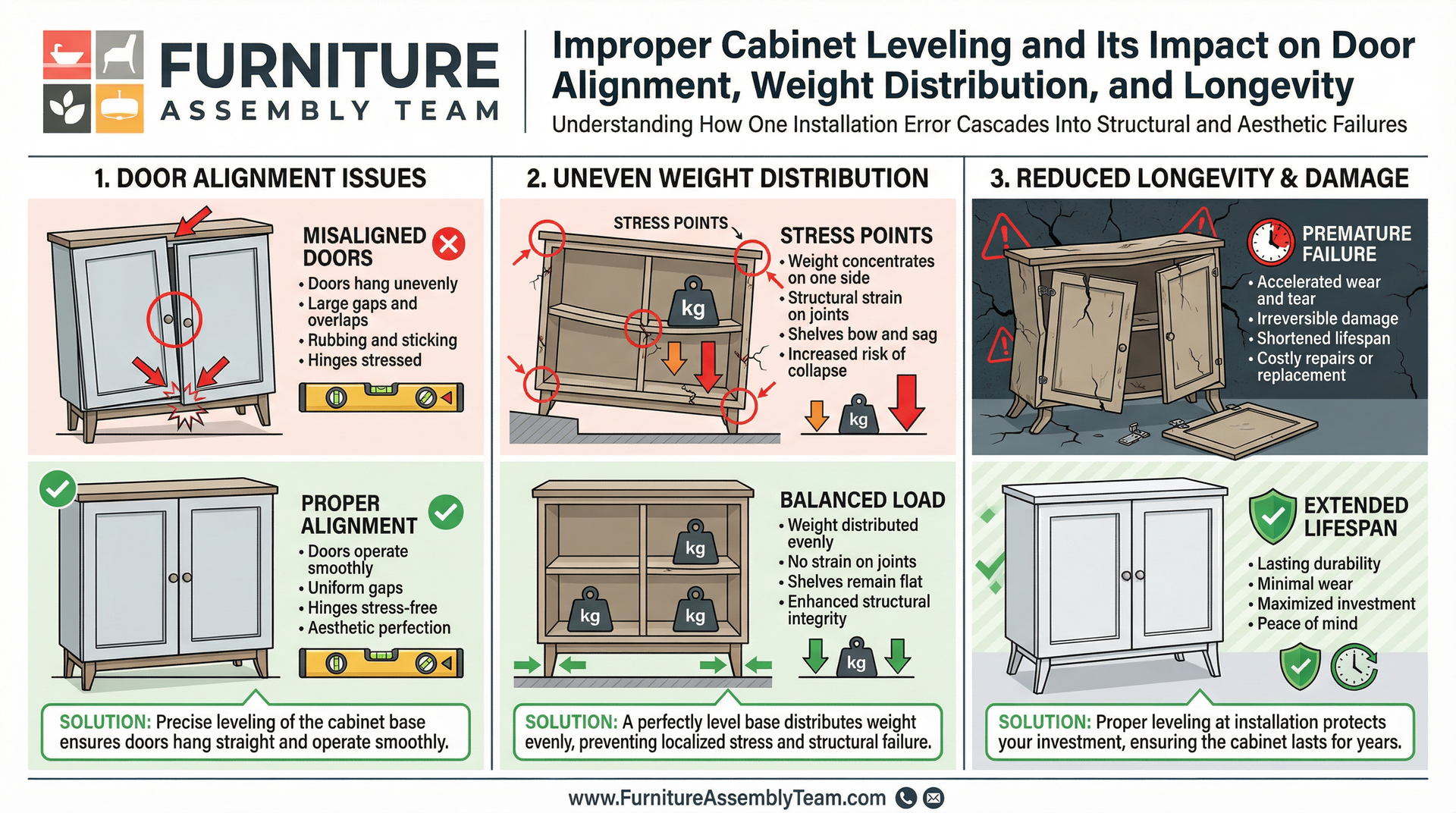
Improper cabinet leveling is one of the most damaging kitchen cabinet installation mistakes because it affects every component that attaches to or rests on the cabinet box. Doors that fail to close fully, drawers that slide unevenly, and countertops that crack under unequal pressure all trace directly back to a cabinet box that was not leveled correctly during the initial installation.
Why Leveling Requires More Than a Standard Bubble Level
Professional installers use laser levels and precision shims to achieve accuracy that standard bubble levels cannot reliably deliver. Floors throughout Wilmington and Harrisburg are rarely perfectly flat, and walls frequently vary by a quarter inch or more across a short run. These variations require careful shimming and incremental adjustment at every cabinet position.
Unleveled cabinets also distribute weight unevenly across mounting points. Over time, that unequal load causes cabinet frames to warp, screws to loosen, and hinges to wear out prematurely. When weight distributes correctly across a level and properly anchored cabinet, the unit lasts for decades without requiring adjustment.
- Precise shimming: ensures the cabinet box sits flat and level despite floor irregularities beneath it
- Laser leveling: maintains consistent height and alignment across full multi-unit cabinet runs
- Even weight distribution: prevents premature hinge fatigue, frame warping, and screw pullout over time
- Door and drawer function: only performs correctly when the cabinet box itself is properly leveled first
Wall Anchoring and Load Support: Why Cabinets Fail Without Proper Stud Installation
Wall anchoring directly into structural studs is the most critical step in any cabinet installation because it determines whether the cabinet can safely carry its intended load over time. Cabinets anchored into drywall alone, without structural stud connection, will eventually pull free from the wall regardless of how carefully they were initially mounted.
The Real Danger of Missed Studs
Upper wall cabinets routinely hold dishes, glassware, canned goods, and small appliances. That combined load frequently exceeds 50 to 100 pounds per cabinet unit. When screws are driven into drywall rather than structural studs, the drywall material cannot sustain that weight across months and years of regular use. This cabinet assembly error leads to sudden structural failure, damaged flooring below, and serious risk of injury to anyone nearby when a unit comes down.
Professional installers locate and mark every stud before mounting a single wall cabinet. They select appropriate screw lengths and structural mounting hardware to ensure a secure, load-bearing connection to the wall's framing. Additionally, they identify metal-framed walls, which require entirely different anchoring techniques than standard wood stud construction. Without that identification, even a careful DIY installer can create a costly and genuinely dangerous situation.
Cabinet, Countertop, and Appliance Alignment: Where Precision Installation Matters Most
Cabinet alignment determines how accurately countertops, sinks, dishwashers, and ranges fit into the finished kitchen. Even a small misalignment in cabinet placement creates visible gaps at countertop seams, uneven appliance heights, and inadequate clearance around range hoods and refrigerators throughout the space.
How One Alignment Error Multiplies Across the Kitchen
When base cabinets do not align to a consistent height and depth, countertop fabricators cannot produce a seamless surface. Gaps at countertop seams allow water infiltration that gradually damages the cabinet boxes positioned directly below. Appliances that do not sit flush in their designated openings also interfere with the drawer and door function of every adjacent cabinet unit.
Referencing standard kitchen layout dimensions helps homeowners understand why professional installers follow precise spacing guidelines throughout every stage of the process. Clearances between countertops, appliances, and base cabinets must meet functional and safety standards that extend well beyond visual aesthetics alone.
In open-plan homes where the kitchen and dining areas connect directly, overall design proportions matter from one room to the next. If you are selecting furnishings to complement your newly installed kitchen, reviewing how to choose the right table for your dining room ensures the full space stays balanced and well-planned from the start.
Manufacturer Requirements and Installation Guidelines Most Homeowners Overlook
Every cabinet manufacturer provides specific installation guidelines essential to maintaining warranty coverage and achieving the structural performance the product was designed to deliver. Skipping or misreading these requirements is a cabinet assembly error that voids warranties and produces installation failures the manufacturer will not cover under any claim.
What Manufacturer Documentation Actually Specifies
Most installation manuals outline required screw types and sizes, recommended mounting heights, wall anchoring sequences, and maximum load capacities that vary between product lines. Some systems require cabinets to be connected to each other using clamps before wall mounting begins. Others follow a specific sequence starting from a corner unit and working outward in one direction only.
Homeowners who skip the documentation review phase frequently install cabinets in the wrong sequence, which forces them to disassemble completed sections just to access an earlier mounting point. Furniture Assembly Team technicians review manufacturer documentation thoroughly before each installation, ensuring every product is assembled and mounted exactly according to its design requirements.
Equally important is how existing cabinetry is handled before new units go in. Removing old cabinets without following proper kitchen cabinet disassembly procedures damages walls, structural anchors, and plumbing connections, creating complications before the new installation even begins.
For homeowners undertaking a full kitchen and dining space renovation, coordinating professional dining table and chair assembly alongside the cabinet project ensures the entire living space is completed to the same standard of precision.
Installation Standards and Code Considerations for Long-Term Safety and Compliance
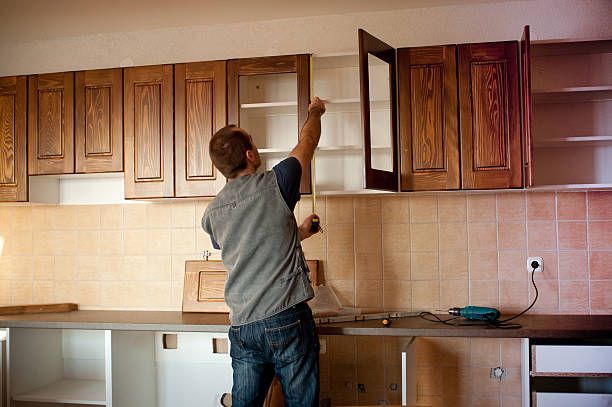
Kitchen cabinet installations are subject to building codes and safety standards governing height clearances, anchoring requirements, and proximity to electrical and plumbing systems. Failing to meet these standards creates compliance issues that surface during home inspections and can directly affect insurance coverage and property value.
Code Requirements That Are Frequently Missed
Range hood cabinets must maintain minimum clearances above cooktops according to local fire safety codes. Wall cabinets installed near electrical panels must preserve required access distances established by electrical code. ADA guidelines additionally establish maximum cabinet heights for homes designed to accommodate residents with mobility needs or disabilities.
Professional installers operating across Maryland and Washington DC understand the local residential code requirements that apply to kitchen projects in each jurisdiction. They also follow recognized global furniture compliance and safety standards that address material safety ratings and structural load benchmarks, ensuring every installation meets both local and broader industry requirements simultaneously.
These standards exist to protect homeowners from risks that remain invisible until a cabinet fails unexpectedly or an inspection uncovers a serious violation that requires licensed correction.
IKEA, Home Depot, Lowe's, and Custom Cabinets Each Require a Different Installation Approach
The installation method for kitchen cabinets varies significantly depending on the brand, construction type, and how the product arrives at the job site. Applying the same approach across different cabinet systems is a common kitchen cabinet installation mistake that results in improper mounting, failed alignment, and costly reinstallation.
Why Brand-Specific Knowledge Matters on Every Project
IKEA kitchen cabinets use the SEKTION rail-mounted frame system, which requires precise wall mounting before any cabinet box can attach to it. A typical IKEA kitchen contains 20 to 30 flat-packed boxes, each requiring individual assembly before wall work begins. Errors during box assembly alter how units align on the mounted rail, and those errors become very difficult to correct once the full system is in place.
Lowe's kitchen cabinetry and Home Depot stock cabinets arrive pre-assembled but still require precise marking, shimming, and sequencing to accommodate wall irregularities properly. Custom cabinets add another layer of complexity because they depend entirely on accurate site measurements taken before fabrication. A measurement error at that stage produces cabinets that arrive on delivery day and simply do not fit the space they were built for.
Each approach demands different tools, techniques, and sequencing knowledge. Just as TV stand and entertainment center installations require brand-specific methods to complete correctly, cabinet installation is not a universal process. Furniture Assembly Team technicians are trained across all major cabinet systems and apply the correct method for each product type.
When DIY Cabinet Installation Becomes Risky and Why Professionals Deliver Better Results
DIY kitchen cabinet installation becomes genuinely risky when homeowners lack direct experience with stud location, precision leveling tools, load calculations, and manufacturer sequencing requirements. These are not skills that develop from reading instructions alone. They require hands-on training and repeated application across different wall conditions, floor types, and cabinet systems.
The Compounding Effect of Early Installation Errors
A single error early in the process, such as setting the first cabinet even slightly out of level, compounds through every cabinet that follows in the run. By the end of a full kitchen installation, that small initial deviation can produce a visible slope across the entire cabinet line and misaligned doors in every unit.
Safety is an equally serious concern. Upper cabinets that are not anchored properly into studs place every household member at risk of sudden structural failure. Many homes throughout Bethesda and Rockville feature walls with older plaster finishes or inconsistent stud spacing that makes DIY stud detection unreliable without professional-grade equipment.
The principle that professionals consistently deliver safer, more durable results applies across home installation projects of all types. Whether a homeowner needs TV mounting and home electronics setup or a full kitchen cabinet installation, the combination of calibrated tools, brand-specific knowledge, and professional accountability always produces a better outcome than DIY attempts that encounter avoidable errors mid-project.
- Advanced stud detection: professionals locate studs accurately in old plaster, tile backers, and irregular wall assemblies
- Laser level precision: maintains accuracy across long cabinet runs where standard bubble levels consistently fall short
- Brand-specific training: ensures each cabinet system is installed according to its exact manufacturer requirements
- Warranty preservation: professional installation frequently maintains the manufacturer warranty that DIY work would otherwise void
- Project efficiency: experienced installation teams complete in one to two days what DIY attempts often stretch across multiple weekends
Avoid Costly Cabinet Installation Errors with Professional Help
Furniture Assembly Team delivers precision kitchen cabinet installation across Maryland, Washington DC, Delaware, Pennsylvania, and Northern Virginia. Whether your project involves IKEA flat-packs, custom cabinetry, or pre-assembled stock units from major retailers, our certified technicians manage every step of the process accurately from initial measurement to final door adjustment.
Contact Furniture Assembly Team today to schedule your cabinet installation or request a project quote. We serve homeowners throughout Baltimore, Alexandria, Arlington, Wilmington, Harrisburg, and surrounding communities.
Beyond kitchen cabinet installation, our team provides full-service furniture assembly, disassembly, and installation services for every room in your home. For specialty and outdoor installation needs that fall outside of residential furniture, trusted installation professionals are available for specialized outdoor equipment repair and installation including trampolines and recreational structures.
Homeowners setting up a complete home workspace will find expert guidance through home office and workstation assembly services covering desks, workstations, and full office setups. For outdoor recreational projects, professional teams specializing in basketball hoop installation for small driveways and limited spaces ensure safe and code-compliant setup from the ground up.
Frequently Asked Questions
What are the most common kitchen cabinet installation mistakes homeowners make?
The most common kitchen cabinet installation mistakes include improper leveling, failing to anchor into wall studs, skipping manufacturer installation sequences, and miscalculating the spacing required for appliances and countertops. These errors create alignment failures, structural weakness, and costly rework that professional installation prevents from the very beginning.
How can I tell if my cabinets were installed incorrectly?
Cabinets installed incorrectly typically show signs such as doors that do not close or align properly, drawers that stick or slide unevenly, visible gaps between cabinet faces, or countertops that are not flush at wall edges. A professional installer can assess these symptoms and determine whether adjustment or full reinstallation is the appropriate solution.
Why do upper wall cabinets sometimes fall off the wall?
Upper wall cabinets fall primarily because they were anchored into drywall rather than structural studs. Drywall alone cannot sustain the sustained weight of a fully loaded cabinet over time, and fasteners eventually pull through the surface. Professional installers always locate and mount into structural studs using appropriately sized fasteners for a secure, long-lasting connection.
Does incorrect cabinet installation damage countertops?
Incorrect cabinet installation directly compromises countertop performance and longevity. Unleveled base cabinets cause seams to open gradually over time, create stress fractures in stone surfaces, and prevent a flush fit at walls and appliance edges. Countertop fabricators require a level and plumb cabinet base before they can template or install any surface material.
Do IKEA cabinets need professional installation?
IKEA cabinets require accurate box assembly followed by precise rail mounting, and errors at either stage compromise the entire cabinet run. While IKEA markets the SEKTION system as DIY-friendly, many homeowners find that the sequencing complexity and leveling demands make professional installation the more reliable and efficient choice for their kitchen.
How long does professional kitchen cabinet installation take?
Professional kitchen cabinet installation for an average kitchen typically takes one to three days, depending on the cabinet quantity, layout complexity, and any wall or floor irregularities requiring correction. DIY installations frequently take significantly longer because of the learning curve and the additional time spent addressing avoidable errors mid-project.
What happens if cabinet installation does not meet local building codes?
Cabinet installations that do not meet local building codes can fail home inspections, delay property sales, and create liability concerns for homeowners. Issues such as insufficient clearance above cooktops or improper anchoring near electrical systems may require licensed correction before a home can pass inspection or successfully transfer ownership.