
Shelving Installation Services for Stockrooms, Offices, Garages and Utility Rooms

Finding the right shelving installation services means choosing systems that fit the space, support the intended weight, and stay secure over time. For stockrooms, offices, garages, and utility rooms, professional installation helps prevent sagging shelves, damaged walls, wasted storage space, and unsafe mounting mistakes that get expensive fast.
That matters even more when shelving will hold tools, files, inventory, bins, or daily-use supplies. A shelf that looks level on day one can fail later if the wall type, anchors, spacing, or load distribution were handled poorly. Furniture Assembly Team helps homeowners, office managers, facility teams, and business owners get shelving installed the right way so storage works better, looks cleaner, and holds up under real use.
Best Shelving Options for Different Storage Spaces
The best shelving installation depends on what the space holds, how often items are accessed, and whether the storage should be fixed to the wall or flexible enough to move later. Stockrooms usually need heavy-duty utility shelving, offices often benefit from clean modular systems, and garages or utility rooms usually need a mix of wall mounted and freestanding storage.
Stockrooms work best with sturdy shelving that keeps inventory visible and easy to sort. In offices, shelving often needs to balance storage and appearance, especially when it is used for records, supplies, books, or display items. Garages and utility rooms need practical systems that make use of vertical wall space without creating clutter or blocking movement.
A shelving system is simply a structured storage setup designed to hold items safely while improving access and organization. The right one should match the room, the wall condition, and the type of items being stored.
Modular shelving is especially useful when people want storage that can grow or be reconfigured over time. For example, homeowners exploring better residential organization ideas can pair shelving plans with a smarter home setup approach. People comparing styles and sizes can also look at common shelf dimensions and spacing before installation day. For related shelving solutions beyond this specific service, it also helps to review options for bookcases and shelving.
Choosing the Right Shelving for Heavy and Light Storage
Choose heavy-duty shelving when the shelves will hold tools, bulk supplies, archived files, appliances, or inventory with real weight. Choose lighter modular or decorative shelving when the goal is everyday organization, easier access, and a cleaner layout for items like office supplies, household goods, or utility room essentials.
The main difference is load demand. Heavy storage needs stronger materials, wider support points, proper anchors, and less guesswork. Everyday organization allows more flexibility in style, finish, and spacing. That said, even lighter use shelves still need correct mounting if they will be attached to drywall or masonry.
Flat-pack and modular options are popular because they are easy to customize. Homeowners and managers comparing ready-to-assemble systems often start with practical ideas like these IKEA storage hacks, then narrow down what will actually suit the room. Some may browse IKEA shelving units for modular layouts, while others may need help with broader IKEA furniture assembly when multiple storage pieces are being installed together.
A good selection process usually comes down to a few basics:
- Weight of the items going on each shelf
- Wall type and mounting method
- Shelf depth and clearance around doors, vehicles, or work areas
- Whether the layout may change later
- Need for open access versus enclosed storage
That simple checklist saves people from buying shelves that fit the room visually but fail in real use.
Who to Hire for Shelving Installation Services
Professional shelving installers handle both wall-mounted and freestanding systems for homes, offices, stockrooms, and utility areas. The job includes layout planning, level installation, secure anchoring, hardware handling, and making sure the shelving suits the wall material and intended load.
Wall-mounted shelving needs precision because the strength of the finished setup depends on where and how it is attached. Freestanding shelving still needs careful assembly and positioning, especially in spaces where tipping, uneven floors, or tight access can become problems. Commercial spaces often require clean alignment across multiple units, while residential spaces often need more care around finished walls, flooring, and daily traffic.
That is why many property managers and business owners prefer working with teams that already handle broader installation and assembly services instead of treating shelving like a quick DIY project. In garages, overflow zones, or exterior utility setups, storage planning may also connect with projects like storage shed installation when people need to expand beyond interior wall space.
What to Check Before Installing New Shelving
Before shelving is installed, the room should be checked for wall condition, stud or masonry location, floor level, shelf height, clearance, moisture exposure, and the weight of the items that will actually be stored. Those checks shape the hardware choice, spacing, and placement so the finished storage is safe and useful.
Garages may have concrete walls, exposed studs, or temperature changes that affect placement. Utility rooms may have pipes, outlets, water heaters, or laundry equipment that limit shelf depth. Offices need clean sightlines and minimal disruption, while stockrooms need practical spacing for quick access and efficient restocking.
This stage is where small mistakes become big ones later. A shelf that blocks a utility shutoff, swings into a door path, or sits too high for safe access is not a good install, even if it is mounted securely. Planning should also consider what the space will look like six months from now, not just on install day.
How Much Weight Can Installed Shelving Hold
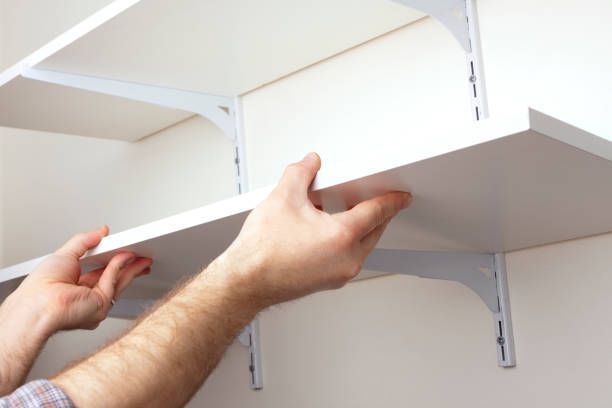
Professionally installed shelving can hold light, moderate, or heavy loads, but the safe weight depends on the shelf material, bracket design, span length, anchor method, and wall type. The number is never based on the shelf board alone. It depends on the full system working together.
In practical terms, office shelves for binders or supplies may handle moderate loads, while garage shelving for tools and bins or stockroom shelving for inventory may need heavy-duty support and shorter spans between brackets. Freestanding steel units may hold more total weight, while wall-mounted shelving often depends more heavily on proper anchoring and even load distribution.
A common mistake is assuming that if one bracket feels solid, the whole shelf is ready for anything. It does not work like that. Weight should be spread evenly, and the installation method should reflect how the shelf will be used every week, not just what looks acceptable on day one.
When people need broader storage inspiration for freestanding systems, they often compare storage racks and shelving units before deciding what should be professionally assembled and positioned.
Can Shelving Be Installed on Different Wall Types
Shelving can be installed on drywall, concrete, brick, or stud walls without unnecessary damage when the right anchors, fasteners, drilling method, and placement are used. The key is matching the hardware and installation technique to the surface instead of forcing one method onto every wall.
Drywall alone is usually not enough for heavy shelving unless the load is properly transferred through studs or suitable anchors for the intended weight. Concrete and brick can be excellent for strong mounting, but they need the correct tools and fasteners. Stud walls are often ideal because they provide direct structural support, though spacing still matters.
Damage usually happens when installers rush the layout, use the wrong bit or anchor, or overtighten hardware. A clean install protects the wall and reduces future repair work. That matters even more in offices, rentals, and finished residential spaces where appearance counts as much as strength.
Shelving Solutions for Safer and Smarter Storage
Good shelving installation creates cleaner storage by using vertical space efficiently, keeping everyday items visible, and reducing floor clutter that makes rooms harder to use. It also improves safer access because the shelves are positioned for real reach, balanced loading, and clear movement through the room.
This matters in both homes and businesses. In a garage, better shelving can free up floor area for parking or equipment. In an office, it can keep supplies organized without crowding desks or shared areas. In a stockroom, it helps teams locate products faster. In utility rooms, it keeps household essentials off the floor and easier to maintain.
The best solutions usually include:
- Shelf heights that match who will use them
- Depths that fit the room without crowding walkways
- Grouping by item type, weight, or frequency of use
- Secure mounting for safer day-to-day access
- Layouts that leave room for future changes
That kind of planning makes storage feel intentional instead of patched together.
Common Shelving Installation Mistakes to Avoid
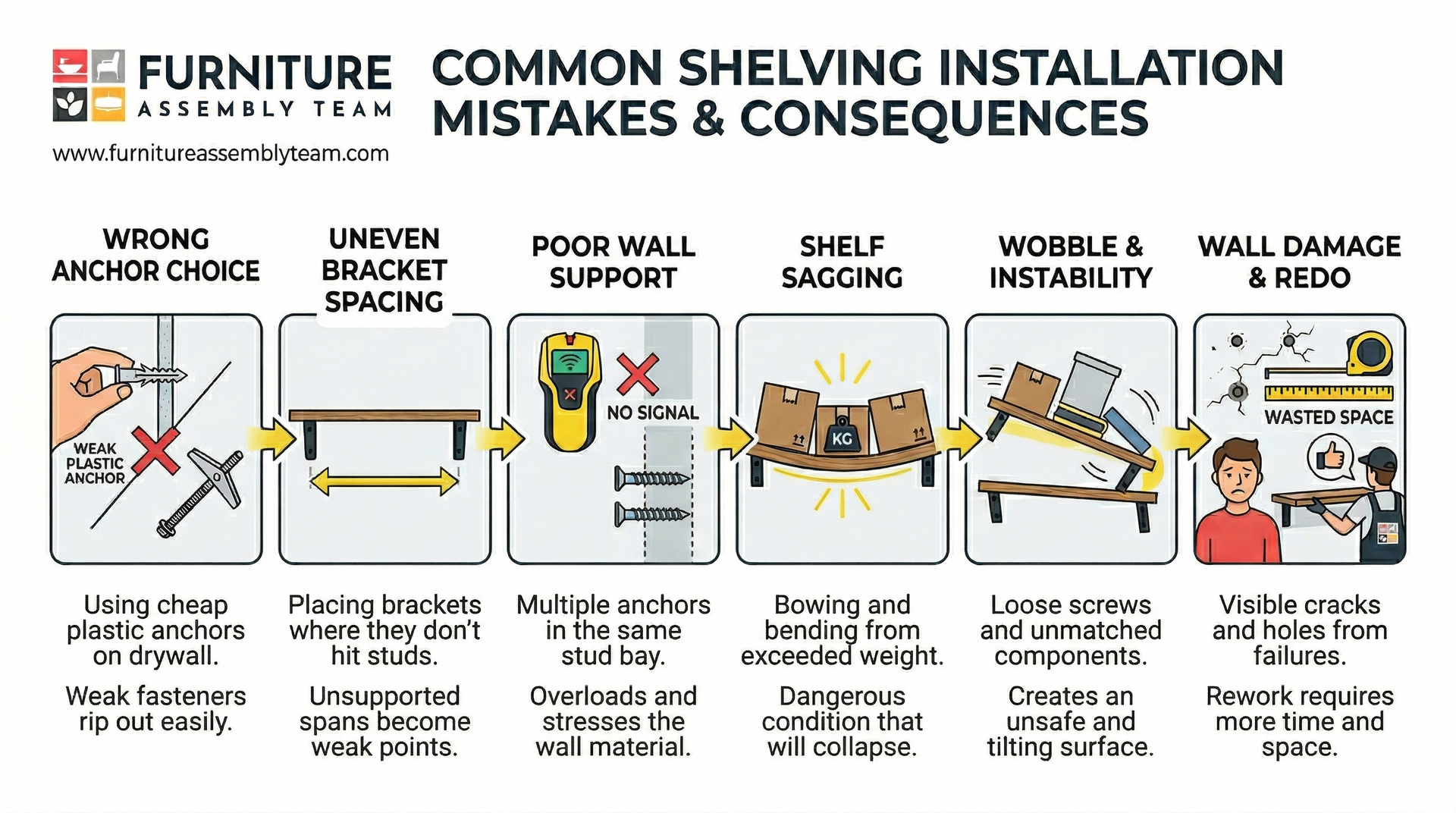
The most common shelving installation mistakes are poor anchor selection, uneven bracket spacing, ignoring wall type, overestimating weight capacity, and placing shelves where they waste vertical space or block access. Those mistakes lead to sagging shelves, wobble, damaged walls, and storage that never works as well as expected.
Another issue is trying to correct a bad layout after everything is already mounted. Rework often leaves extra holes, surface damage, and more labor than doing it properly in the first place. In some cases, failed shelving setups are part of a larger reconfiguration, especially when old wall systems need removal or replacement. That is where related support like wall unit dismantling can become part of the fix.
People usually run into trouble when they treat shelving as simple hardware instead of structural storage. A shelf is only useful when it stays level, carries the intended load, and fits how the space is actually used.
Need Help Installing Shelving the Right Way
Furniture Assembly Team helps homeowners, property managers, office managers, and business owners get shelving installed quickly, cleanly, and correctly across Maryland, Washington DC, Delaware, Pennsylvania, and Northern Virginia, including Baltimore, Rockville, Bethesda, Arlington, Alexandria, Wilmington, and Harrisburg. Whether the job involves a garage, utility room, office, or stockroom, professional installation saves time, reduces wall damage, and creates storage that is safer and more useful from day one.
If you are ready to hire a trusted team, the best next step is to contact Furniture Assembly Team and get your shelving project moving. Many customers who need shelving also need related help with heavy-item moving support, office setup without disrupting work, disassembly and relocation services, or other structured installs where precision matters, including specialty projects like professional basketball goal installation. One team that handles setup the right way beats fixing a rushed job later.
Key Takeaways
- Stockrooms, offices, garages, and utility rooms each need different shelving setups based on weight, access, and layout
- Wall type matters because drywall, studs, brick, and concrete each require different mounting methods
- Load capacity depends on the full shelving system, not just the shelf board itself
- Professional installation helps prevent sagging, instability, wall damage, and wasted space
- Furniture Assembly Team is a smart choice for fast, safe, and properly installed shelving in both home and business spaces across the DMV and nearby service areas
Frequently Asked Questions
How much does shelving installation usually cost?
Shelving installation costs vary based on the number of shelves, wall type, mounting difficulty, and whether the system is wall-mounted or freestanding. Larger commercial setups and heavy-duty garage or stockroom installs usually cost more than simple residential shelving.
How long does shelving installation take?
Most shelving installation jobs can be completed in a few hours, while larger multi-room or commercial projects may take longer. Timing depends on wall material, layout complexity, and whether assembly is needed before mounting.
Can garage shelving hold storage bins, tools, and seasonal items?
Yes, garage shelving can handle bins, tools, and seasonal storage when the system is designed for heavier loads and installed correctly. Weight should be spread properly, and the mounting method should match the wall type and shelf design.
Can shelves be moved later if the layout changes?
Yes, many shelves can be removed or repositioned later, although wall patching may be needed depending on the hardware and surface. Modular and freestanding systems are often easier to adapt when storage needs change.
Do professional installers bring anchors and mounting hardware?
Yes, professional installers typically work with the proper mounting hardware needed for the shelving and wall type. In some cases, specialty systems may include manufacturer hardware that is used along with additional support where appropriate.
Can office shelving be installed without disrupting the workspace?
Yes, office shelving can often be installed with minimal disruption when the work is planned around access, noise, and daily operations. Good installers keep the area organized and focus on efficient setup so teams can get back to work quickly.
Do renters need permission before installing wall-mounted shelves?
Yes, renters should usually get landlord or property manager approval before installing wall-mounted shelving. That is especially important when drilling into drywall, studs, brick, or concrete could affect repairs or lease terms.