
How Professional Outdoor Furniture Assembly Prevents Structural Lean and Severe Weather Damage
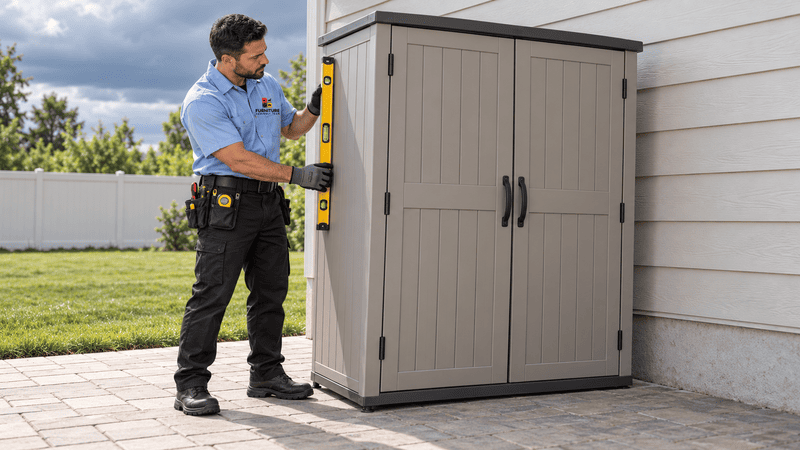
Professional outdoor furniture assembly focuses on accurate frame alignment, level placement, secure hardware, manufacturer-directed connections, appropriate anchoring considerations, and final stability checks. How a piece performs outdoors depends on more than the product itself. Surface conditions, structure size, drainage, wind, moisture, installation location, and manufacturer instructions all shape long-term performance.
- Uneven assembly can create a visible lean that worsens with regular use.
- Loose hardware tends to back out further as furniture shifts and vibrates.
- Outdoor surfaces like pavers, decks, and soil directly affect how level a frame sits.
- Anchoring requirements depend on the structure, the substrate, and the site.
- Weather exposure can magnify small setup problems within a single season.
Outdoor Furniture Problems Often Start Before the First Storm
A new patio set or gazebo can look perfectly stable on installation day. Weeks later, that same structure may wobble, tilt, or creak under normal use. This is exactly where professional outdoor furniture assembly makes a practical difference. A slightly uneven base, one loose bracket, or a frame tightened out of sequence can grow into visible structural lean once rain, heat, wind, and seasonal ground movement enter the picture. Small alignment errors rarely stay small outdoors. Instead, repeated moisture and temperature swings stress every connection point.
Professional installation addresses leveling, hardware, surface conditions, and manufacturer requirements before regular outdoor exposure begins. That early accuracy gives outdoor furniture a far better starting position.
A Slight Lean Can Point to Bigger Setup Problems
Structural lean usually traces back to the base, the frame, or the fasteners. Uneven concrete, settled pavers, soft soil, misaligned legs, and poorly seated connectors all shift weight onto the wrong support points. Over time, that imbalance becomes visible.
Professional outdoor furniture assembly means assembling, aligning, leveling, securing, and checking exterior furniture or structures according to manufacturer instructions, site conditions, installation surfaces, and intended outdoor use.
Common Causes of Structural Lean
A lean does not always mean the furniture is defective. In many cases, the product performs exactly as designed, but the setup conditions work against it.
Common causes include:
- Uneven concrete or cracked patio slabs
- Pavers that have settled or shifted
- Soft soil that compresses under post bases
- Deck boards that flex or move
- Loose fasteners and brackets
- Incorrect frame assembly sequence
- Misaligned legs or uneven support points
- Poorly seated connectors
- Seasonal ground movement
- Repeated dragging or repositioning of furniture
Consider a homeowner in Arlington, Northern Virginia, who sets a new outdoor sectional on an older paver patio. The frame feels firm at first. However, one settled corner paver transfers extra load to a single leg. Within a few months, the sectional rocks and the frame twists slightly.
Why Frames Drift Out of Square
Frames need squaring before final hardware tightening. Technicians check diagonal measurements, leg alignment, bracket position, and cross-bracing before locking connections down. If one corner sits out of square, every later step compounds the error.
Fastener tension matters just as much. Overtightening can strip threads or crack some materials. Undertightening leaves connections loose. When available, manufacturer torque or fastening guidance should be followed. Crews providing patio furniture assembly and setup work through this sequence methodically, so the frame carries weight evenly from the start.
Weather Exposure Tests Every Connection
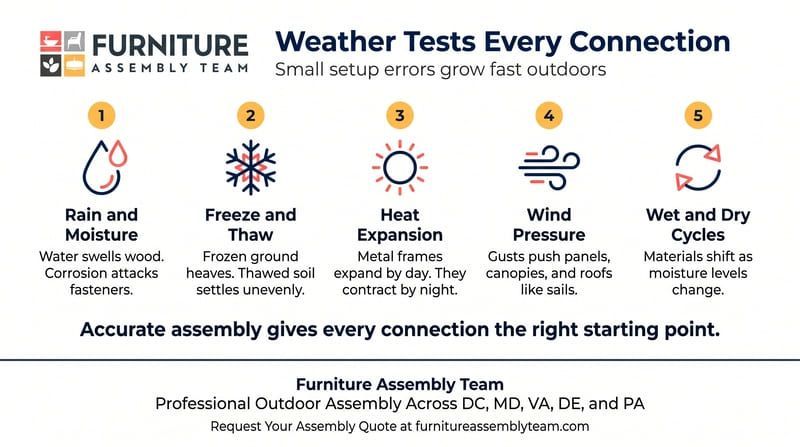
Outdoor exposure magnifies small assembly errors. Rain, moisture, freeze-thaw cycles, heat expansion, direct sunlight, and wind all stress hardware and materials. A connection that feels tight in July may loosen by March.
What Rain, Heat, and Wind Do to Hardware
Outdoor furniture lives under constant stress cycles. The most common weather-related pressures include:
- Rain and moisture: Water swells wood, corrodes unprotected fasteners, and softens ground beneath posts.
- Freeze-thaw cycles: Frozen soil heaves upward, then settles unevenly when it thaws.
- Heat expansion: Metal frames expand in direct sun, then contract at night.
- Wind: Gusts push against large panels, canopies, and roof sections like sails.
- Repeated wetting and drying: Wood and composite materials move as moisture content changes.
Weather resistance depends on product design, materials, manufacturer specifications, maintenance, installation conditions, and exposure. No assembly method makes a structure weatherproof. Still, accurate setup helps a product perform the way its manufacturer intended. Homeowners who invest in professional outdoor furniture assembly services give every connection a correct starting point before those stress cycles begin.
A gazebo on a Maryland property in Bethesda illustrates this well. If the roof panels were seated slightly off during assembly, wind-driven rain finds the gap. Moisture then works into the hardware, and corrosion accelerates loosening.
Surface Conditions Decide How the Frame Should Sit
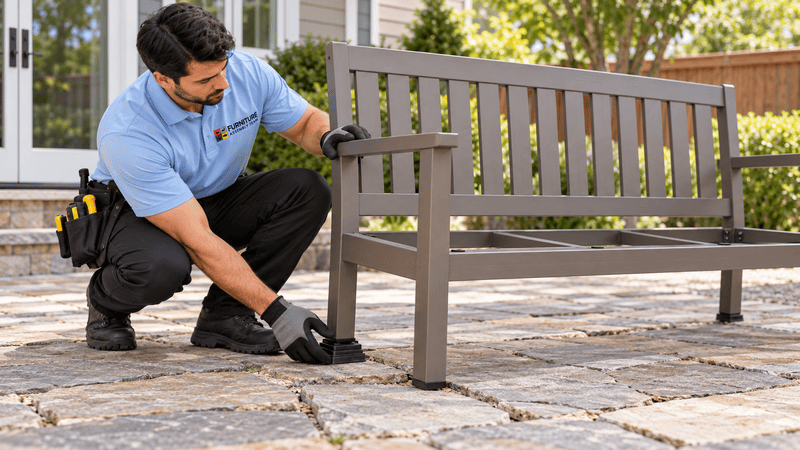
Patios, decks, pavers, concrete, soil, grass, and gravel are not interchangeable installation surfaces. Each one carries load differently, drains differently, and moves differently across seasons. The installation approach should match the actual surface.
Matching the Installation to the Surface
Before assembly begins, technicians evaluate slope, settlement, drainage, and substrate condition. The table below summarizes how common surfaces affect outdoor furniture and structure installation.
| Surface Type | Main Risk | Typical Consideration |
|---|---|---|
| Concrete slab | Cracking, uneven pour | Check slope, confirm solid anchor points |
| Paver patio | Settlement, joint movement | Verify level across multiple pavers |
| Wood or composite deck | Board flex, deck movement | Use appropriate post bases and fasteners |
| Soil or grass | Soft ground, poor drainage | Evaluate compaction and water flow |
| Gravel bed | Shifting under load | Confirm stable, compacted base |
Shimming can correct minor irregularities on some surfaces. However, not every uneven surface can be corrected without additional site work. Significant slope, drainage problems, or crumbling concrete may need attention before installation begins.
Furniture feet and post bases also matter. Wide feet distribute load better on soft ground. Post bases need solid, well-drained bearing points. In Washington, DC, rowhouse terraces often combine old concrete with newer pavers. That mix demands careful, point-by-point leveling rather than assumptions.
Pergolas, Gazebos, and Sheds Need Different Installation Methods
Large backyard structures follow different rules than patio furniture. Pergolas, gazebos, and sheds involve post alignment, roof framing, panel sequencing, and structure-specific anchoring. Each type demands its own installation plan.
Pergolas and Gazebos: Anchoring Depends on the Structure
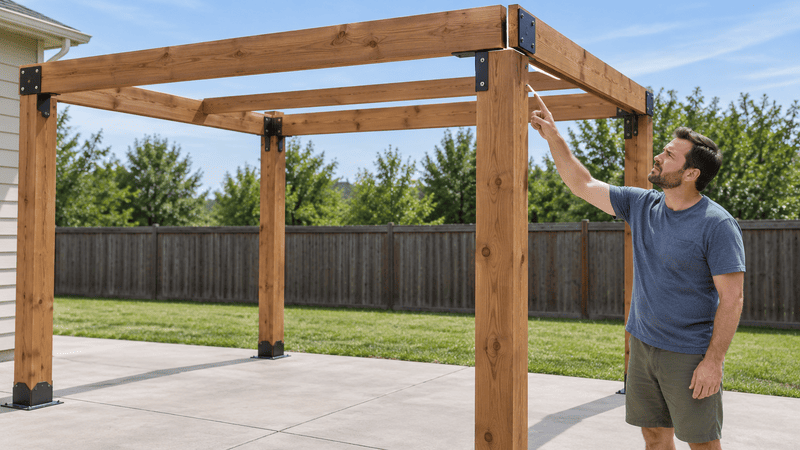
Anchoring is structure-specific. Gazebos, pergolas, and some larger furniture systems may require stabilization based on size, wind exposure, and substrate condition.
Common anchoring considerations include:
- Manufacturer-provided hardware and brackets
- Concrete mounting on sound slabs
- Ground anchoring in suitable soil
- Post bases rated for the application
- Structural brackets at frame joints
- Deck attachment using appropriate fasteners
- Structure height and canopy surface area
- Substrate condition and age
No single anchoring method suits every structure. Anchoring should follow manufacturer instructions, site conditions, and applicable local requirements. Property owners should confirm local requirements with the appropriate authority before installation. Crews delivering professional pergola assembly services evaluate these factors on site rather than applying a generic approach.
Storage Sheds: Panels, Doors, and Roof Framing
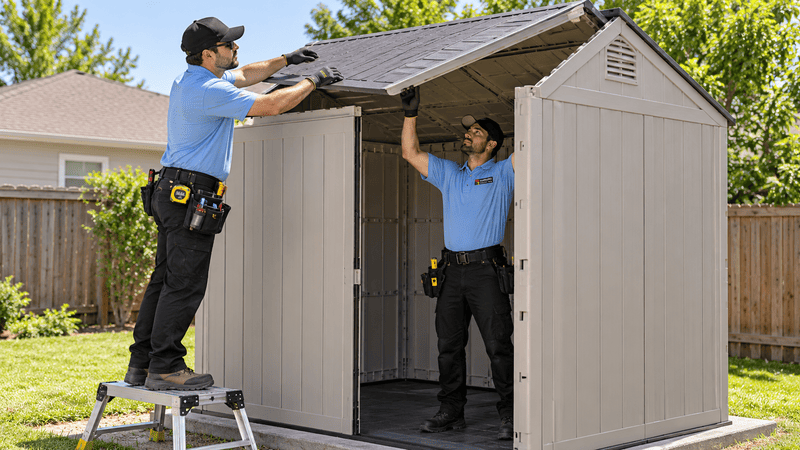
Sheds punish sloppy sequencing. Wall panels must sit plumb before the roof framing goes on. Door openings need accurate alignment, or doors drag and latch poorly within weeks.
A landlord preparing a rental property in Wilmington, Delaware, learns this quickly. A shed assembled out of sequence develops a racked frame. The doors stick, the roof panels gap, and water finds its way inside. Careful professional garden structure assembly services keep panels squared, door openings true, and roof sections seated correctly from the start.
Small Assembly Errors Can Become Expensive Outdoor Repairs
Minor setup mistakes compound outdoors. A loose bolt becomes a bent bracket. A racked frame becomes a cracked panel. Correcting these problems later usually costs more time and effort than proper assembly does upfront.
Why Professional Assembly Reduces Setup Guesswork
Homeowners often choose professional installation for practical reasons:
- Heavy panels and long structural members need multiple installers
- Complex instructions require careful sequencing
- Overhead work on roofs and canopies adds difficulty
- Specialized tools support accurate frame squaring
- Surface leveling demands patience and the right materials
- Hardware sequencing errors are easy to make and hard to spot
Professional installation can reduce assembly guesswork, supports accurate frame alignment, and helps keep components organized. It may reduce avoidable installation errors and can make demanding outdoor projects easier to manage. It also reduces the physical strain of lifting, holding, and aligning large parts.
Why Homeowners Choose Furniture Assembly Team
Furniture Assembly Team is fully licensed and insured, providing professional support for residential and property management outdoor assembly projects. The team handles patio dining sets, outdoor sectionals, pergolas, gazebos, storage sheds, benches, and covered seating areas based on manufacturer instructions and actual site conditions.
Specialized outdoor assembly crews deploy daily across Washington, DC, Maryland, Delaware, Pennsylvania, and Northern Virginia. Their work helps reduce structural guesswork, supports accurate frame alignment, and helps property owners approach installation with a clearer plan. Clean work practices and property-conscious installation come standard on every project.
Get Your Backyard Project on the Schedule
Correct assembly, leveling, alignment, hardware checks, and site-aware installation help outdoor furniture and structures perform as intended. Whether the project involves a new patio dining set, a pergola, a gazebo, or a storage shed, professional outdoor furniture assembly addresses the details that weather exposure will eventually test.
Furniture Assembly Team coordinates every project with care, from frame squaring through final stability checks. Explore the full range of professional furniture assembly services to plan your project, or request an outdoor assembly quote to schedule installation support for your property.
Frequently Asked Questions
Why does outdoor furniture start leaning?
Lean usually comes from uneven surfaces, loose fasteners, misaligned legs, or ground movement. Small setup issues become more visible as the furniture settles and shifts.
Can uneven patio surfaces affect furniture assembly?
Yes. Settled pavers, sloped concrete, and soft soil all affect how level a frame sits. The installation approach should match the actual surface conditions.
Should pergolas and gazebos be anchored?
Many pergolas and gazebos benefit from anchoring or stabilization. The right method depends on manufacturer instructions, structure size, wind exposure, and substrate condition.
Can professional assembly help outdoor furniture handle weather better?
Professional outdoor furniture assembly supports accurate alignment, secure hardware, and correct sequencing from day one. That solid starting point helps a product perform as its manufacturer intended under normal exposure.
What causes outdoor furniture bolts to loosen?
Vibration, repeated use, thermal expansion, moisture, and corrosion all work hardware loose over time. Correct initial tightening and periodic checks help manage this.
Can a shed be installed on an uneven surface?
Minor irregularities can sometimes be managed, but significant slope or soft ground may need site work first. Surface conditions should be evaluated before installation begins.
How often should outdoor furniture hardware be checked?
A seasonal check works well for most pieces. Inspect fasteners after major storms and at the start of each heavy-use season.
When should I hire professional outdoor furniture assemblers?
Consider professional help for large or heavy items, complex instructions, anchoring needs, or uneven surfaces. It also makes sense when a project requires multiple installers or overhead work.