
Senior Living Furniture Setup Services for Bedrooms, Common Areas and Care Spaces

Professional senior living furniture setup helps create safer, more comfortable, and easier to use spaces for older adults in bedrooms, common areas, and care settings. When furniture is placed without enough clearance, stability, or day-to-day function in mind, even a well-furnished room can become harder to navigate and less supportive over time. That is why layout, assembly quality, and room flow matter so much in senior environments.
Furniture Assembly Team helps families, caregivers, property managers, and senior living operators set up rooms in a way that supports comfort, mobility, and practical daily living across Maryland, Washington DC, Delaware, Pennsylvania, and Northern Virginia.
What Makes Furniture Setup Different in Senior Living Spaces
Senior living furniture setup is different because the goal is not just to fill a room. The setup must support safety, easier movement, daily routines, caregiver access, and long-term comfort, all while making the space feel calm and familiar.
In a regular home, furniture placement often focuses on style first. In senior living settings, function has to lead. A bed that is too close to the wall, a chair that shifts too easily, or a dresser that blocks walking space can turn a simple room into a frustrating one.
Senior living furniture setup means arranging and assembling furniture so the space works with reduced mobility, changing health needs, and safer day-to-day use. That includes stable placement, practical height, smoother pathways, and layouts that do not create unnecessary obstacles.
This is also where product suitability matters. Furniture used in senior spaces should be sturdy, appropriately scaled, and positioned with real use in mind. It also helps to understand broader furniture safety and compliance expectations, especially in environments where durability and safe performance matter more than trendy design.
How Should Bedrooms Be Furnished for Comfort and Safety
Senior bedrooms should be furnished with stable essentials, open pathways, easy-to-reach storage, and a layout that supports getting in and out of bed safely. Comfort matters, but so do clearance, furniture height, and the ability to move through the room without squeezing around obstacles.
The bed is usually the anchor piece, so placement comes first. It should allow easy access from the most practical side, leave room for mobility aids if needed, and avoid crowding the door or bathroom path. Dressers, nightstands, and chairs should support daily routines without making the room feel tight.
Families often underestimate how much assembly quality affects bedroom safety. Loose hardware, uneven frames, and poorly positioned pieces can create issues fast. That is why professional help with bed frame and bedroom set assembly can make the room safer from day one.
When a room needs to feel more familiar and residential, thoughtful use of home-style furniture assembly support can help preserve comfort without sacrificing function. If an old layout no longer works, removing bulky pieces may be the smarter move. In those cases, headboard disassembly for safer room reconfiguration can make it easier to reset the room around current needs.

What Furniture Works Best in Senior Living Common Areas
The best furniture for senior living common areas is sturdy, comfortable, easy to sit in and stand from, and arranged to support conversation without blocking movement. Shared spaces work better when seating, tables, and traffic paths are balanced instead of crowded.
Common areas often serve several purposes at once. Residents may gather, relax, read, dine, or meet with family in the same zone. Because of that, furniture should support both comfort and circulation. Oversized pieces can make the room harder to use, while lightweight or unstable furniture can feel unsafe.
Sectional seating can work well in lounges when it is assembled correctly and positioned with enough room around it. In shared sitting areas, properly installed sectional sofa assembly for lounge-style spaces helps create seating that feels welcoming instead of awkward or unstable.
Dining and activity tables also need careful selection. Shape, leg placement, and overall footprint all affect access and comfort, especially in multipurpose rooms. A helpful place to start is understanding how to choose the right table for shared dining and gathering areas.
Furniture that usually works best in common areas includes:
- Firm chairs with supportive backs and arms
- Tables sized for conversation without narrowing the walkway
- Sofas arranged to encourage interaction without trapping foot traffic
- Storage pieces placed along walls instead of in active pathways
Can Setup Choices Improve Mobility and Daily Ease
Setup choices can improve mobility and daily ease by reducing obstacles, widening usable pathways, and making everyday actions feel less tiring. The right layout can help residents move more confidently, while the wrong one can quietly increase frustration and fall risk.
Clearance is one of the biggest factors. Walkers, canes, and wheelchairs need practical space, not leftover space. Rooms should be arranged so the person can turn, reach, sit, stand, and move between key areas without awkward angles or tight squeezes. In many cases, the best reference point is the ADA design standards for accessible spacing and clearance, especially in shared or care-related environments.
Daily ease also depends on furniture placement that matches real habits. A bedside table should be within easy reach. A favorite chair should not require weaving around two other pieces. Storage should support independence rather than force repeated bending or stretching.
This becomes especially important during downsizing or a transition into assisted living. Families often benefit from reading a practical guide on senior moving services and room transition planning before deciding what should come, what should go, and how each room should be reset.
How Do Care Spaces Need to Be Furnished Differently
Care spaces need to be furnished differently because they must support both the resident and the caregiver. That means leaving more working room, using simpler layouts, and choosing furniture that makes assistance, cleaning, and daily care tasks easier.
Unlike a standard bedroom, a care space may need room for transfers, bedside support, medical equipment, or quicker access around the bed and chair. Furniture should not crowd caregiving zones or make routine tasks more difficult than they already are.
Ready-to-assemble furniture is often used in these spaces because it is practical and widely available. Still, correct setup matters. That is where IKEA furniture assembly for functional senior rooms can be useful when families or facility teams need dependable pieces installed properly.
Sometimes the need is urgent, such as after a last-minute admission or when broken furniture must be replaced quickly. In those cases, having access to
emergency setup help for time-sensitive room changes can reduce stress and get the space usable sooner.
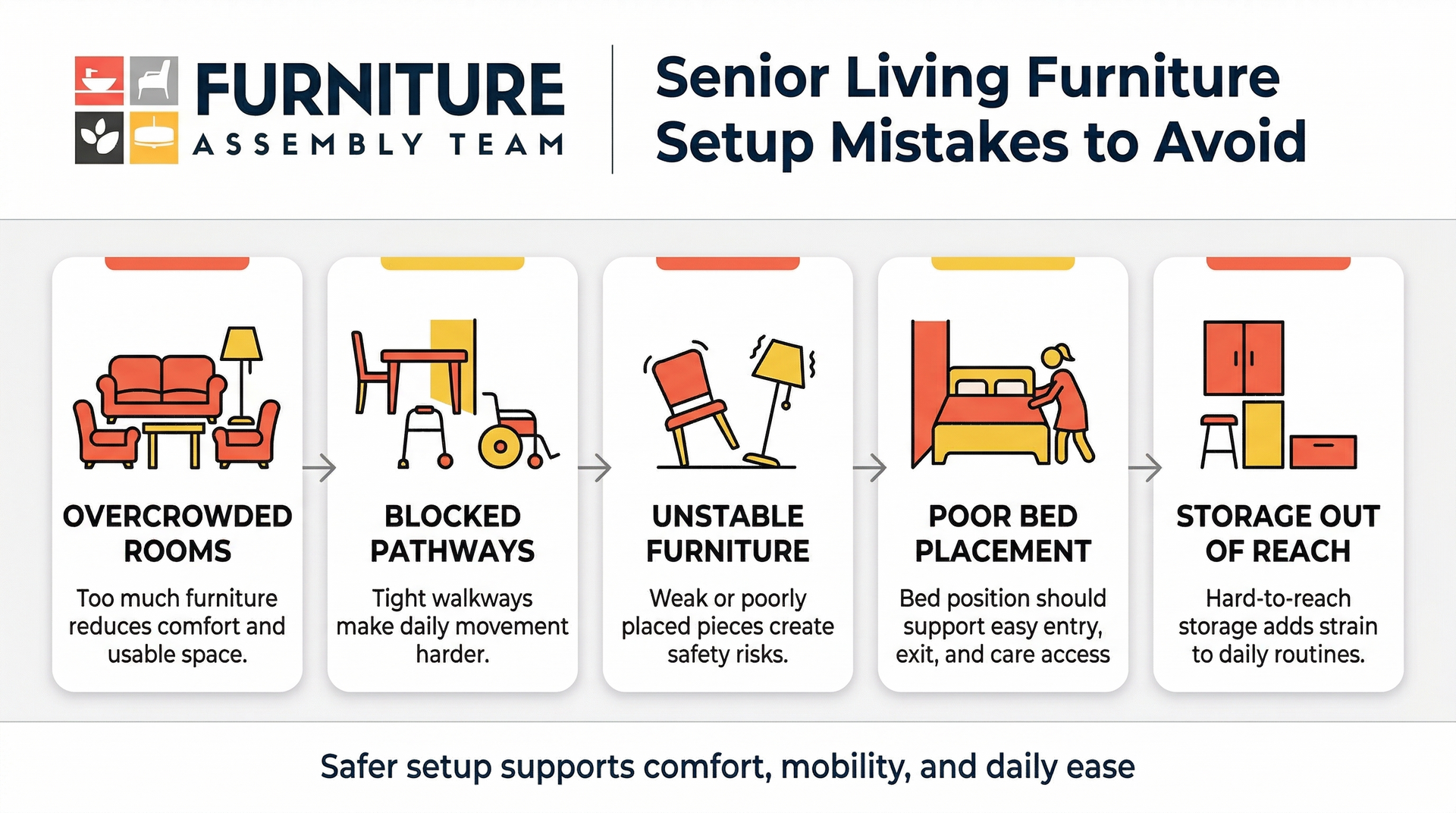
Senior Living Furniture Setup Mistakes to Avoid
The biggest senior living furniture setup mistakes are overcrowding the room, using unstable furniture, blocking pathways, and choosing layouts based on appearance instead of daily use. Small setup mistakes can have a big impact once the room is being used every day.
A common issue is bringing too much furniture into the new space. Families want the room to feel complete, which is understandable, but too many pieces can shrink mobility and make the space harder to manage. Another mistake is placing furniture first and thinking about movement later.
Watch for these avoidable problems:
- Beds, chairs, or tables that narrow the path to the bathroom
- Storage placed too high, too low, or too far from where it is needed
- Lightweight pieces that slide easily during transfers or sit-to-stand movement
- Decorative items that add clutter without improving comfort or use
It also helps to think beyond one room. During a transition, broader residential furniture setup support for seniors moving into a new space may be needed so the entire environment feels coordinated and practical.
How to Create a Warm and Functional Living Environment
A warm and functional senior living environment feels personal, calm, and easy to use. The best rooms combine emotional comfort with practical setup, so the space supports routine without feeling cold, clinical, or overcrowded.
That usually means choosing familiar furniture, leaving visible open space, and avoiding layouts that feel stiff or institutional. A room does not need a lot of pieces to feel complete. In fact, fewer better-placed pieces often make the space feel more peaceful.
Warmth comes from familiarity, lighting, texture, and scale. Function comes from placement, stability, and ease of access. When both are handled well, the room feels supportive rather than restrictive. Families, caregivers, and managers usually notice the difference right away because the space works better and feels better at the same time.
Why Professional Setup Matters in Senior Care Settings
Professional setup matters in senior care settings because correct assembly, safer placement, and room-specific planning reduce mistakes that can affect comfort, access, and daily use. It is often the safer choice when the room needs to work well immediately.
A professional team can see issues that others miss, such as poor spacing around a bed, a chair angle that limits access, or a dresser location that disrupts movement. They can also assemble furniture properly, adjust layouts based on actual room dimensions, and help create better flow in bedrooms, shared areas, and care spaces.
That matters for private families, but it also matters for businesses. Senior apartments, assisted living communities, and property managers often need a reliable partner who can handle a range of room setups efficiently. Furniture Assembly Team offers professional furniture assembly services for senior living and related spaces across Maryland, Washington DC, Delaware, Pennsylvania, and Northern Virginia.
Create a Safer and More Comfortable Senior Living Space
When a senior bedroom, common area, or care space is set up well, everyday living gets easier. Better furniture placement can support safer movement, more comfortable routines, smoother caregiver access, and a more welcoming environment during room transitions, new admissions, downsizing, or assisted living move-ins.
Furniture Assembly Team helps families, caregivers, facility teams, and property managers create functional spaces that still feel warm and lived in. Whether you need support in Baltimore, Rockville, Bethesda, Arlington, Alexandria, Wilmington, Harrisburg, or nearby areas across Maryland, Washington DC, Delaware, Pennsylvania, and Northern Virginia, the goal is the same: a room that works better for real daily life.
If you are ready to improve comfort, mobility, and room flow, contact Furniture Assembly Team for senior living furniture setup. And if your property or organization also needs workspace-related support beyond senior care settings, they can coordinate with providers that handle office furniture assembly for business environments as well.
Key Takeaways
- Senior living furniture setup works best when every piece supports comfort, clearance, stability, and easier daily use
- Bedrooms, common areas, and care spaces each need different layout decisions based on how the space is actually used
- Better furniture arrangement can improve mobility, reduce room frustration, and help prevent common setup problems
- Overcrowding, blocked pathways, and poor assembly are some of the most common mistakes in senior-focused spaces
- Furniture Assembly Team is often the safer choice when families, caregivers, or operators need professional setup that balances warmth, function, and peace of mind
Frequently Asked Questions
What furniture is safest for senior living rooms?
The safest furniture is sturdy, stable, and easy to use without awkward movement. Chairs with arms, beds at a practical height, and tables that do not crowd walkways usually work best.
How much space should be left for walkers or wheelchairs?
Enough space should be left for smooth forward movement, turning, and access to key areas like the bed, bathroom, and seating. Tight corners and narrow gaps make daily movement harder and can increase frustration or fall risk.
Can existing furniture be reused in assisted living spaces?
Yes, existing furniture can often be reused if it fits the room well, remains stable, and supports comfort and mobility. The key is deciding whether each piece helps daily living or simply takes up valuable space.
How long does senior living furniture setup usually take?
Most setups can be completed in a few hours to a full day depending on the number of rooms, the amount of furniture, and whether old pieces need to be moved or removed first. Larger community or multi-room projects may take longer.
Does furniture placement affect fall risk?
Yes, furniture placement can affect fall risk because blocked pathways, unstable pieces, and cramped layouts make movement more difficult. Better room flow often supports more confident daily use.
Is professional setup helpful during a senior move?
Yes, professional setup is especially helpful during a senior move because it reduces stress and gets the new space functional faster. It also helps families avoid guesswork during an already emotional transition.
What bedroom items matter most for comfort and safety?
The most important items are usually the bed, a reachable nightstand, supportive seating, and storage that is easy to access. These pieces shape the room’s comfort and determine how well daily routines work.
When does a care space need different furniture than a regular bedroom?
A care space needs different furniture when caregiver access, transfers, or equipment support become part of daily life. At that point, layout and clearance become just as important as comfort.